
Lieferung heute & morgen

Qualitätsgarantie

Willkommens-Angebote freischalten: KOSTENLOSE Lieferung | Bis zu 80 % RABATT | Kostenlose 30-Tage-JoyPlus-Testphase
App herunterladen
By a Joybuy Product Recommendation Officer, 22 July 2026
Limited storage space is a common problem in many homes. Seasonal clothing, bulky duvets, and extra pillows take up valuable space in wardrobes and under the bed. An efficient way to reduce volume and protect your textiles is by using vacuum storage bags. These practical tools enable space-saving storage by removing excess air and compressing the contents.
This article serves as your guide. It explains the essential features of vacuum storage bags and showcases various models to help you choose the perfect fit for your specific needs—whether for home organisation, preparing for a move, or packing for your next trip.
Choosing the right vacuum storage bag depends on the material, sealing mechanism, and its intended use.
The quality of a vacuum storage bag is largely determined by its material. A common and robust option is a multi-layer composite of Polyamide (PA) and Polyethylene (PE). This blend offers high tear resistance and flexibility. A solid material construction reliably protects the contents from moisture, dust, moths, and odours, ensuring the bags can be reused multiple times without losing their seal.
An airtight seal is essential for a vacuum storage bag to function correctly. Models with a double-zip seal offer enhanced protection against air leaks. Some manufacturers include a colour indicator to show when the seal is fully closed. The valve is also a critical component. Modern valves are often compatible with most standard vacuum cleaners. Capless valves, which open and close with a simple twist, minimise the risk of losing small parts.
Vacuum storage bags are available in various formats, tailored to different needs:
Based on the criteria above, we have curated a selection of products that stand out for their specific features and are suited for various applications.
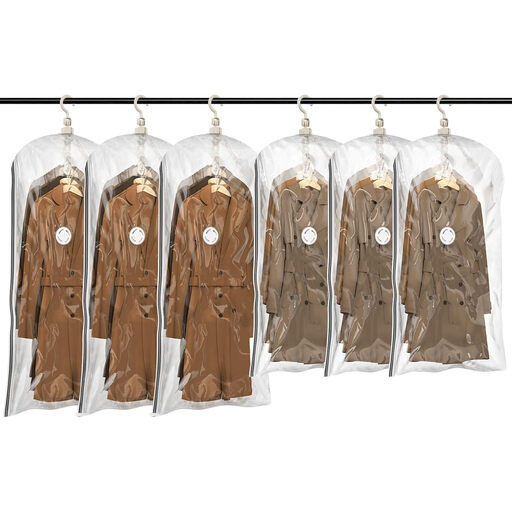
Why It Stands Out: These hanging vacuum bags are specifically designed for wardrobe organisation. The integrated hook allows items like suits, jackets, and coats to be stored vertically, which not only saves space but also helps reduce wrinkling.
Pros:
Who It's For: Individuals looking to optimise their wardrobe space and store seasonal or rarely worn outerwear in a protected, space-saving manner.
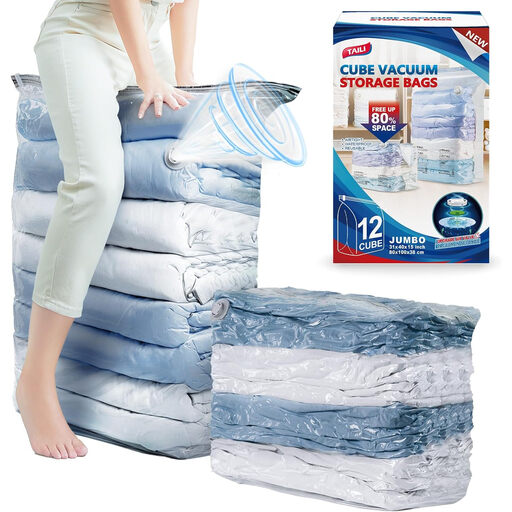
Why It Stands Out: The cubic shape of these jumbo bags maximises storage volume. Thanks to their stable, three-dimensional structure, the bags are easy to stack after vacuuming, making them ideal for storage on shelves, in basements, or in attics.
Pros:
Who It's For: Households with a high demand for space-saving storage for bulky textiles like winter duvets, blankets, and pillows.
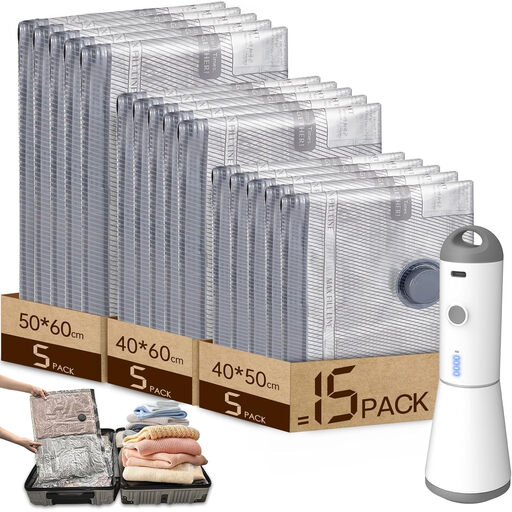
Why It Stands Out: This set stands out with its included cordless vacuum pump. The pump is compact, battery-operated, and allows you to vacuum-seal clothes without needing a power outlet or a large vacuum cleaner.
Pros:
Who It's For: Ideal for travellers, campers, university students in dorms, or anyone looking for a flexible solution without needing a conventional vacuum cleaner.
Haven't found the right solution for your needs yet? There are many other types of vacuum storage bags that differ in size, shape, and accessories.
For a broader overview and additional models, we invite you to explore our full range. ? Discover more vacuum laundry storage bags here
How long a vacuum bag remains airtight depends on the quality of the material, the zip seal, and the valve. High-quality bags made from a PA+PE blend with a double-zip seal can hold the vacuum for several months up to a year. It is recommended to check the condition of the bags every few months.
Most vacuum storage bags are compatible with the round nozzles of standard household vacuum cleaners. However, for some vacuum models with specially shaped nozzles, an adapter may be required. Sets that include their own vacuum pump offer a universal alternative.
Caution is advised when vacuum-sealing textiles with natural fibres like down or wool. Over-compression can damage the fibre structure and permanently reduce its volume. It is recommended to compress such items to only about 60–70% of their original volume to ensure sufficient air remains and to preserve the loft of the fibres.