
Lieferung heute & morgen

Qualitätsgarantie
App herunterladen
Kategorien
Maximising storage space is a common challenge in many households. Vacuum storage bags offer a technical solution to significantly reduce the volume of textiles like clothing, duvets, and pillows. By removing the air, the contents are compressed and simultaneously protected from dust, moisture, and odours. This article analyses the technical features of different types of vacuum bags and presents a selection of models for specific use cases.
The effectiveness and longevity of a vacuum storage bag depend on its material composition and construction details. An informed decision is based on the analysis of the following parameters.
The most common material combination for compression bags is a laminate of Polyamide (PA) and Polyethylene (PE).
A multi-layer construction, often referred to as a 5-layer co-extruded film, increases the product's resilience and durability.
The valve is a critical component for functionality. There are several different systems:
A double zipper (Double-Zip) offers greater security against air leakage than a single closure. Some manufacturers integrate a colour-changing indicator that visually confirms when the seal is correctly and completely closed. This minimises user error and ensures long-lasting compression.
Based on the technical criteria mentioned above, we have compiled a selection of products for different requirements.
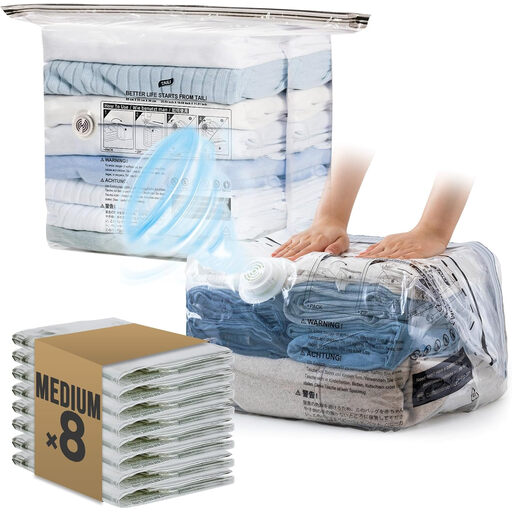
Why We Recommend This Product: The patented ESY SHRINK air valve allows for compression without a vacuum cleaner or pump. The air is removed by simple manual pressing, making this set particularly suitable for travel or for households without quick access to a vacuum cleaner.
Advantages:
Who It's For: Individuals looking for a flexible and travel-friendly solution (vacuum bags for travel). Ideal for compressing clothes in suitcases, backpacks, or for the seasonal storage of smaller quantities of textiles.
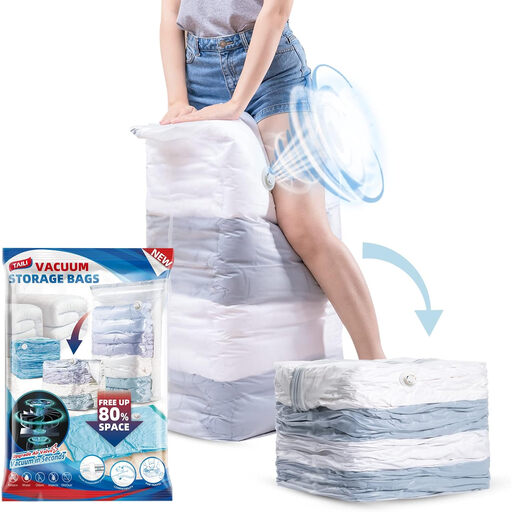
Why We Recommend This Product: The jumbo size (78.7 x 101.6 x 38.1 cm), combined with the stable, self-standing cube shape, is specifically designed for storing very bulky items like duvets, blankets, and winter coats.
Advantages:
Who It's For: Households and families who need to store large quantities of seasonal textiles, such as duvets and winter clothing, in a space-saving and protected manner.
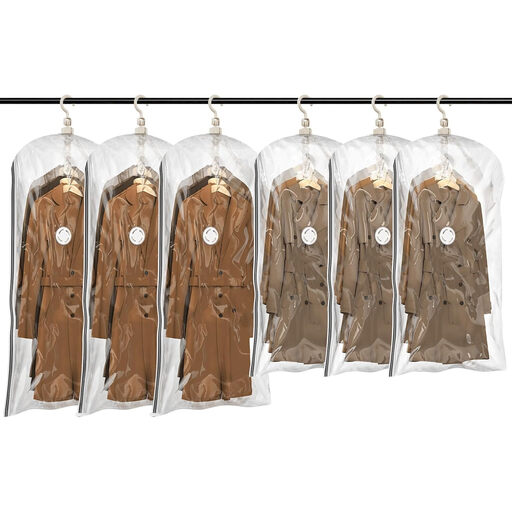
Why We Recommend This Product: This set is a specialised solution for vertical storage in the wardrobe. The integrated hook allows you to compress suits, jackets, and coats while they hang, which reduces wrinkling and optimises wardrobe organisation.
Advantages:
Who It's For: Individuals who want to improve their wardrobe organisation and store valuable or seasonal garments like suits, coats, and dresses in a protected, space-saving way.
The products presented here cover specific use cases. However, the market offers a variety of other sizes, shapes, and sets tailored to individual needs. For a more comprehensive overview and additional models, we recommend taking a look at our main category.
-> Discover our entire range of Vacuum Bags for Clothes here.
1. How long does the vacuum last in a vacuum storage bag? The length of time a vacuum bag remains airtight depends on the quality of the material, valve, and seal. A high-quality bag made of thick PA+PE material with a double zipper can hold the vacuum for several months. It is crucial to close the seal carefully and protect the bag from sharp objects to avoid punctures.
2. Can vacuum bags damage clothing or duvets? When used correctly, vacuum bags are safe for most textiles. For delicate natural fibres like down or wool, excessive compression over very long periods (more than 6 months) should be avoided, as the fibres could temporarily lose their loft. It is recommended to air out and repack such items every few months.
3. Do I need a special vacuum cleaner for vacuum storage bags? Most vacuum bags for clothes are compatible with the standard round nozzles of household vacuum cleaners. For travel or use without a vacuum cleaner, there are alternatives with manual hand-press valves or included hand pumps, as shown above.