
Lieferung heute & morgen

Qualitätsgarantie

Willkommens-Angebote freischalten: KOSTENLOSE Lieferung | Bis zu 80 % RABATT | Kostenlose 30-Tage-JoyPlus-Testphase
App herunterladen
Whether it's seasonal clothing, bulky duvets, or luggage for your next trip, limited storage space is a common problem in many households. Wardrobes are overflowing, and unused textiles gather dust. Vacuum storage bags offer a practical solution to significantly reduce the volume of textiles while protecting them from moisture, dust, and odours.
This article serves as a guide. It explains the key features of vacuum storage bags and presents a selection of models for various applications to help make your purchasing decision easier.
Choosing the right bag depends on your specific needs. Three key criteria will help you find the right product.
The longevity of a vacuum bag is largely determined by the material used. A common and proven combination is Polyamide (PA) and Polyethylene (PE). PA provides the necessary stability and tear resistance, while PE makes the bag flexible and airtight. High-quality materials allow for multiple reuses, making the bags a sustainable solution for seasonal storage. Pay attention to the material thickness, as thicker bags are more resistant to accidental damage.
A reliable seal is crucial for maintaining the vacuum for months. Most models feature a double zipper (Double-Zip), which is securely sealed with an included clip. The valve is the second critical component. Standard valves are compatible with most conventional vacuum cleaners and allow for quick air removal. For travel or households without a vacuum cleaner, there are special compression bags for clothing that can be compressed by hand or with a small hand pump.
Space-saving bags are available in various shapes and sizes, optimised for different purposes:
Here is a selection of models that are suited for different needs due to their specific features.
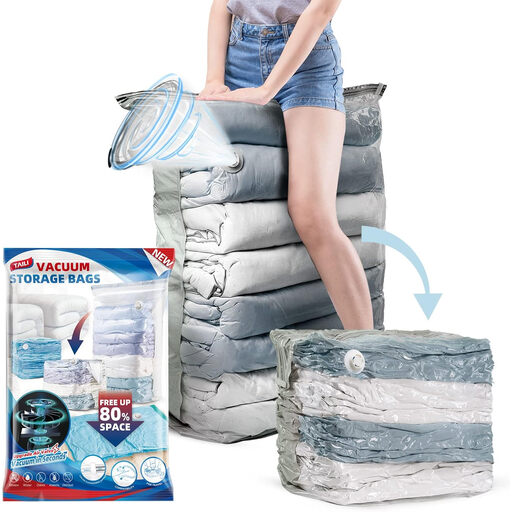
Why This Model Stands Out
The cube-shaped design of these bags is engineered for maximum space efficiency. Thanks to the wide bottom, the bags stand on their own and are easy to fill. According to the manufacturer, the cap-free valve is compatible with any standard vacuum cleaner and speeds up the air removal process.
Advantages
Who Is It For?
This set is ideal for households looking to store large quantities of bulky textiles like winter duvets, pillows, or thick wool blankets for an extended period, while valuing structured organisation in their wardrobe.
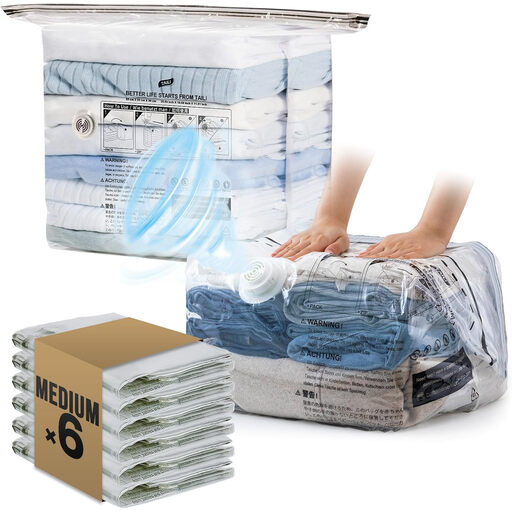
Why This Model Stands Out
These bags require neither a vacuum cleaner nor a pump. The patented ESY-SHRINK air valve allows you to remove the air simply by pressing down manually. This makes them an extremely practical solution for on the go or for quick use at home.
Advantages
Who Is It For?
Perfect for travellers who want to maximise their luggage volume, as well as for students in dorms or individuals who don't have access to a vacuum cleaner. They are excellent as compression bags for clothing.

Why This Model Stands Out
These large, flat bags are versatile all-rounders for storing a wide variety of textiles. The triple-seal turbo valve, combined with the double zipper, ensures a reliable seal and prevents air from re-entering.
Advantages
Who Is It For?
These bags are a great choice for anyone looking for a flexible solution for storage under the bed or in the basement. They are suitable for seasonal clothing, bedding, and other textiles that need to be stored flat.
If the models presented don't exactly meet your requirements, or if you're looking for specific sizes for storing blankets, you may find the right product in our wider selection.
Discover our entire collection of space-saving storage bags for blankets.
The length of time a vacuum bag remains airtight depends on the quality of the material, zipper, and valve. High-quality bags can hold a vacuum for several months up to a year. For long-term storage, it is recommended to check the condition of the bags every few months.
Yes, there are models specifically designed for this purpose. So-called roll-up bags or bags with special press-valves allow you to remove the air by rolling or pressing manually. These are particularly well-suited for travel when a vacuum cleaner is not available.
When used correctly, vacuum bags are safe for most textiles. It is important not to overfill the bags and to position sharp objects like zippers or buttons so they do not puncture the bag. For delicate down or feather products, it is recommended not to remove all the air (about 80% compression) to preserve the structure of the filling. After storage, the textiles should be aired out for some time to regain their original shape.