
Lieferung heute & morgen

Qualitätsgarantie

Willkommens-Angebote freischalten: KOSTENLOSE Lieferung | Bis zu 80 % RABATT | Kostenlose 30-Tage-JoyPlus-Testphase
App herunterladen
Bulky winter coats, duvets and seasonal bedding can quickly take up all the available space in your wardrobe or under the bed. Vacuum storage bags for clothes can reduce the packed size by removing air and protect textiles from dust. However, to ensure they work well in everyday use, you should look beyond the advertised space-saving claims.
The closure, material, format and compression method are all crucial. The following advice will help households, families, travellers and anyone with limited storage space avoid common purchasing mistakes.
Claims such as “up to 80 per cent less volume” generally refer to specific fillings and complete air removal. The result depends on whether the bag contains down, chunky knitwear, towels or flat clothing. An overfilled bag may also fail to close securely.
It is more practical to compare the internal dimensions, recommended load and the space available for storage. Cube-shaped models are often suitable for duvets and blankets, while smaller vacuum storage bags for clothes are easier to store when used for underwear, clothing or travel.
A simple zip or poorly fitting valve can cause the bag to expand again after a short time. Look for a double zip closure, a compatible valve and, ideally, a closure slider or visible closure indicator.
How you use the bag also matters: the zip must be fully closed before air is removed. Even small creases or textile fibres caught in the closure area can affect the seal.
Suits, coats, down jackets and dresses are heavily compressed when folded. Flat bags are not always suitable for these items. Hanging vacuum storage bags with integrated hooks make use of the vertical space in your wardrobe and are suitable for garments that should be folded as little as possible.
For bedding, blankets and bulky winter textiles, standing cube or jumbo formats are often more practical. For hand luggage or a suitcase, compare the external dimensions with the available space before buying.
Many of the models considered here are made from polyamide (PA) and polyethylene (PE). Product specifications describe this material combination as tear-resistant, flexible and water- or airtight. However, this does not mean that textiles are protected from moisture indefinitely. Clothes and bedding should be clean and completely dry before being stored.
Also check for:
Reusable vacuum storage bags are particularly useful if you regularly store and retrieve seasonal clothing. Before storing them again, make sure the bags are dry, clean and free from damage.
A vacuum storage bag with a pump does not require a vacuum cleaner and can be suitable for travelling, moving house or smaller flats. The HOMOH sets include a cordless pump; according to the product description, air removal takes around 30 seconds. The pump should be cleaned without water, and the lithium-polymer battery should be protected from heat, pressure and damage.
Other vacuum travel bags are compressed by hand. This saves you from carrying an additional device and can be practical while travelling, but requires sufficient pressure to be applied across the bag. Vacuum cleaner models are worth considering for larger quantities of duvets or bedding. Make sure the valve is compatible with your household vacuum cleaner.
Small formats such as 40 × 50 cm are suitable for T-shirts, jumpers or children’s clothing. Medium sizes measuring 40 × 60 cm are suitable for mixed textiles. Large 50 × 60-cm bags or cube formats are intended primarily for blankets, bedding and bulky jackets.
The stated capacity should not be confused with a binding loading recommendation. For example, TAILI cube models specify a maximum load of 16 pounds. This limit should be observed. Overfilling makes the bag harder to close and can put strain on the material or valve.
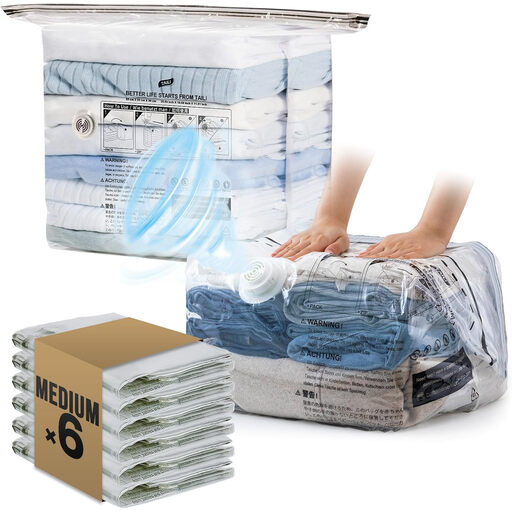
Why this product suits this profile: The six medium-sized cube bags are designed for clothes, blankets, baby textiles and travel luggage. Compression is carried out by hand, so no separate pump is required.
The stated dimensions and described hand-compression method make the possible uses clearer than blanket space-saving claims.
PA and PE laminate, wide double closure, transparent design and six identical medium-sized formats.
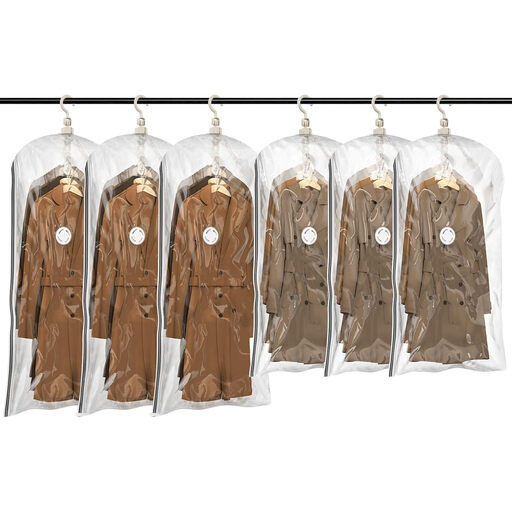
Why this product suits this profile: The set uses the wardrobe rail for suits, coats, jackets and dresses. Three long and three short bags provide different formats for your wardrobe.
According to the product description, the colour-changing zips indicate the closure status, which can make it easier to check the seal before removing the air.
PA and PE material, vacuum-cleaner-compatible valve, five ring hooks, plus long and short variants.
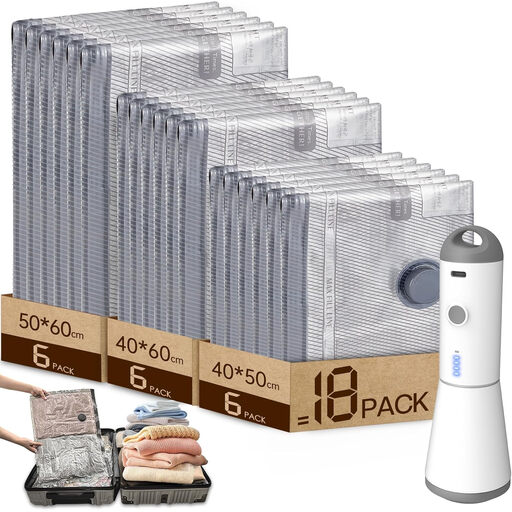
Why this product suits this profile: The combination of three sizes and a cordless pump is suitable for families, moving house and anyone who regularly compresses clothes, duvets and bedding.
The 18 bags distribute textiles across several sizes, while the double zips and valves allow for controlled use.
Nine small, medium and large formats, cordless pump, PA and PE material, plus repeated use according to the product specifications.
For down and feather clothing, follow the method specified for the individual product. Strong, prolonged compression can affect the shape of bulky textiles. Plastic bags should also be kept away from children, as they pose a suffocation risk.
We have put together a complete, regularly updated list of products that fully meet these strict selection criteria and the safety regulations applicable in the EU.
There is no universal service life. It depends on the material, closure, valve, filling quantity and storage conditions. After storing the bag, check it regularly at first to make sure the compression is not reducing. If there are tears or the closure is damaged, the bag should no longer be used.
Only if the valve fits the vacuum cleaner connection. Some models are designed for standard household vacuum cleaners, while others work with a supplied pump or through hand compression. Before buying, check the valve description and usage instructions for the specific product.
Yes, large cube and jumbo models are available for this purpose. Duvets and bedding must be dry and clean and must not exceed the stated load limit. For coats, suits or jackets, on the other hand, hanging garment bags save space because they hold the clothing on the wardrobe rail.