
Lieferung heute & morgen

Qualitätsgarantie

Willkommens-Angebote freischalten: KOSTENLOSE Lieferung | Bis zu 80 % RABATT | Kostenlose 30-Tage-JoyPlus-Testphase
App herunterladen
A vacuum sealer can package portioned food in a space-saving way, make storing food in the freezer easier and be suitable for sous-vide cooking. However, there are clear differences between a compact vacuum sealer for occasional use and a powerful vacuum-packing machine for larger quantities.
Many purchasing decisions do not come down to suction power alone. Unsuitable bags, a sealing strip that is too narrow or missing functions for delicate foods can all cause problems. The following selection from the Joybuy Product Recommendation Officer highlights which specifications matter in everyday use and which appliance may suit different usage profiles.
Power consumption in watts mainly describes how much electricity the appliance uses. For practical use, suction power, negative pressure, the quality of the sealing strip and the bag’s seal are also crucial. Depending on its design, a 110-watt vacuum sealer may work differently from a model with a higher power rating.
You should therefore look for specific details such as litres per minute, maximum negative pressure and the permitted bag width. If these details are missing entirely, it is difficult to assess how suitable the appliance will be for everyday use.
Many external vacuum sealers require textured vacuum bags or textured film rolls so that air can escape through the bag channel. Smooth bags are often intended for chamber vacuum sealers instead. If you overlook this distinction, you risk an incomplete vacuum or an unreliable seal.
Check the following before buying:
Vacuum sealing food reduces contact with air, but it does not replace refrigeration or hygienic handling. Perishable goods must still be stored in the fridge or freezer. Vacuum-sealed food should be labelled with its contents and the date.
Particular care is required with raw animal-based foods, moist dishes and highly perishable products. A vacuum sealer does not automatically prevent the growth of all micro-organisms. You should also follow the manufacturer’s guidance on temperature, storage time and suitable foods.
An even, sufficiently wide sealing strip keeps the packaging closed. For typical household portions, appliances with a bag width of around 28 to 30 centimetres are versatile. An integrated heat sealer can also be useful when food needs to be sealed without vacuuming or when self-cut bags need to be closed.
A vacuum sealer with cutting function is particularly practical when using film rolls. It allows you to adjust the bag length to suit bread, cuts of meat, vegetables or portions for the freezer.
Suction power is often stated in litres per minute. A higher figure can speed up the removal of air from large bags, but it is not the only factor to consider. For delicate foods such as berries, baked goods or soft vegetables, manual vacuum regulation or a stop button is useful.
When sealing moist foods, the appliance should have a suitable moisture function or a collection container. Liquid entering the pump can make cleaning more difficult and put strain on the appliance.
An automatic vacuum sealer with one-touch operation simplifies repeated tasks. For frequent users, the following features are also important:
Running costs mainly come from bags or film rolls. A low purchase price can be less attractive if the appliance only works with proprietary accessories. Appliances designed for standard textured rolls often offer more choice when buying replacements.
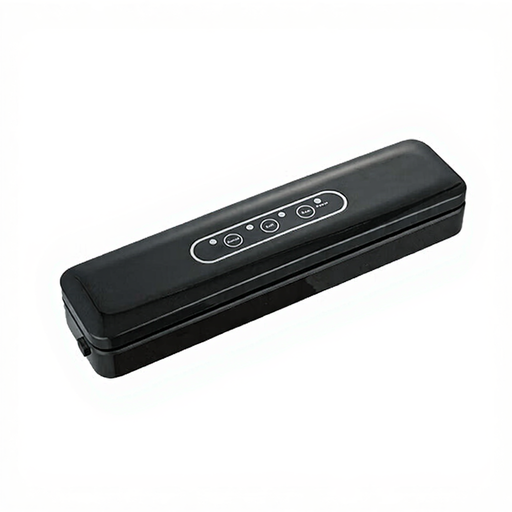
Why this product suits this profile: This compact appliance is suitable for households that occasionally want to portion meat, vegetables, fruit or dry goods while taking up minimal worktop space.
Automatic one-button operation helps reduce user errors. However, you should still check which vacuum bags are compatible and the actual bag width before buying.
Compact construction and an automatic process for typical household portions.
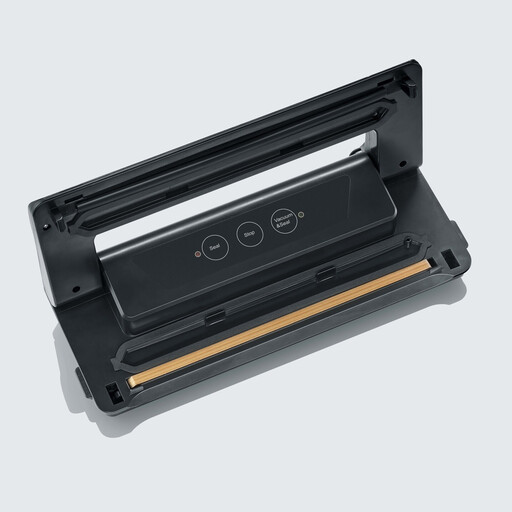
Why this product suits this profile: This model combines automatic vacuum sealing with a stop button for delicate foods, making it suitable for users who want greater control when packaging food.
The stop button helps prevent soft foods from being compressed unnecessarily. The integrated cutter also reduces reliance on pre-made bag sizes.
110 watts, a maximum bag width of 28 cm, a cutter and 10 included bags according to the product information.
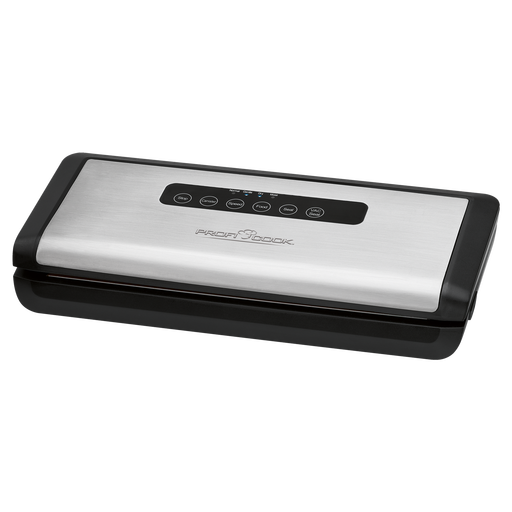
Why this product suits this profile: For regular portioning and sous-vide preparation, this appliance offers several settings and a wide sealing strip.
Electronic vacuum regulation with four levels helps address the risk of drawing too much air from delicate foods. A collection container makes cleaning easier when there is residual moisture.
12 l/min suction power, approximately −0.8 bar according to the product information, compatibility with 30-cm film and 18 included bags.
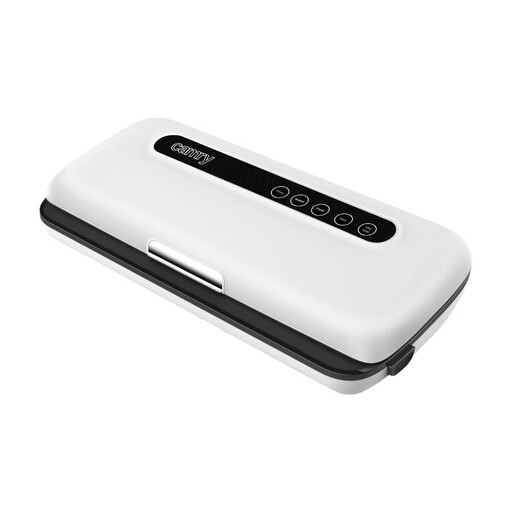
Why this product suits this profile: Separate vacuuming and sealing functions, along with modes for dry and moist foods, make this appliance suitable for varied household provisions.
The choice between dry and moist modes takes different types of food into account. When handling liquids, the preparation and cleaning instructions remain essential.
Up to 12 l/min suction power, 110 watts and a recommended bag width of 28 cm according to the product description.
We have put together a complete, regularly updated list of products that fully meet these strict selection criteria and the safety regulations applicable in the EU.
For clean results, the edge of the bag should be dry and free from grease or crumbs. Leave enough space at the top for the sealing strip. Liquid dishes can be frozen before vacuum sealing or prepared in a suitable container.
For delicate products, a gentle mode is recommended if the appliance offers one. After sealing, check that the strip is closed all the way along. Damaged or leaking bags should be replaced. For sous-vide applications, bags and film must be explicitly suitable for the intended temperature.
The possible storage time depends on the type of food, its freshness when sealed, temperature and hygiene. Vacuum sealing can support storage, but it does not provide one standard shelf life for all products. Labelling, the cold chain and the manufacturer’s guidance remain important.
Liquids can be problematic because they may enter the pump area during extraction. Only use an appliance with a suitable moisture function or collection system for this purpose, and follow the operating instructions. Hot liquids should not be vacuum-sealed directly.
In addition to electricity consumption, the main costs are for vacuum bags and film rolls. With frequent use, rolls with adjustable lengths may be more economical than using only pre-made bags. It is therefore worth checking when buying which accessories are compatible and will remain available in the long term.