Which option is right for you?

For cookery teachers working with delicate custard

If you want to warm prepared custard in portions and stir it at intervals, look for clearly selectable power settings and a suitably sized bowl. The BfR recommends stirring food at intervals when using a microwave. The consumer advice centre also recommends staying within the temperature and wattage limits of your container.

For cookery teachers preparing several portions

When making several portions, check whether your particular bowl, including its handles and lid, will fit, and whether there’s enough room to stir. The manufacturer’s information about the appliance’s dimensions and design can help you compare models, but you’ll still need to measure your own container.

For cookery teachers preparing other dishes too

If you’d like to bake or brown food as well as make custard, a grill and convection function may be useful for your classes. Also check that the appliance, door opening and any accessories you need will fit in your teaching kitchen.

What should you look for when buying?

A standard or existing microwave

A good fit if: you want to warm individual portions of prepared custard and don’t need any other cooking modes.

Bear in mind: there’s no grill or baking function, and stirring and checking the temperature are still important.

Combination microwave with grill

A good fit if: you’d occasionally like to brown or grill dishes as well as warm custard.

Bear in mind: a grill has no proven benefit when warming custard, and features vary between models.

Combination microwave with convection and grill

A good fit if: you regularly want to bake or brown other dishes during your classes, and the appliance and accessories will fit in the space.

Bear in mind: extra cooking modes don’t replace stirring or temperature checks, and you’ll need enough worktop space.

A hob for large quantities that need constant stirring

A good fit if: your class-sized batch won’t fit in a suitable microwave-safe container with enough room to stir.

Bear in mind: this alternative is based on container size and workflow; there’s no proven time, energy or quality advantage.

Buying priority What to look for Who is it important to?
Warming custard with control Check the power settings and how easily you can pause the appliance. Make sure your container is suitable for microwave power and temperature. When I warm custard in portions, I want to be able to pause and stir it. Around 40% of consumers are likely to put controlled heating first.
Room for bowls and portions Measure your bowl, including its handles and lid. If the microwave has a turntable, check that it can rotate freely. For several portions in a cookery class, I need room for my container and a practical workflow. Around 30% of consumers are likely to place particular importance on suitable bowls and batch sizes.
Additional cooking modes Decide in advance whether you’ll be grilling or using convection for other dishes. Check the functions and accessories available with the specific model. If I want to bake or brown food as well as make custard, the extra functions need to be genuinely useful in class. Around 20% of consumers are likely to prioritise additional cooking modes.
Positioning and cleaning Compare the appliance’s external dimensions with the installation instructions. Check which accessories are removable and what service terms apply. In a shared kitchen, I need a suitable place for the appliance and a cleaning routine I can plan around. Around 10% of consumers are likely to consider positioning, cleaning or support first.

Common buying mistakes

  • Assuming a grill or convection function will heat custard evenly

    These functions are designed for other types of cooking. When heating food in a microwave, the BfR recommends ensuring it heats evenly and stirring it at intervals.

    Choose extra functions based on the other dishes actually on your class plan, and remember to stir and check the temperature regardless.

  • Comparing only the stated capacity with the size of your bowl

    The stated capacity doesn’t tell you whether a container with its lid will fit or whether a turntable can rotate freely. Bauknecht describes the MF 255 B as a model without a turntable; for the Severin MW 7798, the manufacturer lists a turntable with a diameter of 31.5 cm.

    Measure your bowl, handles and lid, then compare the dimensions with the inside of the specific appliance. If it has a turntable, also check that your container can rotate freely.

  • Assuming conflicting power ratings are equivalent

    For the Severin MW 7798, the manufacturer’s website lists a maximum microwave power of 900 W, while a Joybuy product listing gives 1000 W. Some individual power ratings on the manufacturer’s website also differ between the product description and technical table.

    If microwave power is important to your decision, check the exact model variant and the relevant technical documentation before comparing figures. Don’t assume the different ratings prove that one model offers more power.

Brands and models to consider

Panasonic

The NN-CD58RS is an example of a combination microwave with inverter technology, a grill and convection.

  • Panasonic lists a 27 l capacity, a 34 cm turntable and seven microwave power settings.
  • The German product page marks the listed variants as unavailable. This applies to that manufacturer’s page and doesn’t tell you whether they’re available from other sellers. No custard test has been carried out on this model.

Bauknecht

The MF 255 B is a freestanding combination model with additional cooking modes and no turntable.

  • Bauknecht lists six power settings, ExtraSpace without a turntable, convection and steam cooking.
  • Its design doesn’t guarantee that a particular bowl will fit or that custard will heat more evenly. Measure your container and check the internal dimensions.

Severin

The MW 7798 combines microwave, grill and convection functions with a turntable and racks.

  • The manufacturer’s website lists a stated capacity of 29 l and a turntable with a diameter of 31.5 cm.
  • Some grill and convection power ratings differ between the product description and technical table on the manufacturer’s website. Don’t treat these figures as definitive criteria for choosing a model.

Samsung

The MC32DB7746KDE1 is a larger combination appliance with additional programmes.

  • For this model, Samsung lists a 32 l capacity, 900 W microwave power, Wi-Fi control, Air Fry and Healthy Steam.
  • This manufacturer information doesn’t prove that the appliance heats custard better or that you’ll need the extra programmes for your class. Choose based on the dishes you actually want to prepare.

Combination microwaves at Joybuy

The combination microwaves below may suit teaching kitchens where grill or convection functions are useful as well as reheating. For the vanilla custard itself, stirring, a suitable container and the right bowl size remain key.
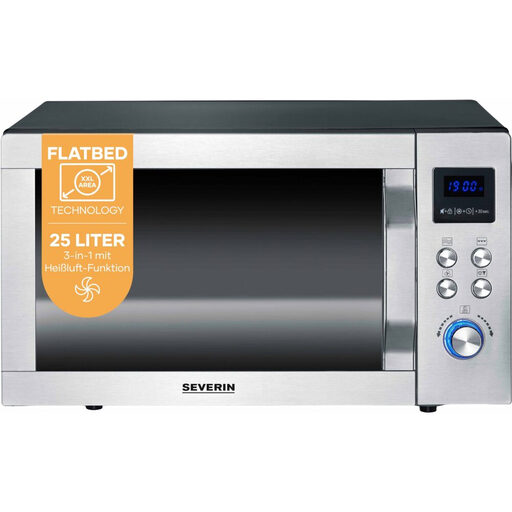
Severin MW 7777 with glass base, grill and convection

Severin MW 7777 with glass base, grill and convection

An option if you’d like to use the grill or convection functions for other dishes in your class, as well as warming custard.

Glass base without a turntable; the product name lists grill and convection functions.

Measure your bowl and check the appliance instructions, as well as whether your container is suitable for the chosen cooking mode.

View at Joybuy
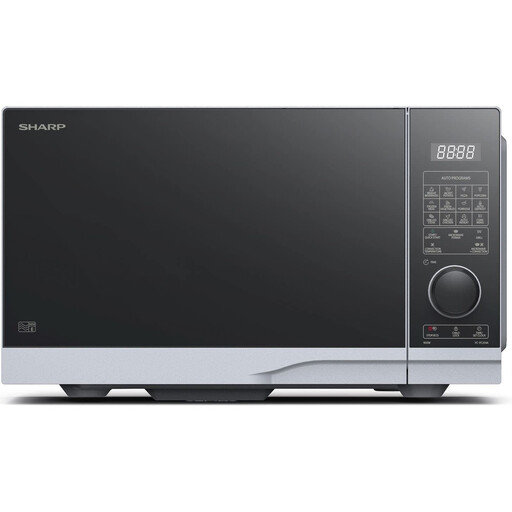
Sharp YC-PC254AE-S combination microwave, 25 L

Sharp YC-PC254AE-S, 25 L

For teaching kitchens where you plan to use the grill and convection functions for other dishes as well as the microwave.

25 L; the product name lists grill and convection functions.

Check that your bowl and lid will fit inside, and that your container is suitable for the relevant cooking mode.

View at Joybuy
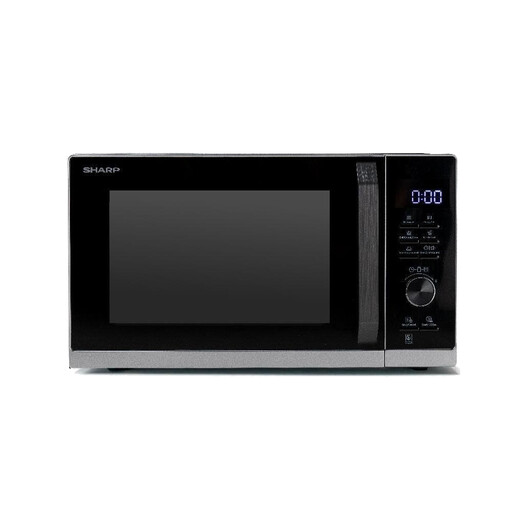
Sharp RCC271TS combination microwave, 27 L

Sharp RCC271TS, 27 L

A combination option if you’d like to use the grill and convection functions in class as well as prepare custard.

27 L; the product name lists 900 W microwave power, 1000 W grill power and 2100 W convection power.

Compare power ratings only for the exact model variant, and check that your containers are suitable for the relevant cooking mode.

View at Joybuy
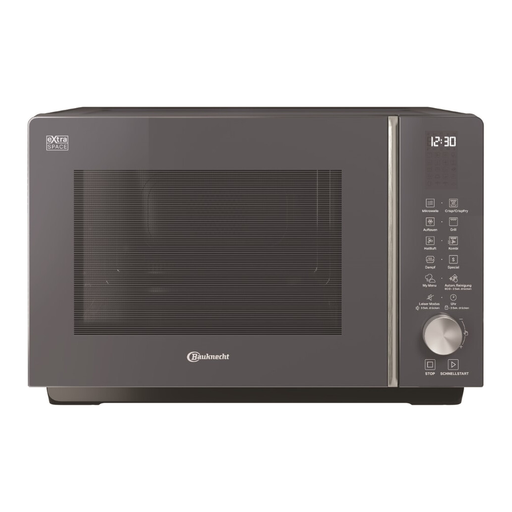
Bauknecht MF 259 SG, 25 L, without turntable

Bauknecht MF 259 SG, 25 L, without turntable

The design without a turntable may suit your bowl if its dimensions fit the interior and you’d also like to use the additional functions.

25 L; the product name lists convection, a quartz grill and steam cooking with a steamer container.

Check the internal dimensions, the accessories supplied and whether your container is suitable for the planned cooking mode.

View at Joybuy
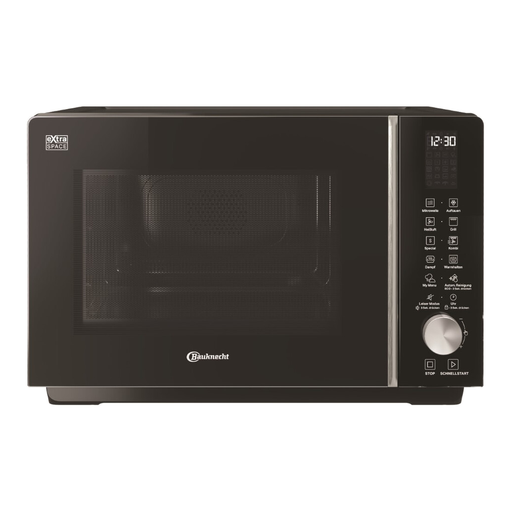
Bauknecht MF 255 B, 25 L, without turntable

Bauknecht MF 255 B, 25 L, without turntable

A design without a turntable may work for containers used in cookery classes, provided the bowl fits inside.

25 L; the product name lists convection, a quartz grill and steam cooking with a steamer container.

Check the usable surface area, internal height and whether your container is suitable for the chosen cooking mode.

View at Joybuy

Frequently asked questions

How can I safely heat prepared vanilla custard for several people?

When preparing and reheating food, the Federal Institute for Risk Assessment recommends heating it to 70 °C throughout for at least two minutes. If you’re using a microwave, stir the food at intervals and check the temperature if in doubt. Keep any portions you won’t need straight away refrigerated. This food safety recommendation doesn’t set the right heating time for every type of custard or its preferred consistency.

Can I use any microwave-safe plastic container for grilling or convection cooking too?

No. A container that’s suitable for microwave use isn’t automatically suitable for a grill or convection cooking. Follow the container’s temperature and wattage limits, along with the instructions for the cooking mode you’re using. Don’t continue using damaged plastic tableware.

What should I check before buying an electrical appliance?

As part of its market surveillance, the Federal Network Agency lists checks including correct CE marking, product identification and manufacturer details, as well as German-language instructions with the required usage and warning information. A CE mark shown in a listing alone doesn’t prove that the specific appliance on offer has been independently tested.

What should I check about repairs and warranty cover?

Check the terms for the specific model and seller. For the MF 255 B, Bauknecht refers to a spare parts guarantee; for the MW 7798, Severin lists the statutory warranty and its own guarantee information. This doesn’t mean that the same service cover applies to every appliance from a particular brand.