Latte with minimal effort
You want espresso and milk prepared as automatically as possible, and don’t mind looking after the milk system afterwards.


If you want to make espresso and milk with as few steps as possible, a bean-to-cup machine with a milk system could be a good fit. If you’d rather have more control over brewing and frothing, consider an espresso machine. For the occasional drink, a capsule machine with a separate milk frother may also work – just factor in capsule compatibility, cleaning and the space needed for all the equipment. Add the vanilla to your glass; you don’t need an automatic vanilla function to make your choice.
You want espresso and milk prepared as automatically as possible, and don’t mind looking after the milk system afterwards.
You want more control over brewing espresso and frothing milk, and are happy to factor in a few extra steps.
You don’t regularly make several lattes at a time and are considering a capsule machine with a separate milk frother. Capsule compatibility and accessories are part of your decision.
For a vanilla latte after your shop, the main differences come down to convenience, control, cleaning, space and ongoing costs.
A good fit if: You want to make milk-based drinks as conveniently as possible. Philips describes LatteGo on the Philips EP3347/90 as a two-part, tube-free system.
Bear in mind: Philips says the removable milk components still need cleaning, so check the care instructions for the specific model.
A good fit if: You want more control over brewing espresso and preparing milk. According to the manufacturer, the De’Longhi EC685.M EX:4 is manual, while the Sage Bambino Plus has an automatic steam wand.
Bear in mind: Using an espresso machine remains part of the process. Also check what extra equipment you’ll need.
A good fit if: You usually make one drink at a time and are happy to use a separate milk appliance. Nespresso describes the Essenza Mini/Aeroccino 3 set as a capsule machine paired with a milk frother.
Bear in mind: Allow space for both appliances and factor in their care. Check that the capsules are compatible with your machine system.
| Priority | What to check when buying | Who it matters to |
|---|---|---|
| Minimal hands-on effort | Check whether the specific model makes milk-based drinks; an espresso function alone won’t froth milk. Automatic preparation doesn’t remove the need to clean the machine. | If I want to get from shopping to a milk-based drink in as few steps as possible, the process matters most. Around 31% of consumers put easy latte preparation first. |
| Control over espresso and milk | Compare how the steam wand works on each model: an espresso machine doesn’t necessarily mean you’ll need to froth the milk manually. | If you enjoy controlling the espresso and milk foam yourself, you may be happy to put in a few extra steps. Around 25% of consumers particularly value this control. |
| Cleaning and descaling | Check the cleaning instructions and removable milk components. It’s also worth finding out how hard your local water is. | If cleaning after a milk-based drink and regular descaling matter to me, I check the care requirements carefully. Easy maintenance is a priority for around 19% of consumers. |
| Space for the equipment | Measure more than just the machine itself: allow room for filling, frothing and cleaning, too. | If space is limited, I need to consider all the equipment, not just the machine’s width. Around 13% of consumers prioritise the space it takes up. |
| Ongoing and additional costs | Check which accessories you’ll need and compare the cost of compatible coffee portions on a like-for-like basis. | If I want to keep an eye on the cost of the complete drinks setup, there’s more to consider than the machine alone. Around 12% of consumers put ongoing and additional costs first. |
Philips says the two-part, tube-free LatteGo system on the Philips EP3347/90 still needs its components cleaned separately.
Before buying, check the cleaning instructions for the exact model and its milk system.
Allow time to care for the parts that come into contact with milk.
The 149 mm quoted by De’Longhi is for the EC685.M EX:4; it doesn’t account for the space needed for the whole process. An Essenza Mini set also includes a separate Aeroccino.
Allow space for all the appliances, as well as room to fill and use them.
In the Essenza Mini set described here, the Aeroccino prepares the milk. Nespresso lists ORIGINAL and VERTUO as separate systems.
Check system compatibility, what’s included and the cost of compatible coffee portions, rather than looking at the machine alone.
The EP3347/90 bean-to-cup machine is worth considering if you want to make espresso and milk-based drinks with LatteGo.
The Dedica Style EC685.M EX:4 is a slim manual espresso machine with a cappuccino system.
The Bambino Plus SES500BSS4EEU1 combines espresso machine controls with an automatic steam wand.
The EQ6-plus TE657F03DE bean-to-cup machine is an option for making milk-based drinks at the touch of a button.
The ORIGINAL Essenza Mini/Aeroccino 3 set pairs capsule espresso with separate milk preparation.
This selection includes bean-to-cup machines, a capsule machine with a milk system, and a machine for portafilter brewing with a milk frother – offering different ways to prepare espresso and milk.
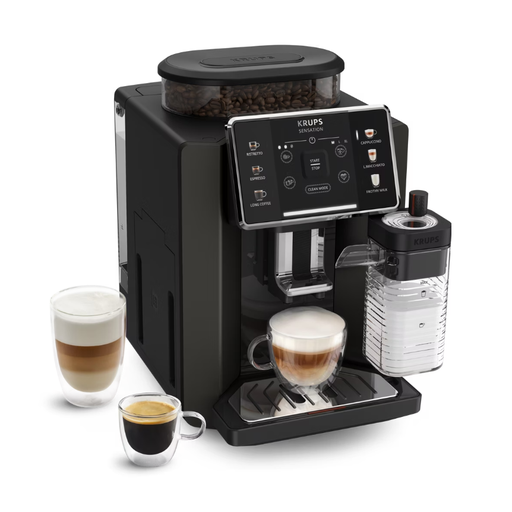 No image available
This bean-to-cup machine with an integrated milk system is worth considering if you want to prepare espresso and milk with just a few button presses.
 No image available
This bean-to-cup machine with an integrated milk system is an option if you want to prepare espresso and milk-based drinks in one appliance.
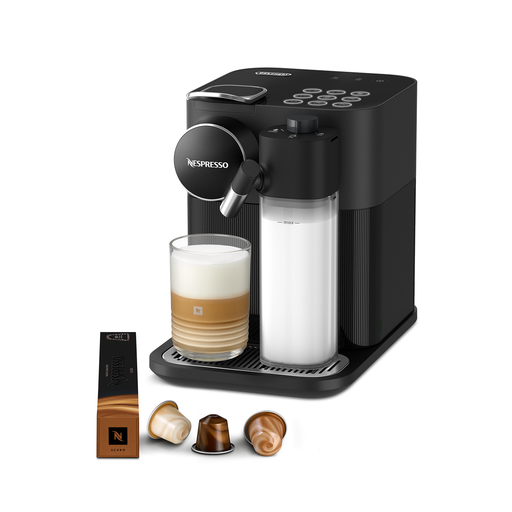 No image available
This capsule machine with an integrated milk system is a good fit if you want to make espresso and milk-based drinks at the touch of a button.
The product description says it takes Nespresso Original capsules. After making milk-based drinks, remember to run the rinse cycle described there.
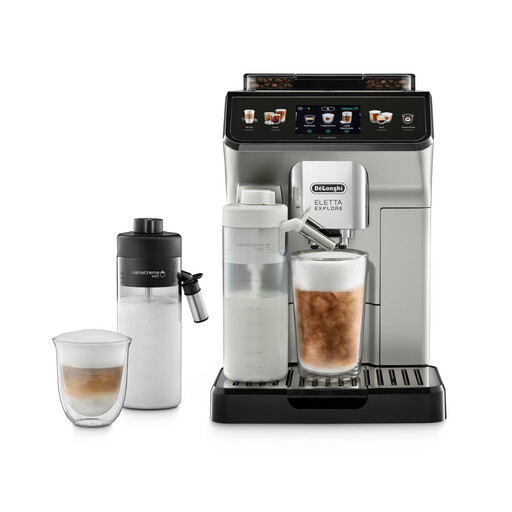 No image available
This bean-to-cup machine with an integrated milk system is worth considering if you want to prepare espresso and milk-based drinks in one appliance.
 No image available
The described combination of portafilter brewing and a milk frother is an option if you’re happy to prepare espresso and milk foam in separate steps.
The product description recommends cleaning the portafilter and milk frother after use.
No. When choosing a machine, what matters is a suitable way to brew espresso and prepare the milk. You can add the vanilla ingredient to your glass; check the instructions for your model to see whether ingredients can be added to any part of the machine.
Follow the instructions for the parts of your model that come into contact with milk. Philips says the removable LatteGo components on the EP3347/90 still need extra cleaning. The Verbraucherzentrale recommends descaling coffee machines regularly; you can ask your local water supplier how hard your water is.
The Verbraucherzentrale recommends keeping milk on the middle shelf of the fridge and using opened cartons within a few days. Don’t use milk that shows obvious signs of spoilage.
No. The statutory warranty applies when a product is faulty and is your right against the seller; a guarantee is an additional, voluntary service subject to its own terms. The Verbraucherzentrale explains that the first remedy is repair or replacement.
Electrical appliances covered by relevant harmonised EU legislation must carry the CE marking. Your Europe, the European Union’s information portal, explains that this indicates a manufacturer’s declaration of conformity; it is not an independent quality mark or a central EU product approval. Check the specific appliance for its marking, power supply details and safety instructions.