Who are the different machines suited to?

Make a latte with minimal effort

If you often make milky coffees and want to spend as little time measuring and frothing as possible in the morning, consider a bean-to-cup machine with a milk system. Cleaning the parts that come into contact with milk will still be part of your routine.

Make your own milk froth

If you prefer to prepare your espresso and milk by hand, a portafilter machine lets you froth the milk yourself, but you’ll need to allow for a few extra steps.

Prepare ingredients and clean the milk system

If you prepare ingredients in advance, check how easy it is to reach and clean the parts that come into contact with milk. Keep perishable ingredients chilled until you’re ready to use them.

What should you look for when buying?

Bean-to-cup machine with a milk system

A good fit if: you often make lattes and want to do as little as possible yourself.

The trade-off: Even a milk system that comes apart easily needs cleaning. Philips describes the LatteGo system on the EP3347/90 as having two parts and no tubes.

Manual espresso machine

A good fit if: you want to make your own espresso and milk froth, and control the proportions in your cup.

The trade-off: Preparing the coffee, operating the portafilter and frothing the milk all involve extra steps.

Capsule machine with a milk system

A good fit if: a pre-portioned espresso base and a milk drink at the touch of a button matter more to you than choosing freely between beans and ground coffee.

The trade-off: Check capsule compatibility, cleaning requirements and the cost of the portions you’ll actually use.

What to consider What to check before buying Who should pay particular attention?
Milk hygiene and cleaning Which parts come into contact with milk, and how are they cleaned? If I prepare milk in advance, I want to be able to clean the parts that carry milk thoroughly after use. Around 31% of consumers put cleaning and milk hygiene first.
Quick preparation Does it make the milk drink I want, and what steps are needed before and after selecting it? When I’m short of time in the morning, I want to do as little measuring and frothing as possible. Around 31% of consumers prioritise quick preparation.
Control over espresso and milk What manual steps, filters and any additional accessories are needed? If I want to make my own espresso and milk froth, I’m happy to put in a few extra steps for more control over my cup. Around 23% of consumers prioritise this control.
Portioning and ongoing costs Which capsule system is required, and which coffee formats suit how much I drink? If I want to portion coffee easily, I also want to keep an eye on the cost of the capsules I use regularly. Around 15% of consumers prioritise portioning and ongoing coffee costs.

Which assumptions should you avoid?

  • Milk at the touch of a button doesn’t mean there’s no cleaning to do

    Siemens says the milk system on the EQ.6 plus must be cleaned after every use. So an automatic drinks programme doesn’t replace the need to care for the parts that carry milk.

    Before buying, check the cleaning instructions and the parts of the specific model you’re considering.

    Allow time to clean the machine after making your drink.

  • Don’t leave pre-prepared milk unrefrigerated beside the machine

    The German Federal Institute for Risk Assessment recommends keeping easily perishable foods in the fridge at 2 °C to no more than 7 °C.

    Keep milk and other perishable ingredients chilled until you’re ready to use them, and follow the storage instructions on the packaging.

  • Don’t compare machine prices alone

    Capsules are an ongoing consumable cost for capsule machines. A 2025 market review by the consumer advice centre in Baden-Württemberg found coffee grounds to be considerably cheaper than capsules; this isn’t a price comparison for any one machine.

    Compare coffee formats on the same basis of consumption, and check which capsules the machine requires.

  • Don’t assume similarly named Dedica models and bundles are the same

    The De’Longhi EC685.M EX:4 is a standalone machine model. A Joybuy offer for the ECKG6821.M, on the other hand, describes a bundle with a grinder and accessories.

    Check the full model name and what’s included in the box, rather than comparing products by the name “Dedica” alone.

Which brands are worth considering?

Philips

The EP3347/90 is a bean-to-cup machine with LatteGo for milk drinks at the touch of a button.

  • Philips describes the LatteGo system on this model as having two parts and no tubes.
  • Parts that come into contact with milk still need cleaning; the design alone doesn’t tell you how much day-to-day effort is involved.

De’Longhi

The Dedica Style EC685.M EX:4 is a manual espresso machine for anyone who wants to froth their own milk.

  • De’Longhi lists a width of 15 cm, an adjustable cappuccino system and ESE pod compatibility for this model.
  • A Dedica bundle with a grinder and accessories isn’t the same package as the standalone EC685.M EX:4.

Gaggia

The Classic E24 is a manual espresso machine with a steam wand.

  • Gaggia lists three included filters and manual steam control for the Classic E24.
  • These manufacturer specifications don’t prove that it makes better espresso.

Nespresso

The Lattissima One Porcelain White combines ORIGINAL capsules with a milk system.

  • Nespresso lists a removable fresh milk container with a capacity of 0,17 l.
  • Check that the capsule system and cleaning requirements suit the way you’ll use it. A 2025 market review by the consumer advice centre in Baden-Württemberg found coffee grounds to be considerably cheaper than capsules.

Siemens

The EQ.6 plus s700 TE657503DE is a bean-to-cup machine with a selection of milk drinks.

  • Siemens lists Latte Macchiato among the drinks you can select on this model.
  • Siemens says the milk system on the EQ.6 plus should be cleaned after every use. This doesn’t apply to all Siemens machines as a general rule.

Joybuy products for different ways of making coffee

These products include bean-to-cup machines with milk systems, manual espresso machines and capsule machines with milk systems.
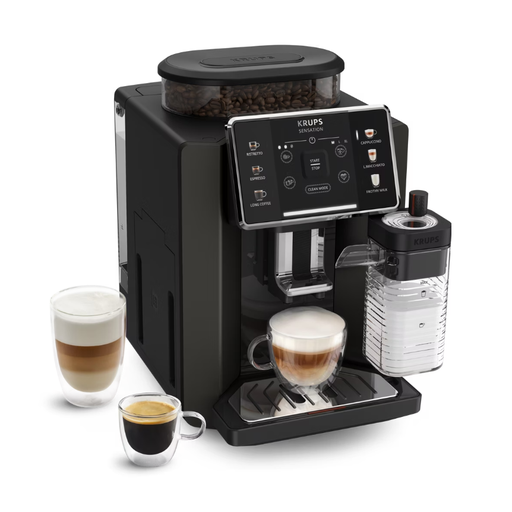
Krups Sensation Milk EA9129, bean-to-cup coffee machine, black

Krups Sensation Milk EA9129, bean-to-cup coffee machine, black

A bean-to-cup machine for anyone who wants to make coffee and milk drinks with minimal effort.

Joybuy
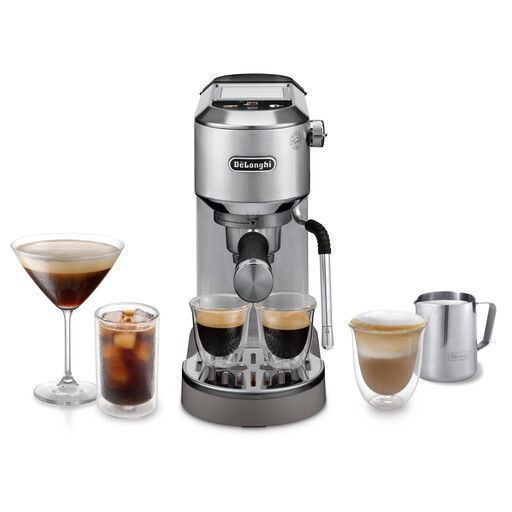
De’Longhi Dedica Duo EC890.M, portafilter espresso machine, stainless steel

De’Longhi Dedica Duo EC890.M, portafilter espresso machine, stainless steel

A manual option for anyone who wants to make their own espresso and milk froth.

The milk is frothed manually; according to the product details, there’s no built-in grinder.

Joybuy
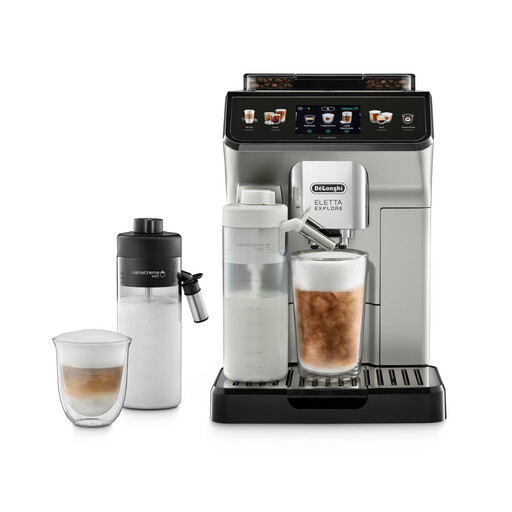
De’Longhi Eletta Explore ECAM450.55.S, bean-to-cup coffee machine, silver

De’Longhi Eletta Explore ECAM450.55.S, bean-to-cup coffee machine, silver

A bean-to-cup machine for anyone who wants to make milk drinks from a menu of options.

Joybuy

Ninja Luxe Premier ES601EU, 3-in-1 coffee machine with grinder and milk frother

Ninja Luxe Premier ES601EU, 3-in-1 coffee machine with grinder and milk frother

A combined option for anyone who wants espresso and a choice of milk froth options.

The portafilter, milk frother and grinder should be cleaned after every use.

Joybuy
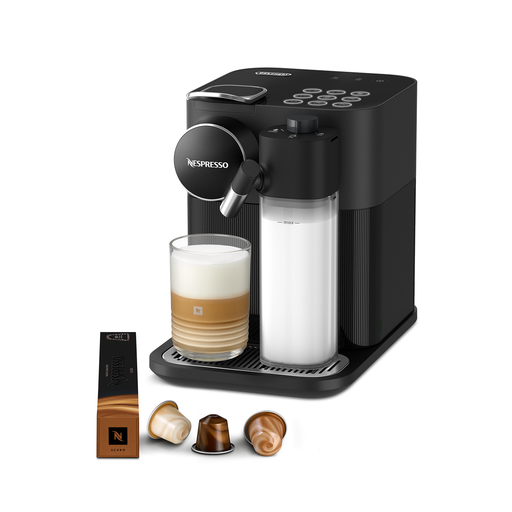
Nespresso De’Longhi Gran Lattissima EN640.B, capsule machine with automatic milk system

Nespresso De’Longhi Gran Lattissima EN640.B, capsule machine

A capsule machine for anyone who wants pre-portioned coffee and milk drinks at the touch of a button.

The machine requires ORIGINAL capsules; run the milk rinse cycle after every milk drink.

Joybuy

Frequently asked questions

Can I prepare the milk for a vanilla latte the night before?

Yes, you can prepare it in the fridge; this doesn’t mean leaving milk unrefrigerated. The German Federal Institute for Risk Assessment recommends keeping easily perishable foods in the fridge at 2 °C to no more than 7 °C. Also follow the storage instructions on the packaging.

Where should I put the vanilla ingredient?

To keep the ingredients separate, you can put the vanilla ingredient in your cup, then add the espresso and milk. Only put syrup or other ingredients in the bean hopper, water tank or milk system if the instructions for your specific machine say it’s safe to do so.

How much maintenance does an automatic milk system need?

Automatic doesn’t mean maintenance-free. Siemens says the milk system on the EQ.6 plus must be cleaned after every use; Philips describes the LatteGo system on the EP3347/90 as having two parts and no tubes. Always follow the instructions for your specific model.

Which ongoing costs should I compare?

Compare the type of coffee you actually use, along with compatible capsules and any model-specific filters or cleaning products. A 2025 market review by the consumer advice centre in Baden-Württemberg found coffee grounds to be considerably cheaper than capsules; it doesn’t establish a fixed current price per cup.

Do I have statutory rights if I buy an espresso machine in Germany?

Yes. If there’s a fault, your statutory rights are against the seller and are separate from any voluntary manufacturer’s guarantee. The consumer advice centre says the statutory period for new goods is generally two years; the remedy available in any particular case depends on the fault and the applicable legal requirements.