What should you look for when choosing one?
First, check whether blending is allowed at your workplace. Then consider which ingredients the appliance can handle, how to care for the parts you use, and whether the cup size suits your serving and the storage space available.
Parts that come into contact with food must meet EU requirements, as explained by the European Commission. Your Europe notes that CE marking is only required when the relevant EU rules say it is. Check the specific model and its instructions for use.
| Priority |
What to check before buying |
Who is this important to? |
| Not disturbing others |
Check where blending is allowed, and compare noise data only when it uses the same measurement and comparable test conditions. |
If I blend in a shared office, I don’t want to unnecessarily disturb conversations or people who are concentrating. Around 36% of consumers are mainly concerned about not disturbing others while blending. |
| Cleaning used parts quickly |
Check each removable part individually to see whether the instructions say it is dishwasher-safe, and find out how to clean the blade assembly. |
If I make a shake in the office, I want to clean the cup, blade assembly and lid afterwards without unnecessary effort. Around 29% of consumers say easy cleaning is their main priority. |
| Single servings and limited space |
Compare the cup capacity, appliance dimensions and number of cups included for the exact model. |
For a single serving, I want to blend directly in a drinking cup without taking up more storage space than necessary. Around 21% of consumers mainly look for single-serving convenience and a small footprint. |
| Ice or frozen ingredients |
Check which ingredients the specific model is approved for and read its instructions; wattage or speed figures alone aren’t enough. |
If I use ice or frozen ingredients, I want to know that the specific model is suitable. Around 14% of consumers prioritise suitability for hard ingredients. |
Joybuy blenders for shakes
Here you’ll find portable blenders for single shakes, as well as a larger appliance for preparing drinks at home. Before blending in a shared office, check that it’s allowed there. For the specific model, also check which parts are intended to come into contact with food and which EU requirements apply.
 No image available
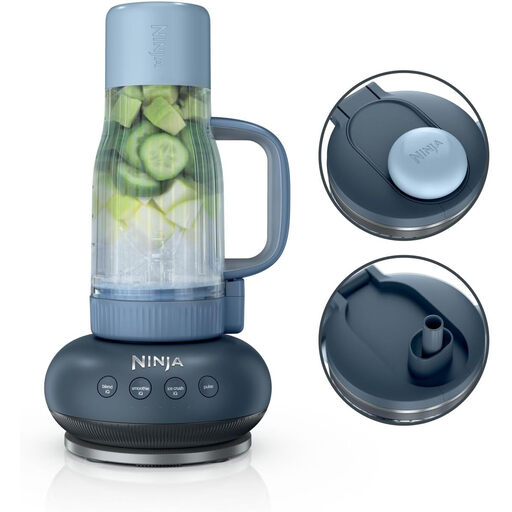
Ninja BlendBoss Portable Blender, 710 ml, Cyberspace
For a shake to take with you, if a 710 ml cup suits your serving size.
710 ml; described as suitable for crushing ice in the product details; removable parts listed as dishwasher-safe; three pre-set automatic programmes.
View at Joybuy
 No image available
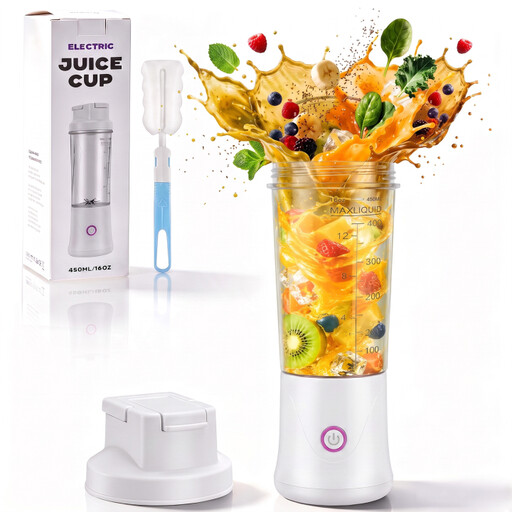
Portable blender, 652 ml, 6 blades, white
For shakes at the office or on the go, if 652 ml suits your serving size.
652 ml; 6 blades; removable parts described as dishwasher-safe.
View at Joybuy
 No image available
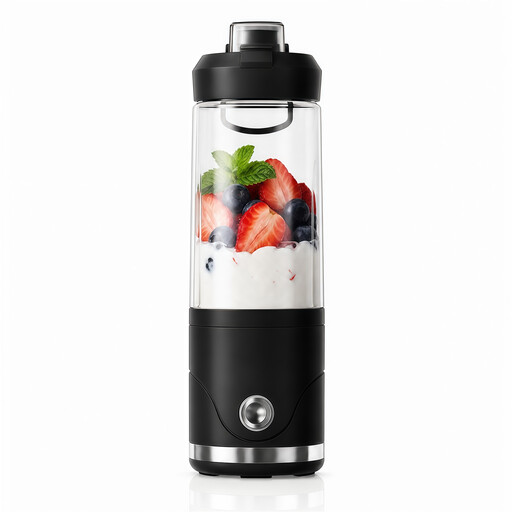
Rechargeable USB-C blender, 650 ml, black
For making a shake at an approved blending area where there’s no power socket nearby.
650 ml; 6 blades; 75 W; 16,000 rpm; USB-C charging.
View at Joybuy
 No image available
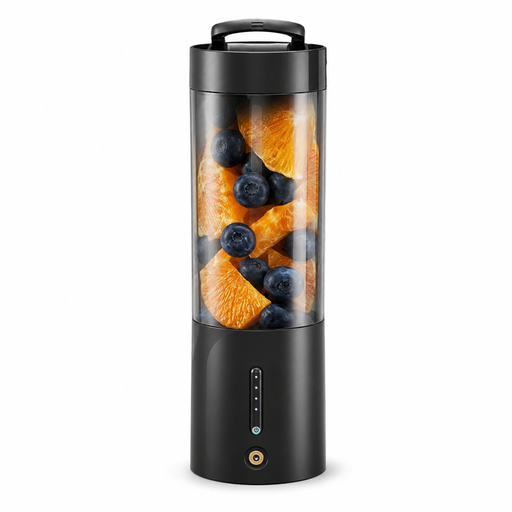
Portable smoothie maker, 450 ml
For a smaller shake on the go, if a 450 ml container is big enough.
450 ml; 6 stainless steel blades; 20,000 rpm; magnetic charging. The description mentions a cleaning cycle using water and washing-up liquid; follow the instructions.
View at Joybuy
 No image available
ochama multi-function blender, 600 W, 1.5 l
For preparing drinks at home, if a larger jug suits the quantity you want to make.
600 W; 1.5 l; three speed settings.
View at Joybuy
Frequently asked questions
Is a small blender enough for a vanilla milkshake?
A blend-and-drink cup can be handy for a single serving made with soft ingredients. If you’re using ice or frozen fruit, check that the specific model is expressly approved for those ingredients and read its instructions.
Can the removable cup go in the dishwasher?
It depends on the model and the individual part. Bosch lists dishwasher-safe parts for the MMB2111M, Severin lists removable drinking cups for the SM 3735, and Philips lists dishwasher-safe parts for the HR2672/00. Also check the instructions for the blade assembly and lid.
How should I store a milk-based shake until my break?
The German Federal Institute for Risk Assessment recommends keeping perishable food sufficiently cold until it is eaten or prepared, and ensuring it stays chilled during transport too. A sealable blending cup is no substitute for refrigeration.
What legal requirements apply to a blender in Germany?
Electrical appliances must meet the relevant EU requirements. CE marking is only required if the applicable harmonised EU rules say it is, as Your Europe explains. Parts that come into contact with food must also meet EU requirements, as described by the European Commission. Check the specific model and its instructions for use.
Are a manufacturer’s guarantee and the statutory warranty the same thing?
No. The statutory warranty is set out in law and covers faults; a guarantee is an additional voluntary benefit with its own terms and conditions. The Verbraucherzentrale explains the difference.


