What should you look for when buying?
The REWE recipe specifies conventional top and bottom heat at 180 °C for the tart case, and a tin with a diameter of 26 cm. For easily perishable foods, the German Federal Institute for Risk Assessment recommends storage at between 2 °C and no more than 7 °C, as well as keeping them chilled while travelling.
| What matters |
What to check when buying |
Who is this important to? |
| Oven setting for the recipe |
Check whether the specific model has the conventional top and bottom heat setting specified in the recipe; extra programmes are no substitute for checking the recipe. |
If I’m blind-baking the pastry case from a recipe, I want to use the specified setting without converting it. Around 26% of consumers put having the right oven setting for a recipe first. |
| Keeping it chilled until lunch |
Plan the filling and how you’ll keep it chilled during storage and transport; baking the pastry case doesn’t remove the need to chill the filling. |
If I’m taking a tart with an egg or dairy filling with me, I need to plan how to store and transport it chilled. Around 26% of consumers prioritise safe preparation and chilling. |
| Tin and available space |
Compare the tin, including its rim and the clearance needed, with the interior dimensions; for built-in ovens, also check the space required and the electrical connection. |
If my kitchen or my favourite tart tin limits my choice of appliance, the oven and tin need to be compatible. Around 21% of consumers put space and fit first. |
| Electricity consumption |
For appliances with the relevant energy information, compare the kWh per standard cycle using the same oven setting. The Verbraucherzentrale explains the figures for conventional top and bottom heat and fan-assisted cooking; your own recipe may use a different amount of energy. |
If I bake regularly, I want to compare consumption using the same setting rather than looking only at the energy-efficiency rating. Around 16% of consumers prioritise running costs. |
| Cleaning and controls |
Compare cleaning methods and controls only after checking the oven setting and fit; hydrolytic cleaning and pyrolysis work in different ways. |
If I also use the oven for other dishes, I want a cleaning method that suits the amount of effort I’m prepared to put in. Around 11% of consumers put cleaning and ease of use first. |
Joybuy ovens for fitted and compact kitchens
This selection of Joybuy products includes built-in and mini ovens for making a tart. For each model, check that it has the oven setting specified in the recipe and that your tin will fit with enough clearance.
 No image available
Bosch HBA571BB4 Series 2 built-in oven
Conventional top and bottom heat is listed, so you can compare it with a suitable recipe; check whether your tin fits by looking at the interior dimensions.
71 l capacity; pyrolysis; five shelf positions; temperature range 30–275 °C.
View at Joybuy
 No image available
Comfee built-in oven, 70 l
Described as a built-in oven with hot air; check that the setting suits your recipe, and confirm the space and fit for your tin.
70 l capacity; 3 kW; hot air, grill and pizza functions; AquaClean steam cleaning; LED display with timer.
View at Joybuy
 No image available
Bosch HBG578ES3 Series 6 built-in oven
Conventional top and bottom heat is listed among the oven settings; also check that your tart tin fits and confirm the dimensions required for installation.
71 l capacity; ten oven settings; pyrolysis; five shelf positions.
View at Joybuy
 No image available
Woltu BF12sz mini oven, 32 l
Described as a mini oven for baking and grilling; its capacity doesn’t confirm that a 26 cm tin will fit.
32 l; 1600 W; temperature range 100–250 °C; timer and crumb tray.
View at Joybuy
 No image available
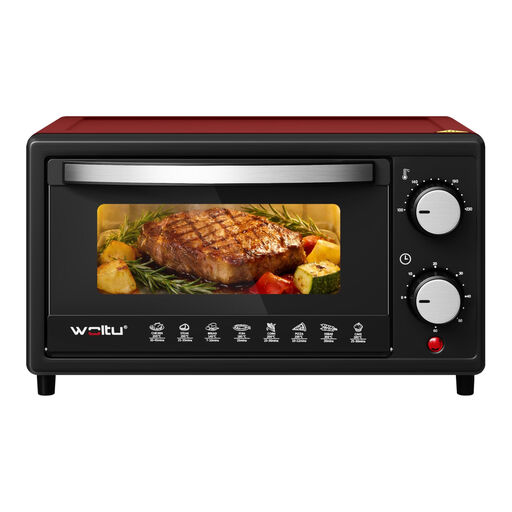
Woltu mini oven, 10 l
Conventional top and bottom heat is listed; check the interior dimensions especially carefully if you want to use a tart tin.
10 l; temperature range 100–230 °C; timer up to 60 minutes; baking tray and rack.
View at Joybuy
Frequently asked questions
Do I have to use a fan setting for a vanilla cream tart?
No, not for every recipe. The REWE recipe calls for a shortcrust pastry case in a 26 cm tin, blind-baked at 180 °C using conventional top and bottom heat; other recipes may differ.
Can I pack a cream tart in the morning without keeping it chilled?
If the filling contains easily perishable ingredients, you shouldn’t simply skip chilling it. The German Federal Institute for Risk Assessment recommends storing easily perishable foods at between 2 °C and no more than 7 °C, and keeping them chilled while travelling, too. Plan the filling, transport and a way to keep it chilled at your destination.
Will a 26 cm tart tin fit in a compact oven?
You can only tell by checking the specific oven interior. Compare the tin’s diameter, including its rim, and the clearance needed from the walls and heating elements with the usable interior dimensions; the capacity in litres alone isn’t enough.
How can I compare ovens’ electricity consumption?
For ovens with the relevant energy information, you can compare the kWh per standard cycle using the same oven setting. The Verbraucherzentrale explains the figures for conventional top and bottom heat and fan-assisted cooking; your own recipe may use a different amount of energy from this standard figure.
Can I connect a built-in oven myself?
It depends on the appliance and its connection. Bosch’s installation instructions state that appliances without a plug must be connected by an authorised professional. Check the instructions for the model you’ve actually bought rather than assuming this applies to every oven.


