
Lieferung heute & morgen

Qualitätsgarantie

Willkommens-Angebote freischalten: KOSTENLOSE Lieferung | Bis zu 80 % RABATT | Kostenlose 30-Tage-JoyPlus-Testphase
App herunterladen
The space under the sink often goes underutilised and can quickly become a cluttered corner for cleaning supplies and loose bathroom items. The right vanity unit solves this problem by transforming this area into valuable, organised storage space. However, selecting the right model depends on several factors: the dimensions of your bathroom, your storage needs, and your preferred material.
This article serves as a practical guide. We will explain the most important criteria to consider when making your choice and present a selection of models that stand out for their functionality and design. Our goal is to provide you with an informed basis for your decision, helping you find the ideal vanity unit for your needs.
Choosing the right vanity unit ensures a tidy aesthetic and efficient use of the available space. Consider the following points to find a model that fits perfectly.
The first step is to measure everything accurately. Note the available width, height, and depth under your sink. A common size is the 60 cm wide vanity unit, but there are numerous variations. A crucial detail is the vanity unit with a p-trap cut-out. Measure the distance from the wall to the centre of the drainpipe, as well as the diameter of the p-trap itself. The cut-out in the cabinet must be large enough to accommodate the pipe easily without forcing the cabinet to stand away from the wall. Carefully compare your measurements with the manufacturer's product specifications.
The bathroom is a high-humidity area, so water-resistant and low-maintenance materials are advantageous.
Ensure the edges are properly sealed to prevent moisture from penetrating the material.
Consider what you need to store. Your needs will determine whether a cabinet with doors or a cabinet with drawers is the better solution.
Here is a selection of functional and thoughtfully designed vanity units that meet different requirements for design and storage.
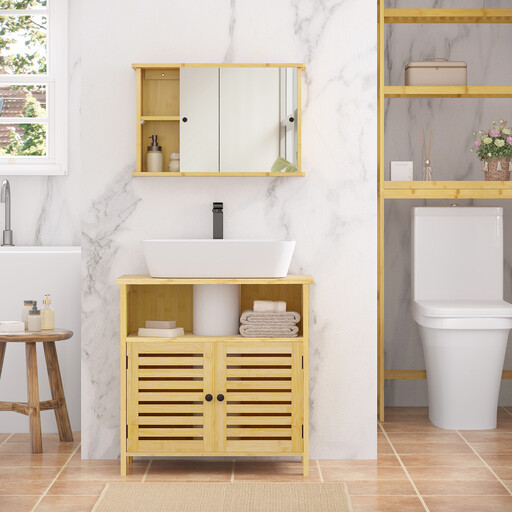
What makes it stand out: This model is made entirely of natural bamboo and brings a warm, homely atmosphere to the bathroom. The louvred doors ensure good air circulation, which helps prevent moisture and odours from building up inside—ideal for storing towels.
Benefits:
Who it's for: For users who value natural materials and want to ensure good ventilation for their bathroom textiles.
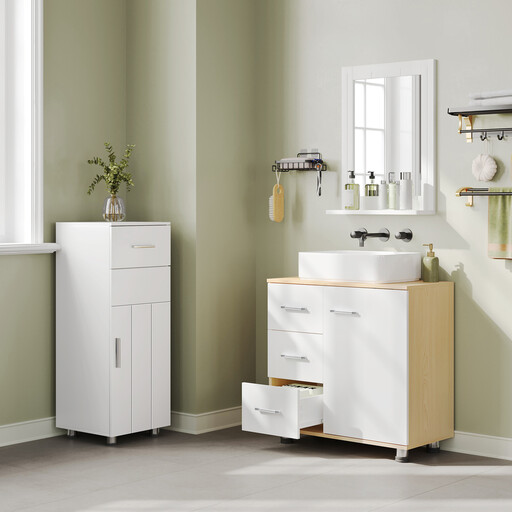
What makes it stand out: This vanity unit combines a modern, minimalist design with a thoughtful storage concept. Three drawers on one side and a cabinet compartment on the other allow for precise organisation of both large and small bathroom essentials.
Benefits:
Who it's for: Ideal for those who prefer a clear separation between small cosmetic items and larger objects and appreciate a modern design.
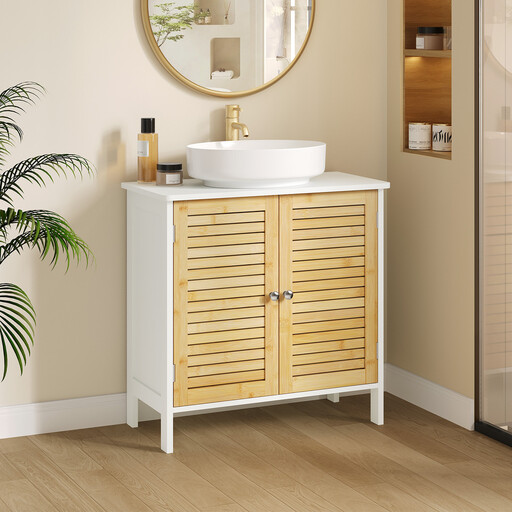
What makes it stand out: This model blends the clean look of white lacquered MDF boards with the natural warmth of bamboo. Behind the two doors is a spacious interior that can be flexibly adapted with a removable and adjustable shelf.
Benefits:
Who it's for: For users who are looking for maximum concealed storage behind classic doors and prefer a two-tone, modern design.
If our recommendations don't include the perfect model for your bathroom, or if you're looking for a different type of storage furniture, you can find a wider selection of practical solutions for a more organised space in our Linen Cabinet category.
Measure two values: the distance from the wall to the centre of the drainpipe (this determines the depth of the cut-out) and the total width of the p-trap, including the pipes (this determines the width of the cut-out). It is advisable to add a small buffer of one to two centimetres to your measurements to ensure a hassle-free installation.
Both options have their merits. Freestanding cabinets are easy to install and often offer maximum storage volume. They stand securely on the floor, which can be an advantage for storing heavy items. Wall-mounted cabinets create a floating, modern look and make cleaning the bathroom floor much easier. The choice depends on your wall's structure, the desired style, and your practical requirements.
Yes, most vanity units are designed as flat-pack kits for self-assembly. They typically come with illustrated instructions and numbered parts. Before you begin, check that you have all the necessary tools, such as a screwdriver and possibly a spirit level. Assembly is usually straightforward for individuals with basic DIY skills.