
Lieferung heute & morgen

Qualitätsgarantie

Willkommens-Angebote freischalten: KOSTENLOSE Lieferung | Bis zu 80 % RABATT | Kostenlose 30-Tage-JoyPlus-Testphase
App herunterladen
A cluttered bathroom can make for a difficult start to the day. When toiletries, cleaning supplies, and towels don't have a designated spot, chaos quickly takes over. A vanity unit is a natural solution for creating storage space in your bathroom. But the selection is vast, and not every model delivers on its promise. Many buyers only realise after assembly that their new bathroom cabinet doesn't fit, the material is swelling, or the construction is unstable.
This guide will help you avoid the common pitfalls. We'll show you the crucial features to look for before you buy, ensuring your new under-sink cabinet becomes a durable and functional addition to your home.
Before you make a decision, it's important to know the most common issues that can lead to purchase regret.
To avoid these problems, you should focus on three core aspects. These will help you objectively assess a model's quality and suitability.
The longevity of a bathroom cabinet depends directly on its material. Look for the following specifications:
Measure carefully before you buy. Note not only the available width, height, and depth under the sink but also these measurements:
Stability and user-friendliness are revealed in the details. A good freestanding under-sink cabinet is characterised by the following features:
Instead of making a one-size-fits-all recommendation, we have selected models that meet specific needs and adhere to the quality criteria mentioned.
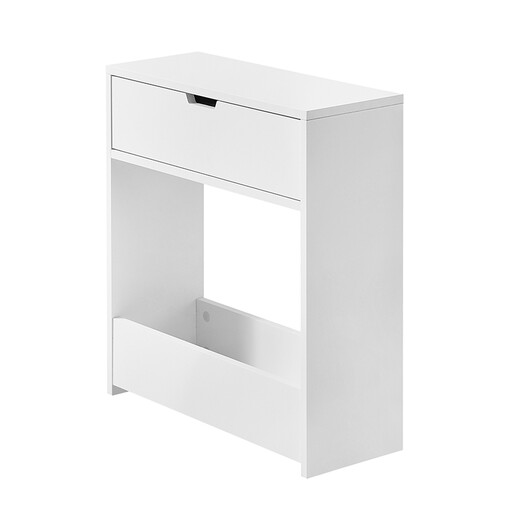
Why it's a great fit: At just 20 cm wide, this cabinet is specifically designed for niches, such as the space between a toilet and a wall. It utilises an area that would otherwise go unused, creating targeted storage for toilet paper and cleaning supplies.
The design is explicitly tailored for tight spaces, bypassing the problem of non-standard dimensions. Furthermore, the lacquered MDF (E1) surface is moisture-repellent.
Maximum space utilisation in a minimal footprint. Perfect for guest toilets or small bathrooms where every centimetre counts.
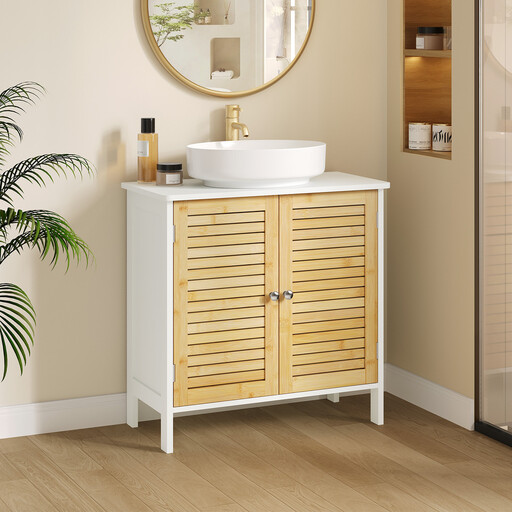
Why it's a great fit: This model offers a balanced combination of functionality, standard dimensions, and an attractive design. It's a solid all-round solution for most bathrooms in need of practical storage.
The combination of natural bamboo and E1-grade MDF boards is water-repellent and more durable than simple particleboard. The adjustable shelf solves the problem of inflexible storage.
Flexible storage thanks to the removable and adjustable shelf, plus sturdy metal hinges and a magnetic catch for secure use.
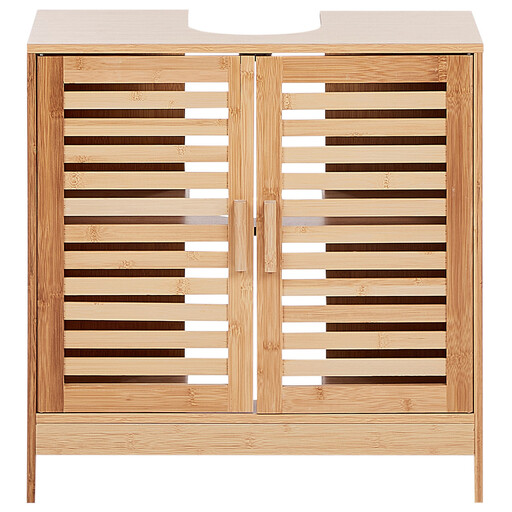
Why it's a great fit: For anyone who appreciates a warm and natural atmosphere in their bathroom. This cabinet is made entirely of bamboo and brings a Scandinavian flair to the bathroom with its louvered door design.
Bamboo is naturally more resistant to moisture than unsealed engineered wood. The louvered doors promote air circulation, which helps prevent moisture and odours from building up inside the cabinet.
The louvered door design ensures excellent ventilation for the cabinet's contents. The bamboo material is robust and creates a cosy atmosphere.
We've compiled a complete, up-to-date list of products that meet these selection criteria.
Measure three things:
Yes, many models, especially a freestanding under-sink cabinet, can also be used as a general bathroom cabinet or sideboard. The cut-out in the top panel can then be used to hold folded towels or be covered with a suitable box or tray.
The most important rule is to avoid standing water. Always wipe up water splashes on the surface immediately with a dry cloth. Ventilate the bathroom regularly after showering or bathing to reduce overall humidity. For cleaning, do not use harsh abrasive cleaners; use only a damp cloth and mild detergents.