
Lieferung heute & morgen

Qualitätsgarantie

Willkommens-Angebote freischalten: KOSTENLOSE Lieferung | Bis zu 80 % RABATT | Kostenlose 30-Tage-JoyPlus-Testphase
App herunterladen
The space under a bathroom sink is often wasted, and the sight of the P-trap is rarely aesthetic. A vanity unit seems like the obvious solution to create storage and conceal the pipework. However, the selection is vast, and not every model lives up to its promises. Many buyers only realise after assembly that their new cabinet is wobbly, the material swells with moisture, or the pipe cut-out doesn't fit.
This guide reveals the three most common pitfalls to avoid when buying and highlights the crucial features you should look for to find a functional and durable addition to your bathroom.
Before you make a purchase, it's vital to recognise typical weaknesses that often only become apparent with everyday use.
To avoid the problems mentioned above, focus on three essential technical parameters. These determine the fit, longevity, and functionality of your new bathroom furniture.
The choice of material is crucial for the unit's lifespan in a humid bathroom climate.
Measuring is essential here. Before buying, take the time to determine three values precisely:
The choice between a freestanding and a wall-mounted model depends on the condition of your walls and your personal preferences.
Here are some product recommendations tailored to different needs and use cases.
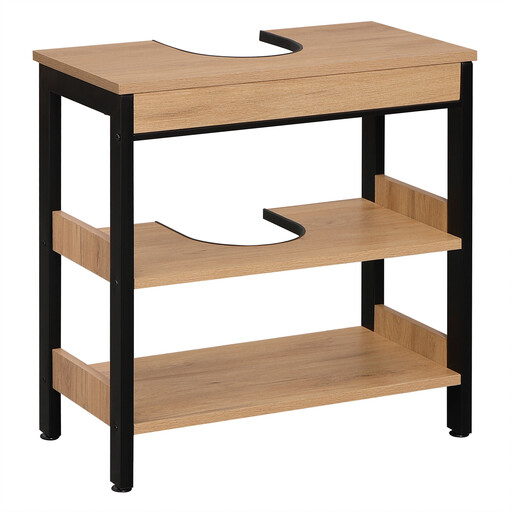
Why This Fits Their Persona: This person is looking for a straightforward and functional solution to hide the pipework and create storage. The standard dimensions of 60 x 30 cm fit most German bathrooms and solve the core problem without complex modifications.
The unit is made from MDF panels, which are more resistant to moisture than simple chipboard. The standardised dimensions for the cabinet and pipe cut-out minimise the risk of a bad purchase for common sink installations.
Clear functionality and a precise fit for standard bathrooms. The freestanding design does not require complex wall mounting.
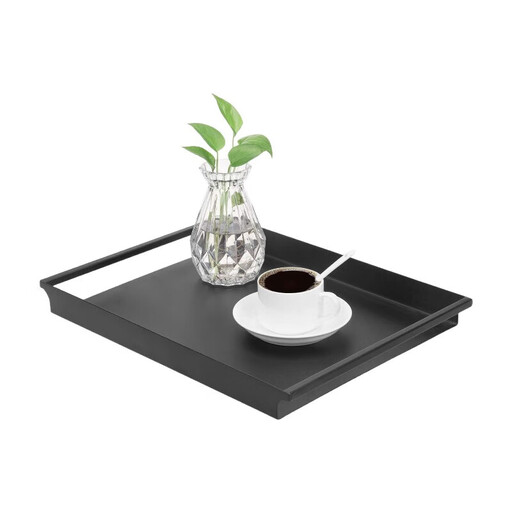
Why This Fits Their Persona: For those who value not only storage inside the cabinet but also order on the countertop. This tray serves as a stylish base to group perfume bottles, creams, and other items, creating an uncluttered look.
As a complementary organisational element, it bypasses the typical problems of bathroom cabinets. It solves the secondary problem of surface clutter rather than concealing storage. The metal is also impervious to humidity.
A flexible organisational element for the vanity top or shelves. The timeless design in matte black complements many interior styles.
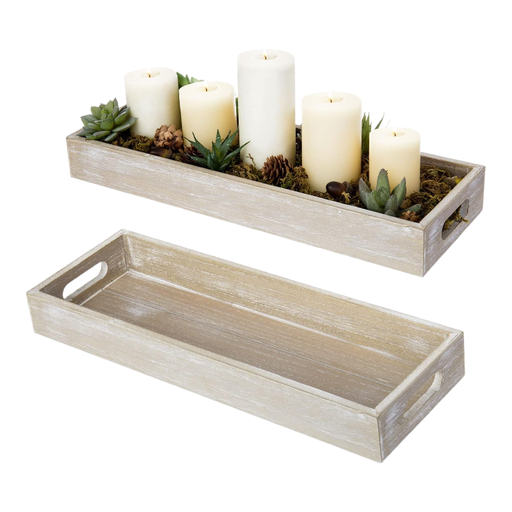
Why This Fits Their Persona: Ideal for bathrooms with a country or natural style. These wooden trays add a warm, organic touch and serve as a decorative surface for guest towels, soap dispensers, or small plants.
As a flexible decorative element, it is not permanently installed and can be easily moved away from wet zones. It avoids the trap of swelling wood in fixed furniture, as long as it is protected from direct and standing water.
The set of two narrow trays allows for versatile decoration and organisation. The torched wood finish provides a striking visual accent.
We have compiled a complete, real-time list of products that fully satisfy these strict selection criteria and UK safety regulations.
1. How do I correctly measure for a vanity unit's pipe cut-out? Measure two values: the distance from the wall to the centre of the drainpipe (this determines the depth of the cut-out) and the distance from the floor to the underside of the sink (to ensure the cabinet fits underneath). Also, measure the diameter of the P-trap bend to check if the cut-out is wide enough.
2. Can I use a freestanding vanity unit in a small bathroom? Yes, freestanding models are often a great choice for small bathrooms. They make efficient use of the space under the sink without requiring you to drill into the walls. Look for models with a shallow depth and a standard width of 50 or 60 cm to avoid overwhelming the space.
3. What is the most durable material for a bathroom cabinet? In terms of value for money, a vanity unit made from high-quality coated MDF panels is an excellent choice, as it is more moisture-resistant than simple chipboard. Solid wood that has been specially treated for humid environments is also very durable but is typically more expensive. For all materials, a good seal on all surfaces and edges is essential.