
Lieferung heute & morgen

Qualitätsgarantie

Willkommens-Angebote freischalten: KOSTENLOSE Lieferung | Bis zu 80 % RABATT | Kostenlose 30-Tage-JoyPlus-Testphase
App herunterladen
A cluttered bathroom can make for a difficult start to the day. Towels, cleaning supplies, and toiletries pile up, leaving the space under the sink unused. A vanity unit is an obvious solution, but the sheer number of options can lead to poor purchases. Certain models may look appealing, but prove impractical or start to swell from moisture after just a few months.
This guide will help you avoid the most common pitfalls. We'll focus on the crucial features that define a quality bathroom cabinet, so you can make an informed decision and find a long-lasting solution for your bathroom.
Before you decide on a model, you should be aware of the typical problems that often only become apparent after the purchase.
To avoid these problems, you should pay attention to three key aspects when making your selection. These will determine the durability and functionality of your new bathroom furniture.
The material is crucial for durability in humid environments.
The choice between a wall-mounted and a freestanding model affects both aesthetics and practicality.
Precise measurement is essential. Note the width, depth, and height of the available space. Also, measure the position and dimensions of your siphon to ensure the cut-out will fit. A vanity unit 60 cm wide is a common standard size, but a small guest bathroom often requires narrower solutions. Also, consider what type of storage you need: A vanity unit with drawers offers quick access to small items, while compartments behind doors are ideal for larger objects like stacks of towels or cleaning bottles.
Here are some recommendations tailored to different needs and room situations. Each model has been selected based on the practical criteria mentioned above.

Why This Fits Their Persona: Ideal for renters or for furnishing rental properties. The freestanding design requires no drilling, and the standardised siphon cut-out fits most common sinks. A straightforward and cost-effective solution.
The use of E1-grade MDF board with a paint finish offers better moisture resistance than uncoated particleboard. The standard siphon cut-out minimises the risk of a bad fit.
Simple, tool-free placement under the sink. The doors open 180° for easy access to the interior.
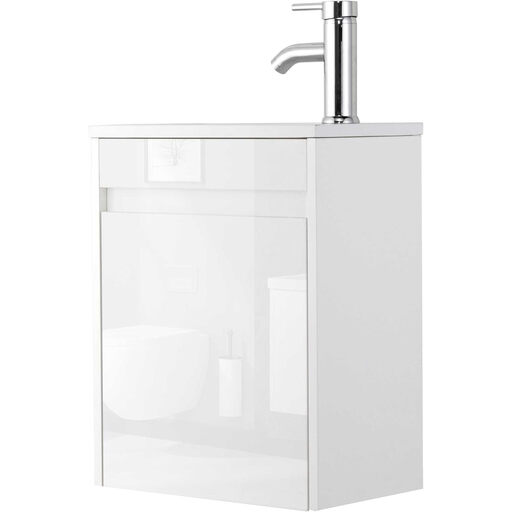
Why This Fits Their Persona: Perfect for anyone needing to maximise every inch in a small guest bathroom or a narrow main bathroom. The wall-mounted design creates floor clearance and makes the room feel visually larger. As a complete set with a basin, it offers a cohesive solution.
Since the basin and cabinet are a single unit, there are no fitment issues with the siphon. The basin's smooth resin material is easy to clean and designed for wet environments, preventing swelling.
Space-saving design thanks to wall mounting. The basin's smooth surface simplifies cleaning and prevents dirt build-up.
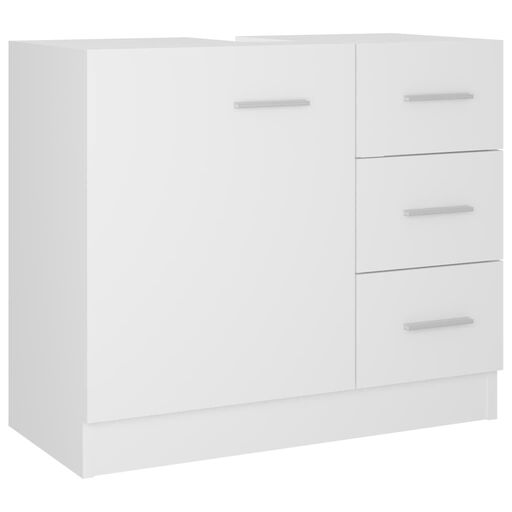
Why This Fits Their Persona: For families who need to store a wide variety of toiletries and supplies. The combination of one compartment and three drawers allows for flexible and organised storage for both large and small items.
The model includes a wall bracket for anti-tip security, which enhances stability and safety. The engineered wood, described as robust, is designed for daily use.
Versatile storage with 1 compartment and 3 drawers. The top surface is specifically designed for installing a washbasin.
We have compiled a complete, up-to-date list of products that fully meet these strict selection criteria and safety standards.
Measure three key dimensions:
No, the wall structure is crucial. A wall-mounted bathroom cabinet under the sink exerts significant pulling force due to its own weight and its contents. It should only be mounted on solid, load-bearing walls such as concrete, solid brick, or sand-lime brick. For lightweight walls (e.g., plasterboard), special cavity wall anchors and possibly additional reinforcement of the wall structure are required. When in doubt, a professional should be consulted.
The E1 designation is a European standard that regulates the emission of formaldehyde from engineered wood products like MDF or particleboard. E1-classified boards release only a very low, harmless amount of formaldehyde into the air. This classification is a mark of quality that ensures a healthier indoor climate, especially in living areas and bathrooms.