
Lieferung heute & morgen

Qualitätsgarantie

Willkommens-Angebote freischalten: KOSTENLOSE Lieferung | Bis zu 80 % RABATT | Kostenlose 30-Tage-JoyPlus-Testphase
App herunterladen
A cluttered bathroom with towels, cleaning supplies, and toiletries left in the open disrupts your morning routine. Furthermore, unsightly pipework under the sink often detracts from the overall aesthetic. A vanity unit is a simple yet effective solution to these problems. It conceals the siphon and creates valuable storage space in the bathroom.
This article serves as a practical guide. It outlines objective criteria for your selection and presents a range of models that stand out for their functionality and design. Our goal is to make it easier for you to choose the right bathroom cabinet.
Before making a decision, there are a few fundamental aspects to consider to ensure the cabinet fits perfectly in your bathroom and meets your needs.
Precise measurement is the first and most crucial step. Measure the available width, height, and depth under your sink. A common standard size is the 60 cm wide bathroom cabinet, but be sure to check your specific measurements carefully. Pay special attention to the bathroom cabinet with a siphon cut-out. Measure the distance from the wall to the centre of the drain pipe, as well as the pipe's diameter, to ensure the cabinet's recess will fit.
The bathroom is a high-humidity environment. The cabinet's material should therefore be moisture-resistant to prevent swelling or mould growth.
The installation method affects both the aesthetics and functionality.
Here is a curated selection of three models that cater to different needs and style preferences.
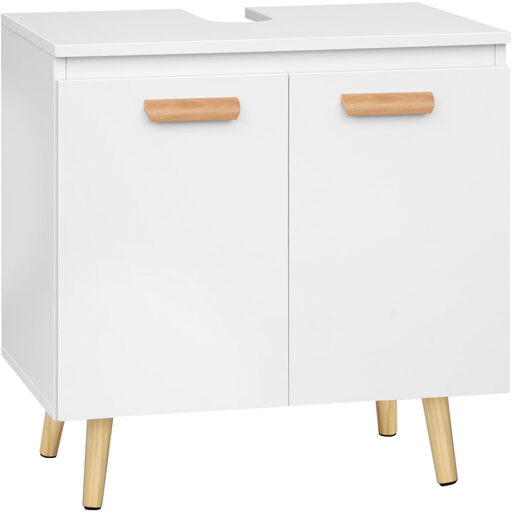
Why It Stands Out: This model from EUGAD embodies minimalist design. With its clean lines and neutral white finish, it blends seamlessly into almost any modern bathroom without being obtrusive.
Advantages:
Who It's For: Ideal for those looking for a simple, functional, and cost-effective solution who prefer a clean, uncluttered design.
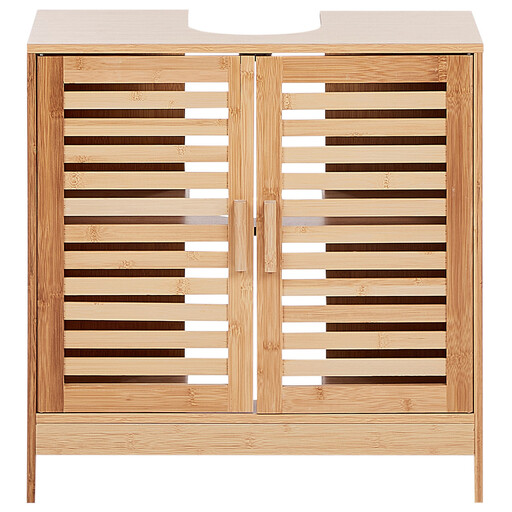
Why It Stands Out: The MISSOULA cabinet from Beliani stands out for its material and aesthetic. The use of bamboo and the slatted door design lend the bathroom a warm, Scandinavian-inspired atmosphere.
Advantages:
Who It's For: Perfect for users who value natural materials and want to add a touch of wellness and warmth to their bathroom.
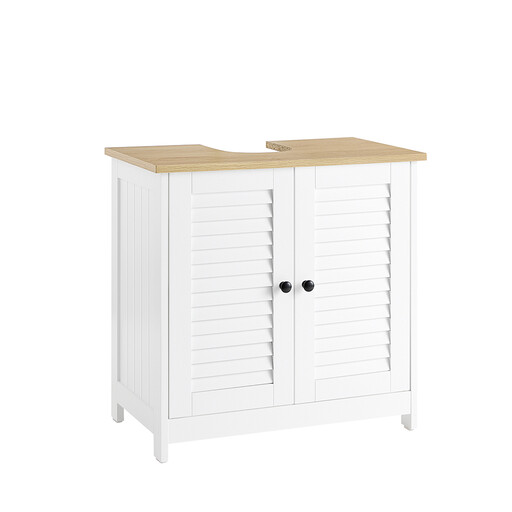
Why It Stands Out: This model from SoBuy combines a classic design with thoughtful, practical details. The adjustable shelves and mould-resistant slatted doors, in particular, make it a flexible storage solution.
Advantages:
Who It's For: A great choice for anyone who needs a customisable storage solution and places a high value on features that combat the high humidity in a bathroom.
The models featured are designed for the bathroom. However, if you also want to optimise storage space in other areas of your home, such as the kitchen, you may find suitable solutions in our kitchen base cabinets category.
Discover our selection of kitchen base cabinets here.
The terms under-sink cabinet and vanity unit are often used interchangeably in common parlance. Technically, an under-sink cabinet refers to a separate piece of furniture placed under an existing sink. A vanity can refer to a complete unit consisting of both a sink and a matching base cabinet.
Measure two things: 1. The distance from the wall to the centre of the drain pipe. 2. The diameter of the pipe itself. Compare these measurements with the specifications in the product description. A generously sized bathroom cabinet with a siphon cut-out offers more flexibility during installation.
Materials that have been specially treated for damp environments are a great choice. These include melamine-coated MDF or particleboard, as the coating prevents water penetration. Solid wood, such as bamboo or teak, has a natural resistance to moisture and is also very well-suited for bathroom furniture.