
Lieferung heute & morgen

Qualitätsgarantie

Willkommens-Angebote freischalten: KOSTENLOSE Lieferung | Bis zu 80 % RABATT | Kostenlose 30-Tage-JoyPlus-Testphase
App herunterladen
A cluttered bathroom, with towels, cleaning supplies, and cosmetics lying around, can complicate your morning routine. A vanity unit not only creates valuable bathroom storage but also conceals unsightly water pipes and gives the room a tidy, organized aesthetic.
However, the selection is vast, and choosing the right model can be overwhelming. This guide serves as a practical reference. We will introduce various models and explain the key criteria to consider, helping you make an informed decision for your bathroom.
To find the perfect under-sink cabinet for your bathroom, three aspects are particularly important: the dimensions, the material, and the type of storage.
The first step is precise measurement. Measure the available width, height, and depth under your sink. A common standard size is the 60 cm wide bathroom cabinet, which fits into many bathrooms. The bathroom cabinet with a siphon cut-out is also a critical detail. Measure the position and dimensions of the siphon to ensure the cabinet's recess is large enough. Plan for a little extra clearance around it to make installation easier.
The material affects not only the look but also the durability of the cabinet in the humid bathroom environment.
Consider what you need to store.
Here is a selection of models that meet different design and functionality requirements.
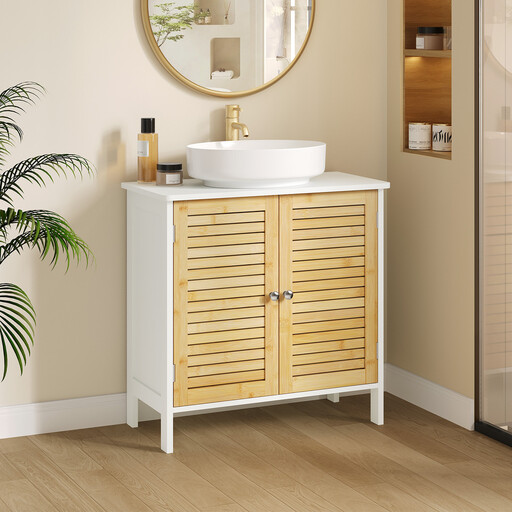
Why it stands out: This model combines the clean look of white lacquered MDF boards with the natural warmth of a bamboo frame. The material mix creates a modern yet inviting accent.
Advantages:
Who is it for? For users who appreciate a modern design with natural elements and prefer flexible, concealed storage behind closed doors.
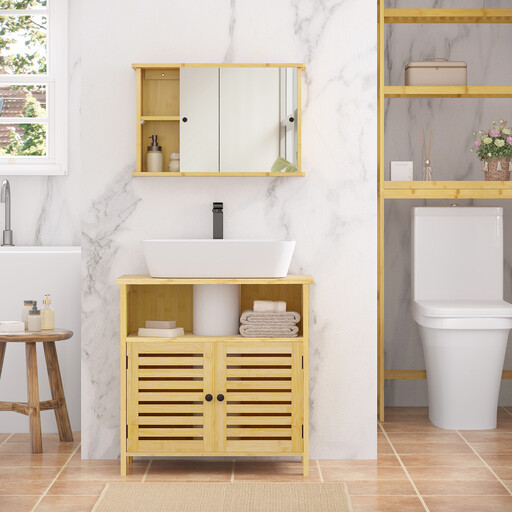
Why it stands out: This bamboo bathroom cabinet is distinguished by its louvered doors. These provide good air circulation inside the cabinet and help prevent moisture build-up.
Advantages:
Who is it for? Ideal for lovers of natural materials and for bathrooms where good ventilation of the cabinet's contents is important, for example, for storing towels.
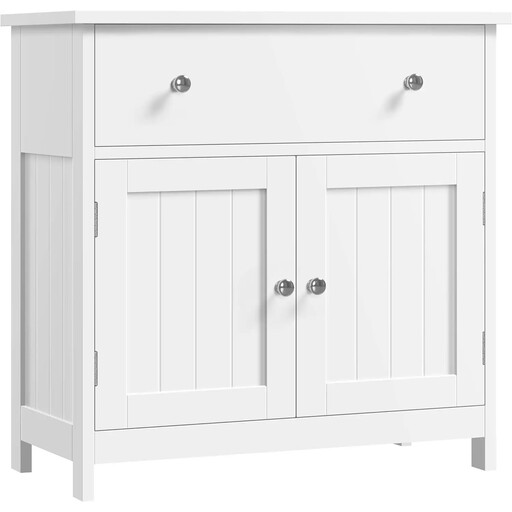
Why it stands out: With its farmhouse style design and a combination of a drawer and doors, this vanity cabinet offers a classic aesthetic and a thoughtful layout.
Advantages:
Who is it for? For those who prefer a timeless farmhouse look and want a clear separation between drawer and door storage for better organization.
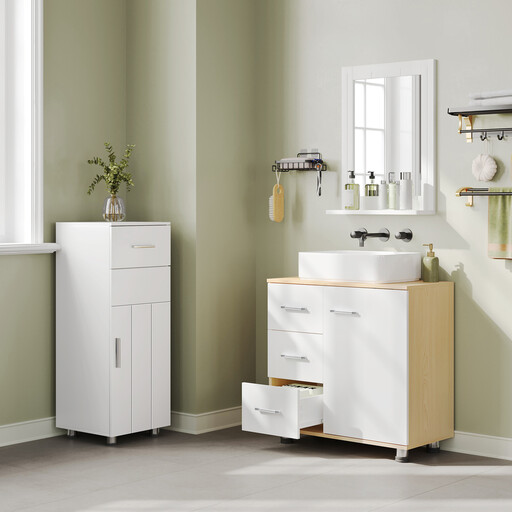
Why it stands out: This model features an asymmetrical design with three drawers on one side and a door on the other. The combination of white and a light oak finish looks modern and minimalist.
Advantages:
Who is it for? For individuals who appreciate clear organization through multiple drawers and are looking for a sleek, modern design for their bathroom.
A vanity unit is a highly personal choice that depends on your bathroom's layout and your individual style. If the models presented here don't quite match your vision, there are many other variations to explore.
Browse our entire collection to find more sizes, materials, and designs that will fit perfectly into your home. Explore Our Entire Collection of Bathroom Vanities
First, measure the maximum width available under the sink. Then, measure the height from the floor to the bottom edge of the sink. Finally, measure the depth from the wall to the front edge of the siphon or other pipes. Also, note the exact position and width of the siphon pipe to compare these measurements with the cabinet's siphon cut-out.
Yes, both materials are designed for use in the bathroom. MDF boards are typically sealed with a water-resistant melamine or lacquer coating that protects them from moisture. Bamboo is a naturally moisture-resistant grass that hardly warps when exposed to wet conditions. Nevertheless, it is recommended to always wipe away standing water from the surfaces to maximize the furniture's lifespan.