
Lieferung heute & morgen

Qualitätsgarantie

Willkommens-Angebote freischalten: KOSTENLOSE Lieferung | Bis zu 80 % RABATT | Kostenlose 30-Tage-JoyPlus-Testphase
App herunterladen
A new vanity unit can transform your bathroom by concealing unsightly pipes and creating valuable storage space. However, the selection is vast, and not every model lives up to its promise. Many buyers are frustrated by poor quality that only becomes apparent after assembly. As your Joybuy Product Recommendation Officer, I'll help you identify the crucial features and sidestep common purchasing pitfalls.
Before you decide on a bathroom cabinet, you should be aware of the typical weaknesses that often only surface during daily use and lead to disappointment.
To avoid these problems, focus on the following three core aspects when making your selection. These determine the longevity and functionality of your new bathroom cabinet.
The material is critical in the humid climate of a bathroom. Look for the following terms:
Carefully measure the available space before you buy. The most common width is the 60 cm vanity unit, but there are also narrower or wider models. Three measurements are crucial:
Consider what you need to store. A good under-sink cabinet combines different elements to make optimal use of storage space in the bathroom.
Based on these criteria, we have compiled a few models for different needs and bathroom types.
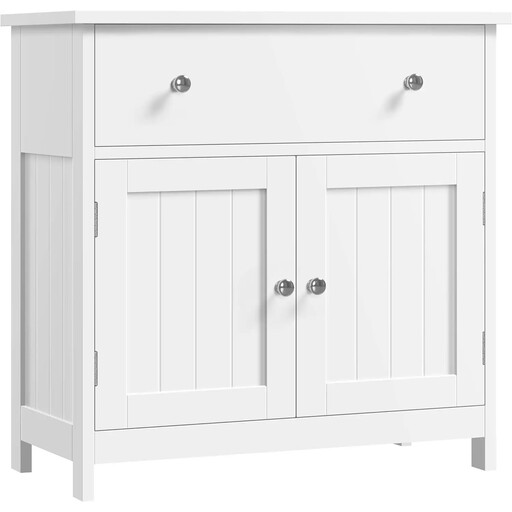
Why This Fits Their Persona: Perfect for anyone seeking a functional and affordable solution. This classic white bathroom cabinet offers a proven layout with one drawer and two doors, ideal for everyday needs in standard bathrooms.
The construction from MDF panels with a water-resistant coating counteracts swelling. An included anti-tip kit addresses the problem of instability.
Combination of a drawer and a cabinet compartment for flexible organisation. The standard dimensions of 60 x 30 x 60 cm fit under many common sinks.

Why This Fits Their Persona: This bathroom chest of drawers is designed for bathrooms where every centimetre counts. As a narrow bathroom cabinet, it fits into corners and niches that would otherwise go unused, creating targeted organisation for small items.
With its specific, narrow dimensions (32x30x81 cm), it solves the problem of ill-fitting, bulky furniture. The anti-tip kit provides the necessary safety for its slim, tall design.
Extremely space-saving design. Three separate drawers allow for clear organisation of cosmetics and bathroom essentials.
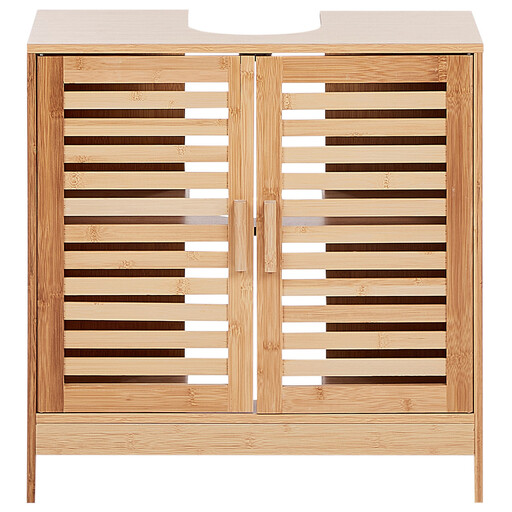
Why This Fits Their Persona: For users who value natural aesthetics and sustainable materials. Bamboo brings a warm, homely atmosphere to the bathroom and stands out from classic white MDF furniture.
Bamboo is naturally more moisture-resistant than unsealed engineered wood, making it a durable choice for the bathroom. The louvered doors also promote air circulation, preventing mould growth inside.
Made from the renewable resource bamboo. The slatted design ensures good ventilation for the cabinet's contents.
We've compiled a full, up-to-date list of products that fully meet these strict selection criteria and UK safety regulations.
Measure the maximum width, depth, and height available under your sink. The position of the p-trap is especially important: measure the distance from the wall to the center of the drain pipe and the diameter of the pipe itself. Be sure to compare these measurements with the p-trap cutout specifications in the product description to ensure the cabinet can sit flush against the wall.
MDF stands for "Medium-Density Fibreboard." It is an engineered wood product made by pressing finely shredded wood fibres, resulting in higher density and stability than conventional particleboard. MDF is well-suited for the bathroom, provided it has a high-quality, seamless, and water-resistant surface seal (e.g., lacquer or melamine resin).
Many vanity units are designed as freestanding furniture. Nevertheless, using an anti-tip kit is strongly recommended, especially in households with children. This device securely fastens the cabinet to the wall and prevents it from tipping over. Many high-quality models already include such a safety feature.