
Lieferung heute & morgen

Qualitätsgarantie

Willkommens-Angebote freischalten: KOSTENLOSE Lieferung | Bis zu 80 % RABATT | Kostenlose 30-Tage-JoyPlus-Testphase
App herunterladen
A vanity unit promises a simple solution to an everyday problem: bathroom clutter. Yet, the search for the right model can quickly become complicated. Many buyers only realise after delivery that the furniture doesn't fit, the material swells up after a short time, or the storage space is impractically divided.
This guide, compiled by the Joybuy Product Recommendation Officer, helps you navigate these common pitfalls. We focus on the objective criteria that truly matter, so you can make an informed decision and find a solution that keeps your space organised for the long term.
Before you decide on a model, you should be aware of the most common problems that often only become apparent after the purchase:
To avoid the problems mentioned above, you should focus on three core technical aspects. These determine the durability and functionality of your new bathroom cabinet.
The choice of material is crucial for longevity in a humid bathroom climate.
A well-made bathroom cabinet made of coated MDF offers a reliable compromise between durability and a reasonable price.
Precise measurement is essential. Before you start your search, note down the following dimensions:
Consider how you want to make the best use of the storage space in your bathroom.
Here are some recommendations tailored to specific needs and room situations that meet the quality criteria mentioned.
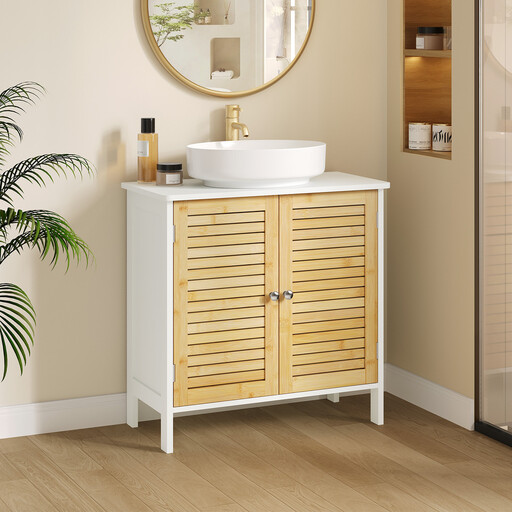
Why This Fits Their Persona: With a standard width of 60 cm, this model fits into most bathrooms. The combination of a white body and bamboo elements creates a modern and understated look. It's a functional and straightforward solution for more organisation.
The removable and adjustable shelf counteracts the "Organisation Mistake" and allows for flexible division for tall bottles and flat towels.
The material combination of E1-rated MDF boards and bamboo is water-repellent, according to the manufacturer. Magnetic catches keep the doors securely closed.
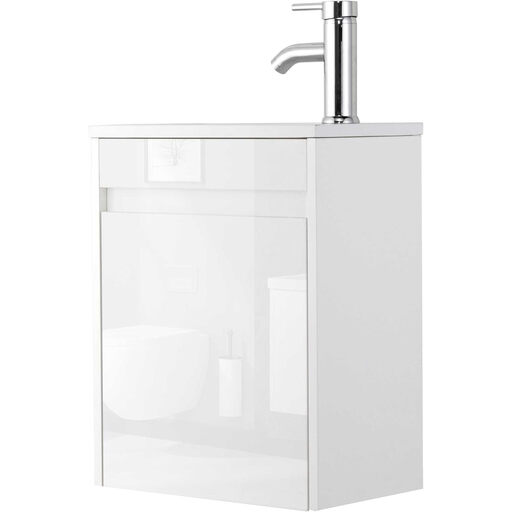
Why This Fits Their Persona: This set is ideal for small spaces like guest bathrooms. The wall-mounted design creates floor clearance and makes the room appear larger. Its clean, modern design blends seamlessly into contemporary interiors.
As an integrated set of washbasin and cabinet, it completely bypasses the "Fit Mistake." The sink and cabinet are perfectly matched, simplifying planning and installation.
The space-saving wall mounting is a clear advantage in tight spaces. The smooth surface of the resin washbasin is described as easy to clean.
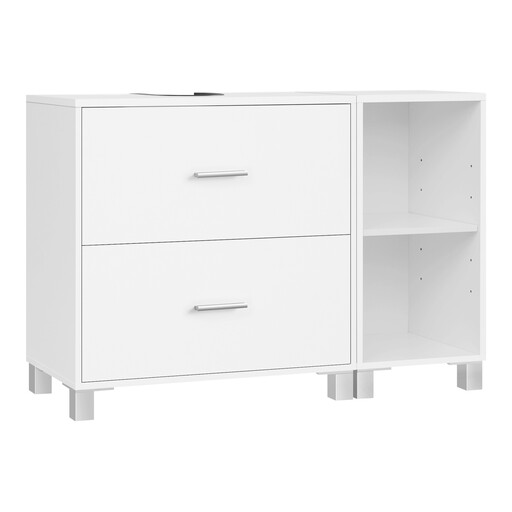
Why This Fits Their Persona: For anyone who needs to utilise every inch and wants a clear structure for their bathroom essentials. This modular system adapts to various room layouts thanks to its flexibly positionable side cabinet.
This model is the direct answer to the "Organisation Mistake." With two drawers, an adjustable shelf, and an additional side cabinet, it offers a multitude of compartments for structured storage.
The flexible, modular design allows for individual customisation to the space. The E1-engineered wood material is described as robust and water-repellent.
We have compiled a complete, up-to-date list of products that fully meet these strict selection criteria and German safety regulations.
The height of a freestanding vanity unit is typically between 55 and 65 cm to fit under standard sinks. For wall-mounted models, the installation height depends on that of the sink. Ideally, the top edge of the sink should be at a height of 85 to 95 cm from the floor. The cabinet is mounted accordingly underneath.
No, the wall's condition is crucial. A floating vanity unit requires a load-bearing, solid wall made of concrete or masonry. For lightweight walls (e.g., drywall), special reinforcements, known as bracing, must be installed within the wall to safely support the weight. A prior check of the wall's stability is mandatory.
Solid wood is very durable but requires regular maintenance to protect it from moisture. For the typical bathroom environment, well-sealed MDF boards (lacquered or coated with melamine resin) offer an excellent compromise of moisture resistance, stability, and ease of care. They are more resistant to warping than simple particle boards.