
Lieferung heute & morgen

Qualitätsgarantie

Willkommens-Angebote freischalten: KOSTENLOSE Lieferung | Bis zu 80 % RABATT | Kostenlose 30-Tage-JoyPlus-Testphase
App herunterladen
A vanity unit is a simple yet effective solution for bringing order to your bathroom. It not only creates valuable storage for towels, cleaning supplies, and cosmetics but also elegantly conceals unsightly water pipes and the P-trap. However, choosing the right model can quickly become overwhelming. Many buyers only realise after delivery that the new cabinet doesn't fit, the material is unsuitable for humid environments, or the construction feels unstable.
To help you make an informed decision, we'll highlight the three most common pitfalls when buying a vanity unit and show you which features truly matter.
A bad purchase is frustrating and a waste of time. It's often the same three issues that lead to dissatisfaction:
To avoid the problems mentioned above, you should check three core aspects before making your selection. These will help you find a functional and long-lasting vanity unit.
Before you start your search, take a moment to accurately measure your sink and the available space. Note down the following values:
The material is crucial for longevity in the bathroom. Most cabinets are made from MDF (Medium-Density Fibreboard). Here, it is essential to look for terms like "moisture-resistant" or "water-repellent coating". Such a coating, often made of melamine resin, seals the surface and protects the wood from swelling.
An alternative is models made from solid wood like bamboo. Bamboo is naturally more resistant to moisture and brings a warm, natural look to the bathroom. Regardless of the material, an easy-to-clean surface that can be wiped down with a damp cloth is a practical advantage.
Consider what you want to store in your bathroom vanity. This will determine which layout makes the most sense for you:
Here are some models tailored to different needs and bathroom situations.
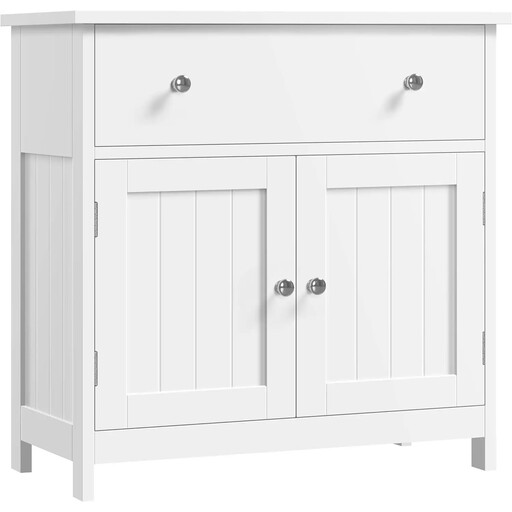
Why This Fits Their Persona: This model offers a balanced combination of classic design, practical storage, and an accessible price point. It is ideal for anyone looking for a straightforward and functional starter piece for their bathroom.
The construction from FSC-certified MDF panels is finished with a water-repellent coating, which protects the material from swelling due to moisture.
Offers a combination of a drawer and a spacious cabinet with two doors. The standard 60 cm width fits under many common sinks.
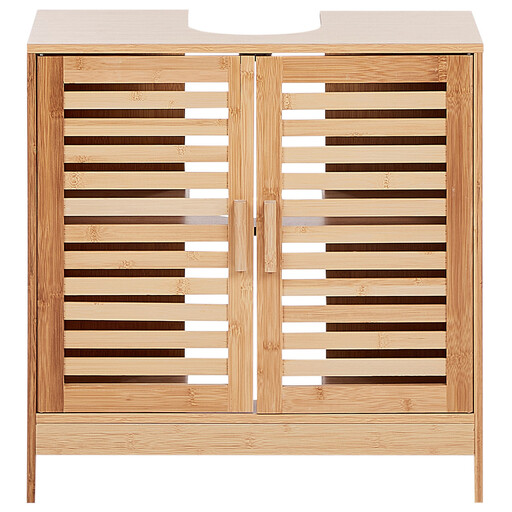
Why This Fits Their Persona: For users who prefer a warm and natural aesthetic in their bathroom. Bamboo is not only visually appealing but also a robust and sustainable material that offers an alternative to classic white cabinets.
Bamboo is naturally more moisture-resistant than untreated engineered wood. The louvered doors also promote air circulation, preventing trapped moisture inside the cabinet.
Sturdy construction from a renewable resource. The two shelves provide structured storage space behind the visually appealing louvered doors.
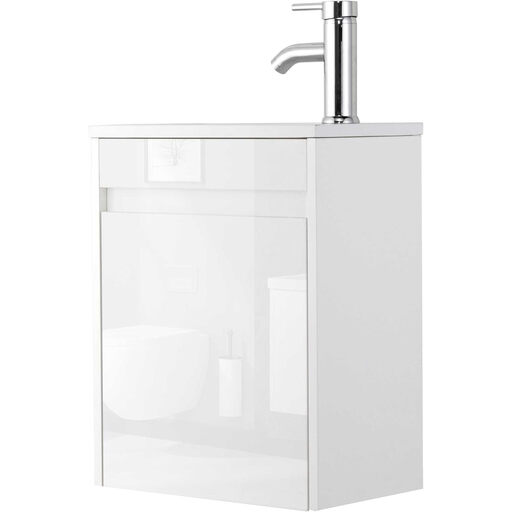
Why This Fits Their Persona: This combination is ideal for very small bathrooms or powder rooms where every inch counts. The wall-mounted design keeps the floor clear, making the room feel larger and more airy.
As a complete set, the washbasin and vanity unit are perfectly matched. This completely eliminates the problem of mismatched dimensions or P-trap cutouts.
A space-saving, all-in-one solution with integrated storage. The smooth surface of the resin washbasin is easy to clean and hygienic.
We have compiled a complete, up-to-date list of products that fully meet these strict selection criteria and German safety regulations.
Measure the width, height, and depth of the available space under your sink. The position of the P-trap is especially important: measure the distance from the wall to the centre of the drain pipe and its diameter. Compare these measurements with the P-trap cutout details in the cabinet's product description to ensure everything will fit.
Standard vanity units are generally not suitable for sinks with a ceramic pedestal (column), as the column occupies the space where the cabinet would stand. However, there are special models designed for pedestal sinks that are built to surround the base. Look for corresponding notes in the product description, such as "suitable for pedestal sinks."
A bathroom cabinet under the sink made of coated MDF is easy to maintain. Wipe the surfaces regularly with a soft, slightly damp cloth. Avoid abrasive cleaners, as they can damage the protective layer. If water gets on the surface, wipe it dry promptly to prevent moisture from seeping into joints or along edges.