
Lieferung heute & morgen

Qualitätsgarantie

Willkommens-Angebote freischalten: KOSTENLOSE Lieferung | Bis zu 80 % RABATT | Kostenlose 30-Tage-JoyPlus-Testphase
App herunterladen
The space under the sink is often an untapped resource that quickly turns into a cluttered collection of cleaning bottles and toiletries. A well-chosen vanity unit can solve this problem and create valuable storage space. However, the selection is vast, and not every model is a worthwhile investment. Many buyers only realise after assembly that the new cabinet doesn't fit, the material is swelling, or the layout is impractical.
As your Joybuy Product Recommendation Officer, I'm here to help you navigate these common pitfalls. This guide will show you what to look for to make an informed decision and find a product that meets your standards for both organisation and durability.
Before you decide on a model, you should be aware of the three most common issues that can lead to frustration and a poor purchase.
To avoid a bad buy, focus on three core technical parameters. These determine the fit, durability, and practical utility of your new cabinet.
The choice of material is critical to the lifespan of your bathroom cabinet. Look for the following standards:
Measuring is non-negotiable. Before adding a bathroom cabinet with a p-trap cutout to your cart, grab a tape measure:
A good vanity unit adapts to your needs, not the other way around. Look for a smart interior layout:
Here are some recommendations tailored to different needs and bathroom layouts. Each model has been evaluated based on the criteria above.
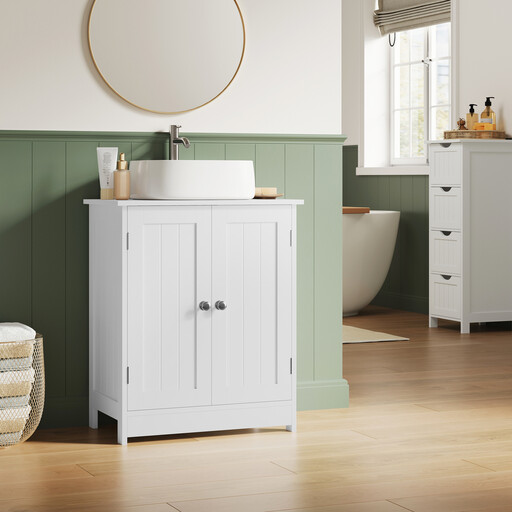
Why it's a great fit: Ideal for renters or those with small bathrooms who need a simple, functional, and cost-effective solution to create order quickly. The compact design makes efficient use of space without feeling bulky.
Tackles the "Storage Trap" with an adjustable shelf. This allows the interior space to be adapted for items of different heights, despite its compact size.
The surface is coated with UV lacquer, making it moisture-resistant and easy to clean. The doors close magnetically, keeping the contents dust-free.
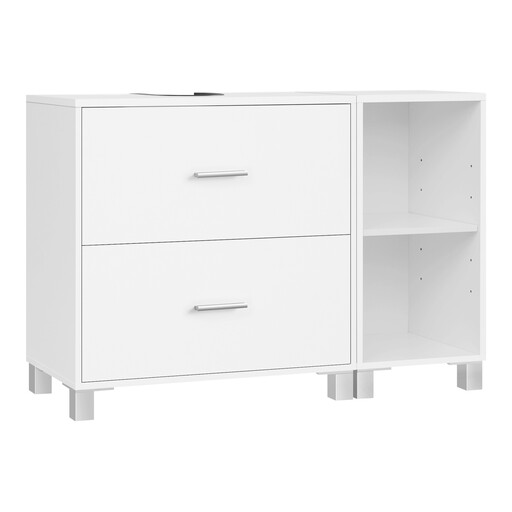
Why it's a great fit: Perfect for anyone looking for more than just a simple under-sink cabinet. The modular design with a separate side cabinet offers maximum flexibility for unusual bathroom layouts or additional storage needs.
Cleverly solves the "Measurement Mistake." If the side cabinet doesn't fit directly next to the main unit, it can be placed separately elsewhere in the bathroom, ensuring no storage space is lost.
The side cabinet features an adjustable shelf with five positions. The construction from E1 engineered wood is robust and water-resistant.
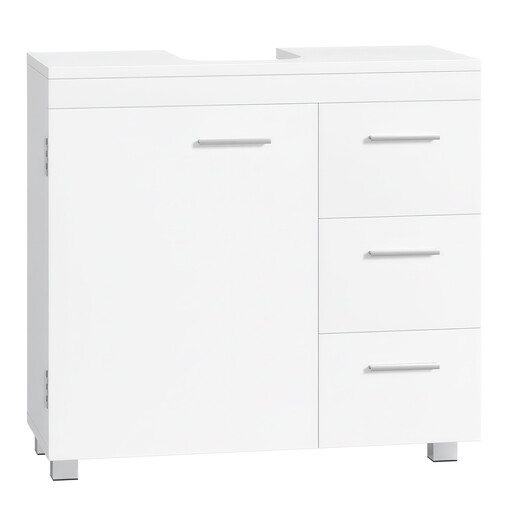
Why it's a great fit: For those who appreciate thoughtful organisation. The combination of three drawers and two door compartments provides a clear separation for large and small bathroom essentials. Another advantage is its suitability for pedestal sinks.
Directly counteracts the "Storage Trap" by offering a versatile layout. Drawers prevent small items from getting lost, while the adjustable shelf in the cabinet section creates space for bulky items.
The design is explicitly intended for sinks with or without a pedestal, increasing its compatibility. An included anti-tip kit provides additional safety.
We have compiled a complete, up-to-date list of products that fully meet these strict selection criteria and rigorous safety regulations.
Measure three key values: 1. The maximum width of the available space under the sink. 2. The depth from the wall to the front edge where the cabinet will stand. 3. The p-trap's position: measure the distance from the wall to the centre of the drain pipe and the pipe's diameter. Carefully compare these measurements with the diagram and specifications in the cabinet's product description.
Materials specifically designed for damp rooms are the safest choice. These include Class E1 MDF boards with a durable lacquer or melamine resin coating. These surfaces are water-resistant and easy to clean. Untreated or thinly foiled particleboard should be avoided as it is prone to swelling.
Most standard vanity units are designed for wall-mounted sinks. However, there are special models suitable for pedestal sinks. These often have a wider or deeper p-trap cutout that also accommodates the pedestal. Look for explicit notes in the product description like "suitable for pedestal sinks" or "for basins with a pedestal."