
Lieferung heute & morgen

Qualitätsgarantie

Willkommens-Angebote freischalten: KOSTENLOSE Lieferung | Bis zu 80 % RABATT | Kostenlose 30-Tage-JoyPlus-Testphase
App herunterladen
A kettle with temperature control is more than just a kitchen appliance—it's a precision instrument for the perfect tea, aromatic coffee, or preparing baby formula at the exact right temperature. However, the market is flooded with models whose advertised features often fail to deliver in practice. As your Joybuy Product Recommendation Officer, I'll help you navigate the common pitfalls and make an informed decision.
Many devices entice with long feature lists, but their weaknesses quickly become apparent in daily use. Pay special attention to these three points to avoid disappointment:
To find the right kettle for your needs, you should focus on objective and verifiable features.
The choice of material has a direct impact on durability and taste.
The core competency of such a device lies in its control system.
Here are some models that represent a considered choice for specific user profiles, based on their technical specifications and material properties.
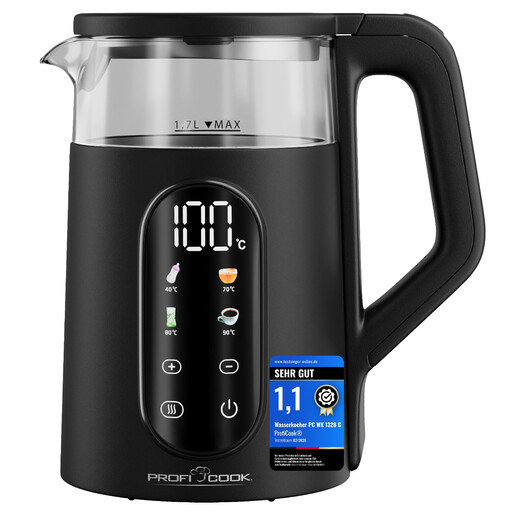
Why This Fits Their Persona: Ideal for users who value degree-perfect preparation. The precise temperature control from 40°C to 100°C and the real-time display allow for the perfect infusion of tea and coffee flavours.
The sensor-touch display with a real-time temperature reading counters the pitfall of inaccurate sensors. The heat-insulated glass body and concealed stainless steel heating element address material risks.
Precise temperature adjustment in increments, an effective keep-warm function, and a 100°C quick-start feature. The device is also declared BPA-free.
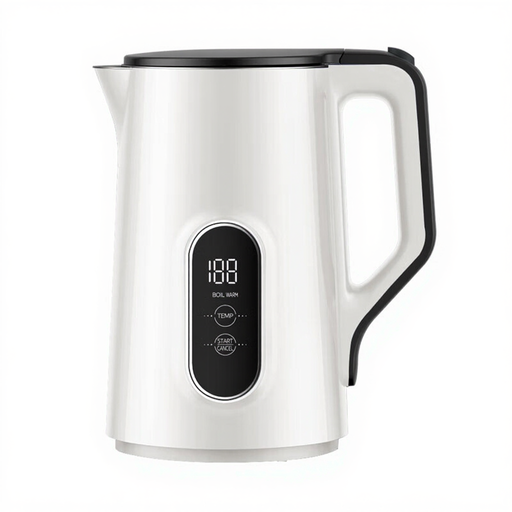
Why This Fits Their Persona: This model is designed for speed, safety, and versatility. The 45°C setting is practical for baby formula, while the high 2200W power quickly heats water for the whole family.
The double-wall construction protects against burns, and the 304 stainless steel interior, along with declared BPA-free plastic parts, minimises material risks. The preset modes provide reliable temperatures.
Fast heating in 4-5 minutes, a 1-hour keep-warm function, and a safe, anti-scald exterior. The use of a Strix thermostat indicates a reliable safety shut-off mechanism.
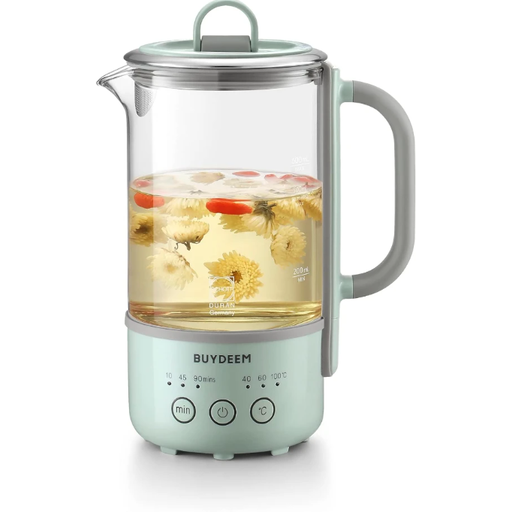
Why This Fits Their Persona: With a 0.6-litre capacity and a weight of just 680g, this travel kettle is ideal for the office, travel, or small households. It combines portability with high-quality materials.
Instead of cheap plastic, this model uses Schott-Duran glass and 18/10 stainless steel. This avoids the risk of material fatigue and taste alteration, even in a compact device.
Extremely lightweight and portable, made from high-quality, certified materials. The automatic 8-hour keep-warm function is a remarkable feature for a device of this size.
We have compiled a complete, up-to-date list of products that fully meet these strict selection criteria and German safety regulations.
The frequency depends on the water hardness in your area. With hard water, it is advisable to descale the device every 4 to 8 weeks. Regular descaling not only ensures hygiene but also maintains the efficiency of the heating element and the accuracy of the temperature sensors.
Both high-quality 304 stainless steel and borosilicate glass are taste-neutral. Problems with a metallic or plastic-like taste usually occur with devices made from low-quality alloys or non-BPA-free plastic. With the materials mentioned, you do not need to worry about any impact on taste.
A higher wattage (e.g., 2200 W or more) results in a shorter boiling time, which is particularly advantageous for large capacities. For a small travel kettle with a 0.5-litre capacity, a lower wattage is sufficient and often more practical, as it places less strain on the power grids in hotels or RVs. Efficiency, therefore, depends on the ratio of power to capacity.