
Lieferung heute & morgen

Qualitätsgarantie

Willkommens-Angebote freischalten: KOSTENLOSE Lieferung | Bis zu 80 % RABATT | Kostenlose 30-Tage-JoyPlus-Testphase
App herunterladen
A variable temperature kettle is more than just a kitchen appliance—it's a precision tool for tea and coffee lovers, as well as new parents. However, the market is flooded with models whose advertised features often fail to deliver in practice. Before you make a decision, it's crucial to understand the common pitfalls that can lead to buyer's remorse.
Common issues include inaccurate temperature sensors that scorch delicate green tea, or misleading "BPA-free" claims on products where plastic parts still come into contact with hot water. Another annoyance is a poorly designed spout that drips during pouring, increasing the risk of scalding.
This guide will help you navigate these problems and find a model that is precise, safe, and perfectly tailored to your needs.
To make an informed decision, you should examine three core aspects that determine your kettle's longevity and functionality.
The choice of material affects not only the look but also taste neutrality and durability.
Regardless of the material, it's crucial that all parts that come into direct contact with water (the inner lid, spout, and filter) are also made of stainless steel, glass, or certified BPA-free plastic.
The ability to precisely control the water temperature is the main advantage of these devices. Look for models that offer practical temperature presets for your specific needs:
An additional kettle with a keep-warm function is practical if you need hot water over an extended period without constantly reboiling it.
Safety should be the top priority. Basic features include:
Instead of presenting an overwhelming list, we have matched a few models to typical user profiles.
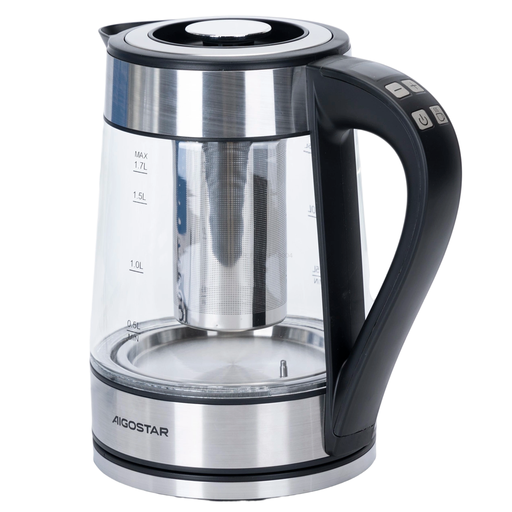
Why This Fits Their Persona: The precise, 13-step temperature selection and the integrated, removable tea infuser allow for the perfect preparation of specialty hot beverages directly in the kettle.
The digital display shows the current water temperature in real time. This prevents inaccuracies common with fixed presets and gives you full control over the heating process.
High flexibility thanks to a wide temperature range (40-100°C), a memory function, and an integrated tea infuser.
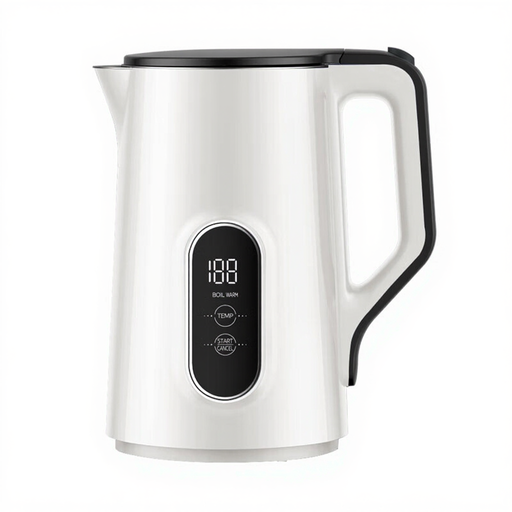
Why This Fits Their Persona: The 45°C setting is ideal for preparing baby food. The double-walled construction minimises the risk of burns on the exterior, a key safety feature in households with children.
All parts that come into contact with water, including the inner lid, spout, and rim, are made from food-grade 304 stainless steel. All plastic components are explicitly designated as BPA-free.
Double-walled design for scald protection, a precise low-temperature setting (45°C), and a 1-hour keep-warm function.
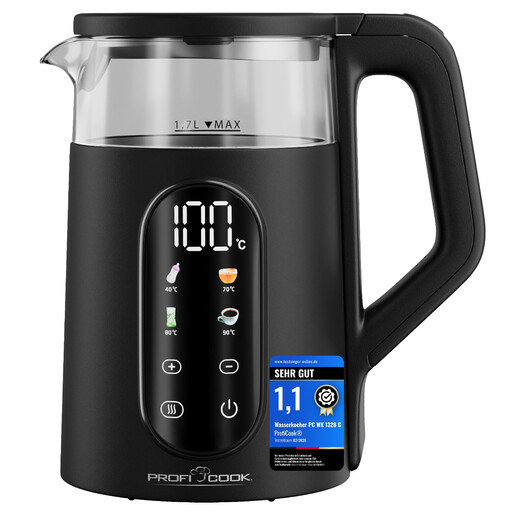
Why This Fits Their Persona: This designer kettle combines the clean aesthetic of a glass kettle with modern operation via a sensor-touch display and a real-time temperature readout.
The safety flip-lid with one-handed operation ensures comfortable and secure handling without drips. The glass body is also heat-insulated, which enhances safety.
Modern touch controls, a real-time temperature display, and a quick-start function for 100°C.
We have compiled a complete, up-to-date list of products that fully meet these strict selection criteria and rigorous safety standards.
The frequency depends on the water hardness in your area. For hard water, descaling every one to two months is recommended. With soft water, every three to four months is usually sufficient. Regular descaling ensures the temperature sensor works accurately and improves energy efficiency.
The initial heating cycle consumes the most energy. The keep-warm function uses significantly less power, as it only needs to compensate for heat loss. For periods of up to an hour, this can be more energy-efficient than completely reboiling cold water.
Modern glass kettles use heat-resistant borosilicate glass, which is very durable for daily use and handles sudden temperature changes well. However, stainless steel is inherently more resistant to impacts or being dropped. The choice is ultimately a trade-off between the aesthetics and purity of glass and the maximum durability of stainless steel.