
Lieferung heute & morgen

Qualitätsgarantie

Willkommens-Angebote freischalten: KOSTENLOSE Lieferung | Bis zu 80 % RABATT | Kostenlose 30-Tage-JoyPlus-Testphase
App herunterladen
A kettle with temperature control is more than just a kitchen appliance for heating water. It's a precision tool for tea lovers, coffee connoisseurs, and new parents. However, the market is flooded with models whose marketing promises often conceal more than they reveal. Before you make a decision, it's crucial to understand the most common pitfalls that can lead to disappointment and unnecessary expense.
As your Joybuy Product Recommendation Officer, I'm here to help you navigate this jungle of information. We'll focus on the facts so you can find a model that truly meets your needs.
Many appliances look high-quality at first glance but reveal their weaknesses only in daily use. Pay special attention to these three points:
To avoid these traps, you should focus on three verifiable criteria. These define the quality, safety, and longevity of your new kettle.
The material that touches your drinking water is the most important criterion. There are two leading options here:
Regardless of the material, a BPA-free kettle label is a must to ensure no unwanted chemicals get into your water.
The functionality of a kettle with temperature control lives and dies by its precision.
The size should suit your household. A 1.7L kettle is ideal for families, while 1.0 litre is often sufficient for singles or couples. A small travel kettle with a capacity of 0.5 to 0.6 litres is perfect for on the go or at the office. Also, look for a 360° swivel base for easy placement, one-handed lid operation, and an easy-to-read water level indicator.
Here are some models that represent a considered choice for different user profiles based on objective features.
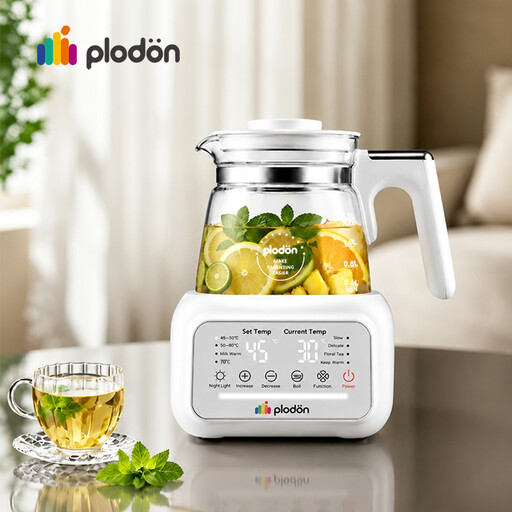
Why This Fits Their Persona: This model is tailored to the needs of parents. With special modes for warming milk, precise temperature control, and a long keep-warm function, it's ideal for the preparation of baby formula at any time of day or night. The integrated night light is a thoughtful detail.
It bypasses the trap of inaccurate temperature control with dedicated programs and a constant temperature hold for up to 72 hours (according to the manufacturer), offering high reliability for preparing baby formula.
The borosilicate glass body is BPA-free and taste-neutral. The memory function remembers the last setting after lifting the kettle.
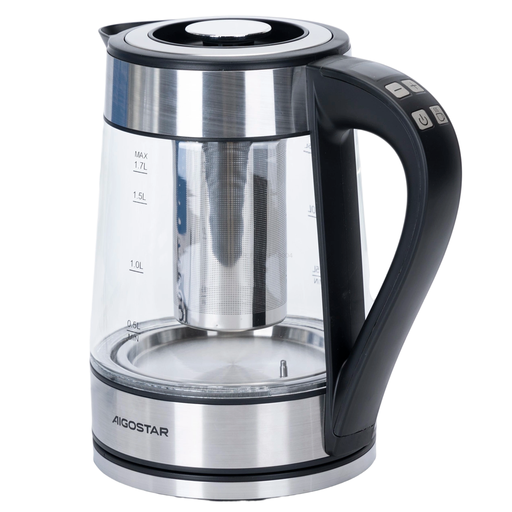
Why This Fits Their Persona: This model functions as a versatile tea maker. The removable tea filter and 13-step temperature control allow for the precise preparation of various types of tea directly in the appliance. The modern design of glass and stainless steel with a colored LED indicator appeals to design-conscious users.
The 13-step temperature control offers high precision and avoids the trap of inaccurate settings. The glass and stainless steel construction minimizes contact with plastic at high temperatures.
Integrated, removable tea filter for direct brewing. The memory function saves the last selected temperature, which simplifies repeated use.
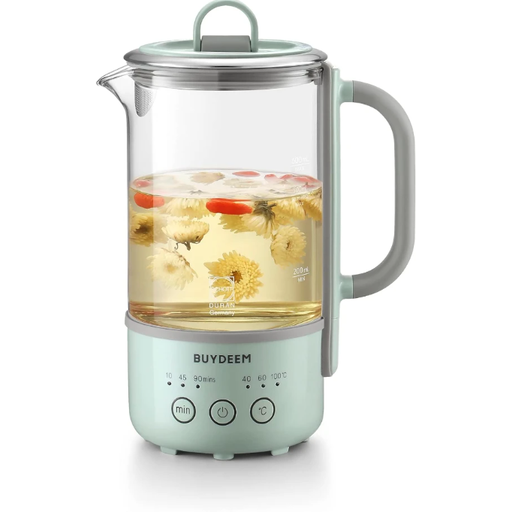
Why This Fits Their Persona: As a compact travel kettle with a 0.6-litre capacity and low weight, this model is ideal for use in the office, hotel, or dorm room. It combines portability with high-quality materials for daily use on the go.
This model avoids the trap of cheap materials by using Schott-Duran glass and food-grade 18/10 stainless steel, according to the manufacturer. This ensures durability and safety even in a compact device.
Extremely lightweight and portable. The automatic 8-hour keep-warm function is a useful feature for a device of this size, enhancing convenience in daily life or while traveling.
We have compiled a complete, up-to-date list of products that fully meet these strict selection criteria and safety regulations.
The frequency of descaling depends on the water hardness in your area. With hard water, it is advisable to descale the device every one to two months. With softer water, cleaning every three to four months is sufficient. Regular descaling not only ensures hygiene but also maintains the efficiency of the heating element and the accuracy of the temperature sensors.
Both materials have their advantages. A glass kettle allows for visual inspection of the water and any limescale deposits. It is taste-neutral but can be fragile if handled improperly. A stainless steel kettle is very robust, durable, and often keeps water warm longer, especially in double-walled models. The decision ultimately depends on personal preferences regarding design and material properties. For both, it is important to look for high-quality, food-grade materials.
The majority of the energy is used for the initial boiling of the water. The keep-warm function itself consumes significantly less power, as it only needs to maintain the temperature by briefly reheating at intervals. Compared to completely re-boiling water multiple times, the function can even save energy if you need hot water repeatedly over a period of about an hour. However, the device should always be turned off completely when not in use.