
Lieferung heute & morgen

Qualitätsgarantie

Willkommens-Angebote freischalten: KOSTENLOSE Lieferung | Bis zu 80 % RABATT | Kostenlose 30-Tage-JoyPlus-Testphase
App herunterladen
A small electronic device like a car key, a scale, or a watch has stopped working—a common cause is a dead battery. Selecting the correct replacement battery is crucial for the device's functionality and longevity. VARTA coin cells offer a wide range of sizes and technologies for various applications. This guide analyses the technical specifications to help you select the right coin cell.
The correct identification of the required battery is based on objective parameters. Before making a purchase, you should verify the following three aspects.
The most important information is the designation printed on the old battery. This code, for example CR2025 or V371, defines the chemical composition, shape, and exact dimensions.
Compatibility is only guaranteed with an identical designation.
The coin cell's technology determines its voltage and performance characteristics. An incorrect choice can damage the device or impair its function.
Interchanging these two technologies is not possible due to their different voltages.
The capacity, specified in milliampere-hours (mAh), describes the amount of stored energy and affects the operational life. A higher capacity generally leads to a longer runtime. Furthermore, the choice of pack size—a single battery or a coin cell set—is a practical consideration, especially if multiple devices in the household use the same battery type.
Based on technical specifications and application areas, we present three VARTA coin cell models here.
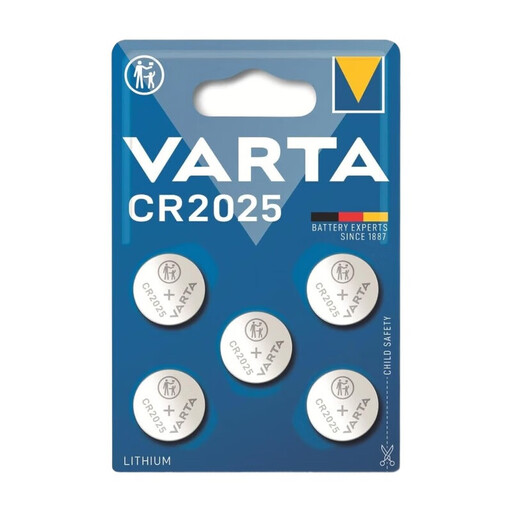
Why we recommend this product: The CR2025 is one of the most common coin cells for everyday devices. With five batteries in child-safe packaging, this product offers a practical and secure storage solution. The lithium technology with 3V of power ensures a reliable energy supply for a wide variety of devices.
Advantages:
Who it's for: Users who need a common 3V battery for devices like car keys, remote controls, bathroom scales, or kitchen scales and value having a supply on hand.
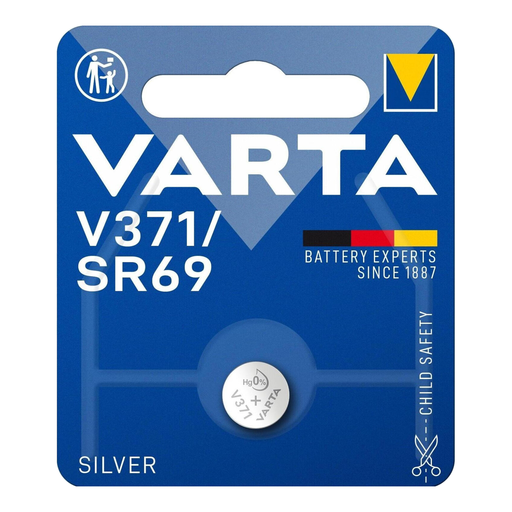
Why we recommend this product: The V371 is a specialised Silver Oxide battery known for its extremely stable voltage output of 1.55V. This property is essential for the precise operation of analogue and digital watches. Its compatibility with other designations like SR69 and SR920SW makes it a versatile choice for watch owners.
Advantages:
Who it's for: Individuals who need a reliable watch battery for their wristwatch or other small devices that require a 1.55V battery of type V371 or an equivalent designation.
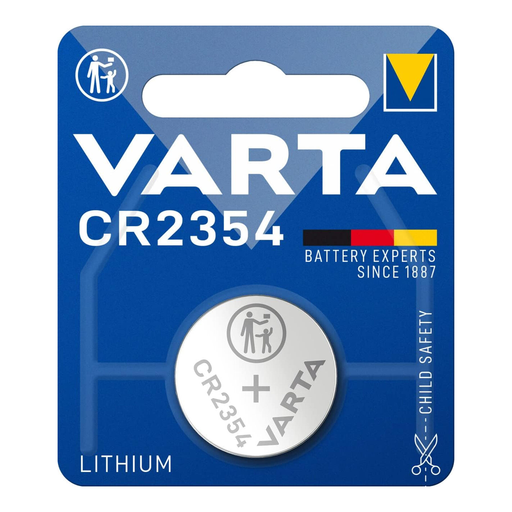
Why we recommend this product: The CR2354 is a high-performance Lithium coin cell with a high capacity of 530 mAh and a voltage of 3V. Its specific dimensions (23 mm x 5.4 mm) and high energy density make it the right choice for more energy-intensive applications such as certain modern car keys, smart health devices, or bike computers. The manufacturer-stated shelf life of up to 10 years is another practical advantage.
Advantages:
Who it's for: Users whose devices explicitly require the battery type designation CR2354 and who are looking for a long-lasting, high-capacity power solution.
If you are looking for batteries for other devices like computer peripherals or need a specific coin cell set not listed here, you can find a wider selection in our Computer Remote Controls category.
1. What does the designation CR2025 mean on a coin cell? The code provides precise technical information. "C" stands for the chemical base, Lithium. "R" stands for the round form factor. The first sequence of digits, "20", indicates the diameter in millimetres (20 mm), while the second sequence, "25", indicates the height in tenths of a millimetre (2.5 mm). This system allows for unambiguous identification.
2. Can I replace a Lithium battery (3V) with a Silver Oxide battery (1.55V)? No, such a replacement is not recommended. The voltage is a critical parameter for a device's electronics. Using a 3V battery in a device designed for 1.55V can cause irreparable damage. Conversely, a device designed for 3V will not function, or will function incorrectly, with a 1.55V battery. Always use the battery type specified by the device manufacturer.