Vegan snackers keeping an eye on fat
You want to compare the fat content of different dried fruits using the nutrition information, rather than assuming that a low figure means the product is reduced-fat.


If you’re looking for vegan dried fruit with a low fat content, compare the fat per 100 g and check that the individual product is suitable for vegans. A low fat content does not prove that a product has less fat than a comparable alternative. Sugar and energy per 100 g are worth comparing too: according to Verbraucherzentrale NRW, removing water during drying concentrates the natural sugars.
You want to compare the fat content of different dried fruits using the nutrition information, rather than assuming that a low figure means the product is reduced-fat.
For you, the specific vegan label or recipe matters, as do details of added sugar and sulphur treatment on the individual pack.
Choose according to how you’ll use it: softer dried fruit as an ingredient, or crunchy freeze-dried fruit as a topping.
When shopping for vegan dried fruit, start by checking the fat per 100 g and the ingredients list. Sugar content and texture will also help you decide whether the fruit suits your snack or recipe.
| Criteria | What to check | Who it matters to |
|---|---|---|
| Fat content | Compare the fat per 100 g. Don’t assume a low figure means the product is “reduced-fat”. | I want to be able to check the fat content when snacking, rather than rely on an unsupported claim about fat reduction. For around 42% of consumers, this comparison is the main priority. |
| Vegan suitability and ingredients | Check the recipe, vegan labelling and ingredients list; if needed, also look for information about sulphur dioxide and cross-contamination. | If I want to avoid certain ingredients or possible cross-contamination, the specific pack is what matters when making my choice. This check is a priority for around 33% of consumers. |
| Sugar and texture | Check the sugar and energy per 100 g, and choose a texture that suits the snack or recipe you have in mind. | I’d choose something different for a crunchy topping than for a soft baking ingredient, while still keeping an eye on the sugar content. Around 25% of consumers put this use first. |
The fat per 100 g tells you about the product, but it doesn’t show that its fat content has been reduced compared with a similar product.
Use the stated fat content when shopping. Only rely on a fat-reduction claim if it’s backed up by a clear comparison with a comparable product.
Dried fruit contains natural sugars. According to Verbraucherzentrale NRW, removing water concentrates them per 100 g.
Compare the sugar and energy figures, and bear in mind how much you plan to eat.
A mix contains different ingredients from a pack of individual fruits, so its nutrition information needs to relate to the product you’ve actually chosen.
Check the ingredients list and fat content of the specific mix, rather than relying on the name of the product category.
ALDI SÜD notes that FARMER NATURALS mango may come from different suppliers, so the nutrition information can vary.
Before buying, check the information on the pack you’re actually taking home.
The examples below can help you compare individual product ranges, but the information doesn’t apply to every product from each brand.
Seeberger offers classic and freeze-dried fruit for snacking and cooking.
EDEKA24 stocks dried fruit from various brands, as well as EDEKA own-label products.
Lidl’s Alesto range includes dried fruit, nuts and other snacks.
ALDI SÜD’s FARMER NATURALS range includes dried pineapple and mango, among other products.
This selection includes dates for snacking or baking, and candied ginger pieces for a sweet and spicy snack or as a baking ingredient. If you mainly want to compare fat content and vegan suitability, check the information on each pack; the two products differ particularly in their added sugar.
 Image unavailable
These pitted dates can be enjoyed as a snack or used in baking. Compare the fat and sugar per 100 g when choosing; a low fat content doesn’t automatically mean low sugar.
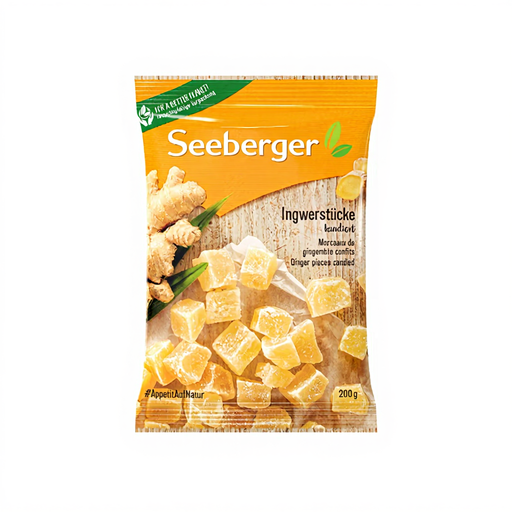 Image unavailable
These candied pieces are suitable for the snacking or baking uses mentioned in the product description. They’re not the right choice if you’re looking for a product with no added sugar; also check the note about sulphites.
No. A low fat figure simply describes the product’s fat content; “reduced-fat” requires a substantiated comparison with a comparable product. Instead, you can compare the fat content per 100 g directly when making your choice.
No, “no added sugar” doesn’t mean that. According to Verbraucherzentrale NRW, removing water concentrates the natural sugars in dried fruit. Check the sugar per 100 g on the individual pack.
“Unsulphured” means that sulphur dioxide hasn’t been used on the product described that way; it says nothing about its fat or sugar content. If you want to avoid sulphur dioxide, check this information alongside the ingredients list, and compare the nutrition information separately.
Not every pack carries the same labelling. For example, Seeberger describes its apple rings as vegan according to the recipe, while also noting that cross-contamination is possible. Check the ingredients and information on the product you choose, particularly for mixes or coated fruit.