
Lieferung heute & morgen

Qualitätsgarantie

Willkommens-Angebote freischalten: KOSTENLOSE Lieferung | Bis zu 80 % RABATT | Kostenlose 30-Tage-JoyPlus-Testphase
App herunterladen
Vegan meat alternatives range from dry soya chunks for hot meals to flavourful snacks for eating on the go. However, choosing solely based on terms such as “meat-like”, “high-protein” or “vegan” means overlooking important differences. Ingredients, allergens, salt content, preparation and storage all affect whether a product suits your daily routine.
This guide explains what consumers in Germany should look out for when buying vegan meat alternatives and which products are suitable for different needs.
A high protein content can be an important selection criterion, but on its own it says little about the product as a whole. Flavourful ready-made snacks can contain comparatively high levels of salt, sugar or fat. For example, according to the product information, Wuxianzhai Five-Spice Vegetarian Beef contains 20.9 g of protein and 6.75 g of salt per 100 g. This makes the salt content something buyers should consider when planning portions.
Many products are based on soya, wheat or wheat gluten. This applies, for example, to vegan jerky, vegetarian meat strips and plant-based sausages. Even products without any declared main allergens may carry packaging warnings about possible traces. You should therefore check the ingredients list and allergen information before every purchase – particularly if you have an existing intolerance.
Ready-to-eat products such as vegan Asian snacks can be eaten straight from the pack. Dry products such as soya chunks or vegan mince, on the other hand, must first be soaked and often then fried or cooked. Frozen products such as a plant-based corn dog also require specific preparation and continuous storage at −18 °C or below.
The main ingredient determines how the product is made and how it feels when eaten:
So, check whether you want to eat the product straight away, cut it into strips or use it as an ingredient in a dish.
For an objective comparison, use the figures given per 100 g. Pay particular attention to:
The figures generally refer to the dry or ready-to-eat product. With soya chunks and vegan mince, bear in mind that the weight changes as they absorb water.
Before buying, it is worth checking the instructions for use:
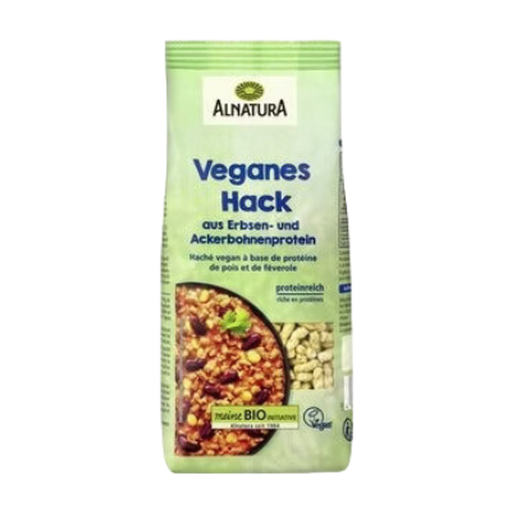
Why this product suits this profile: The dry granules can be used in portions for chilli sin carne, Bolognese or moussaka. According to the product information, the recipe is based on pea and fava bean protein and contains no soya.
The preparation method and dry format are clearly apparent. This helps prevent it being mistaken for a ready-to-eat snack.
Dry storage, versatile use and a 100 g pack size. According to the product information, the product contains 17 g of protein per 100 g.
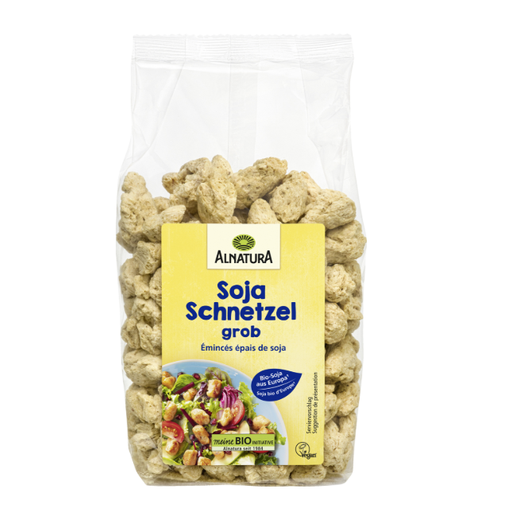
Why this product suits this profile: According to the product description, the coarse soya chunks come from organic farming and are suitable for vegan goulash, pan-fried dishes or as a salad topping.
The ingredient base is clearly stated as “partially defatted and textured soya flour”. Allergens and possible traces are listed separately.
150-g pack, dry format and, according to the product information, 50 g of protein per 100 g when uncooked.
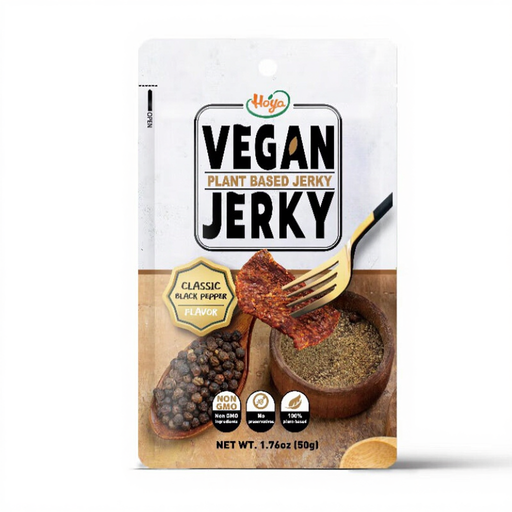
Why this product suits this profile: The 50-g bag is designed for eating on the go, during breaks or as a plant-based protein snack. The black pepper seasoning suits fans of savoury flavours.
The portion size is clearly stated. Soya and gluten are also identified as allergens, making it possible to check the ingredients before buying.
Ready to eat, 50 g pack size and, according to the product information, 22 g of protein per 100 g.
We have put together a complete, regularly updated list of products that fully meet these strict selection criteria and the safety regulations applicable in the EU.
For classic dishes, vegan meat strips, soya chunks and vegan mince are good options. If you are looking for sausages for the frying pan, barbecue or hot pot, you can compare plant-based sausages and vegetarian sausages based on their preparation method, chilling instructions and salt content. A vegan chicken alternative with chilli and Sichuan pepper is better suited as a spicy side dish or noodle topping.
For eating straight away, you can choose from vegan jerky, vegetarian snacks and vegan Asian snacks. With heavily seasoned varieties, pay particular attention to sodium or salt, as well as the sugar content of marinades. An organic meat alternative is identifiable by the relevant certification; however, the organic label does not replace comparing nutritional values and allergens.
For beginners, dry vegan mince or a dry burger mix is practical because you can use it in portions. It is important to follow the pack instructions for rehydration and subsequent preparation. Ready-to-eat jerky is more straightforward, but is generally used as a snack rather than a complete meal.
Unopened dry products can be stored in a cool, dry place away from light until the best-before date printed on the packaging. Once opened, they should be sealed tightly. Prepared or chilled products belong in the fridge and should be eaten promptly according to the packaging instructions. For frozen products, the specified storage temperature must be maintained.
No. Protein content varies considerably depending on the base ingredient. Products made with concentrated soya, pea or fava bean protein may contain higher levels, while burger mixes containing cereals and vegetables often contain less protein. The key factors are the nutrition table per 100 g and the actual portion size.