Shoppers with firm organic and vegan requirements
You only want to buy a muesli bar if both claims are clear on the specific product. The consumer advice centre recommends checking the organic and vegan labelling separately.


If you want a muesli bar that is both organic and vegan, check both claims on the specific product. For packaged organic products from the EU, this includes the EU organic logo and the control body code. According to the consumer advice centre, the ingredients list alone is not enough to confirm that a product is vegan. Then compare the ingredients, sugar information and, where relevant, allergen advice rather than assuming a product has these qualities because it is described as ‘natural’ or organic.
You only want to buy a muesli bar if both claims are clear on the specific product. The consumer advice centre recommends checking the organic and vegan labelling separately.
You’re looking for a bar to take with you and want to know which sweetening ingredients it contains, and how much sugar is listed per 100 g and per serving.
You need to check every bar for ingredients such as nuts and see whether any ‘may contain’ advice is relevant. If you specifically need gluten-free food, check the labelling on the individual product.
First, check the organic and vegan claims separately. If a bar meets both requirements, the ingredients list, nutritional information and allergen labelling can help you decide which one to choose.
| Criteria | What to check | Who it matters most to |
|---|---|---|
| Organic and vegan | Check both claims on the product. For packaged organic products from the EU, also look for the EU organic logo and control body code. | I only want to buy a bar if it meets both my firm requirements. Neither organic labelling nor the ingredients list alone confirms that it is vegan. This double-check is the top priority for around 46% of shoppers. |
| Ingredients and sugar | Compare the sweetening ingredients in the ingredients list, as well as the sugar content per 100 g and per serving. | If a bar contains dates or syrup, I want to compare its sugar content with other products rather than judge it by the name of the sweetening ingredient. This is the top priority for around 36% of shoppers. |
| Allergens and gluten | Check highlighted allergens and ‘may contain’ advice; look for a gluten-free claim if you need one. | If I need to avoid certain ingredients, I make my decision based on the information on that specific pack, not the brand. Around 18% of shoppers prioritise these additional requirements. |
An organic muesli bar can contain animal-derived ingredients. For example, EDEKA says its Bio Knusperriegel Nussmix contains honey and is labelled vegetarian.
As well as checking the organic claim, make sure the bar you choose is explicitly labelled vegan.
According to the consumer advice centre, sweetening ingredients such as fruit juice or syrup also contribute to the sugar content. REWE lists 40 g of sugar per 100 g for the share Bio Nussriegel Hazelnut.
Compare the sugar content per 100 g and per bar, and check the ingredients list too.
The ‘organic’ and ‘vegan’ labels don’t tell you whether a bar is suitable for someone with a specific allergy. For example, EDEKA Bio Knusperriegel Nussmix contains peanuts and almonds.
Check the highlighted allergens and any ‘may contain’ advice on every pack.
A listed product may not be available at the store you want to shop at. ALDI SÜD, for example, marks GUT BIO Knusperriegel Nussmix as unavailable at the selected store on its product page.
Before you shop, check availability for your location and the labelling on the pack actually being offered.
REWE lists its Bio Flapjack Schoko Haferriegel as both an organic and a vegan option in its catalogue.
REWE describes the share Bio Nussriegel Hazelnut as organic and vegan. It may suit shoppers looking to compare a nut bar using the product information available.
REWE includes Corny Haferkraft Kakao in its selection of vegan muesli bars.
EDEKA Bio Knusperriegel Nussmix shows why organic own-label ranges shouldn’t automatically be treated as vegan.
ALDI SÜD sells GUT BIO Knusperriegel as an organic product, but the organic own-label alone doesn’t answer whether it is vegan.
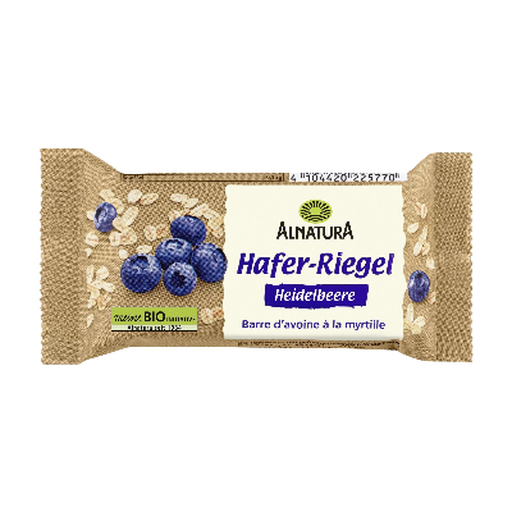
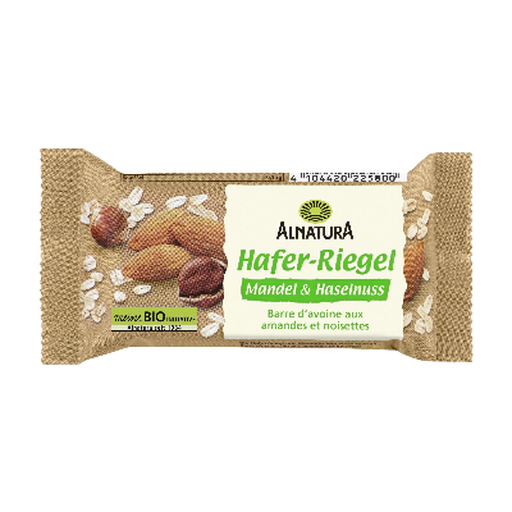
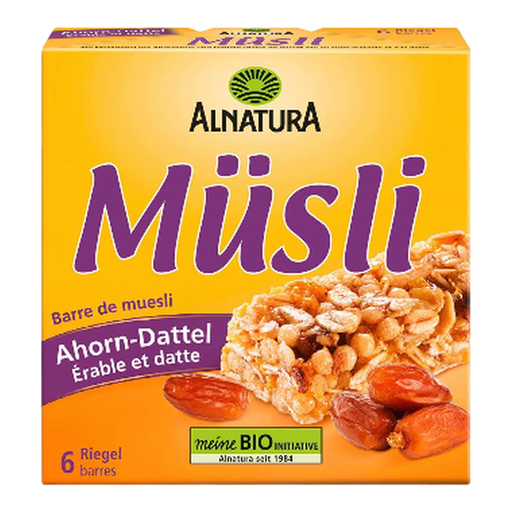
These Alnatura options include a blueberry and oat flapjack, an almond, hazelnut and oat flapjack, and maple and date muesli bars. If organic and vegan are must-haves for you, compare the information in each product description with the labelling on the pack.
 No image available
An option if you’re looking for a blueberry and oat flapjack for a vegan organic shop. The product description says it is vegan and certified organic; check the relevant claims on the pack. You can also compare the nutritional information and allergen advice if needed.
 No image available
For shoppers looking for an oat flapjack with almonds and hazelnuts who don’t need to avoid these ingredients. The product description says it is vegan and certified organic; check the claims, ingredients and allergen advice on the pack.
 No image available
For shoppers looking for several individually portioned maple and date muesli bars. The product description says they are vegan and certified organic; check the pack labelling and, if you’re interested in the sweetening ingredients, compare the ingredients list with the sugar content per 100 g and per bar.
No. According to the consumer advice centre, you can’t confirm that a product is vegan with certainty from the ingredients list alone. Also look for an explicit vegan claim on the specific product.
Check the EU organic logo and the organic control body code on the pack. According to the consumer advice centre, the EU organic logo is compulsory on packaged organic food produced within the EU; it doesn’t also confirm that the bar is vegan.
No. Organic labelling doesn’t tell you how much sugar a product contains. Compare the sugar content per 100 g and per serving, and check the ingredients list: according to the consumer advice centre, fruit juice and other sweetening ingredients can also contribute to the sugar content.
Yes, if you need to avoid certain ingredients or possible traces. Organic and vegan claims don’t replace product-specific allergen labelling. Check the information on the pack, including highlighted ingredients and ‘may contain’ advice.