
Lieferung heute & morgen

Qualitätsgarantie

Willkommens-Angebote freischalten: KOSTENLOSE Lieferung | Bis zu 80 % RABATT | Kostenlose 30-Tage-JoyPlus-Testphase
App herunterladen
The wine market is constantly evolving, and more people are actively seeking products that align with a conscious lifestyle. Vegan organic wine is more than just a trend—it's the answer to a growing desire for sustainability, ethical consumption, and pure flavour. However, the expanding selection doesn't make the choice any easier. It's easy to get lost between marketing promises and unclear labelling. This guide will help you navigate the common pitfalls and make an informed decision the next time you want to buy a high-quality vegan organic wine.
Before you choose a wine, it helps to be aware of the most common areas of confusion that often lead to an unsatisfying purchase.
The Assumption: "Organic" Automatically Means "Vegan" A widespread misconception is that any wine with an organic seal is also vegan. This is not the case. While organic farming prohibits the use of synthetic chemical pesticides, this primarily applies to the work in the vineyard. In the cellar, the wine fining process—which removes impurities—often traditionally uses animal-based agents like gelatine (from bones), casein (milk protein), or egg whites. A wine that is free from animal-derived additives must therefore be explicitly labelled as vegan.
Misleading Labels: "Vegan-Friendly" vs. Certified Some producers use vague phrasing that offers no reliable guarantee. A certified vegan wine, often identifiable by the V-Label or another official seal, guarantees that no animal products were used throughout the entire production process. Look for these clear certifications instead of imprecise marketing terms.
The "Dry" Flavour Profile: A Matter of Definition The term dry organic wine is subject to legal limits on residual sugar content. Nevertheless, the perceived taste can vary significantly depending on the acidity and grape variety. A wine that is legally classified as dry may still have a noticeable fruit sweetness to some palates. If you prefer a very crisp, less fruity wine, you should also pay attention to the grape variety and the description of the wine's aroma.
To ensure your wine meets your standards for quality and ethics, you should check the following points.
Official seals offer the most important guidance. The EU organic seal (the green leaf) ensures that the grapes were grown according to organic farming guidelines. For the vegan property, a separate seal like the V-Label is crucial. Only the combination of both certificates gives you the certainty that you are holding a genuine vegan organic wine. Brands like Biorebe Wein or Landlust Wein rely on this transparent labelling.
Whether it's a vegan red wine or a vegan white wine, the grape variety largely defines its character. A Riesling from Germany often offers crisp acidity and mineral notes, while a Primitivo from Southern Italy impresses with its full fruit and smooth texture. Learn about the typical characteristics of grape varieties to find a wine that suits your personal taste.
For regular enjoyment or for stocking up for social gatherings, buying larger formats makes sense. A case of 6 wine or a vegan wine bundle is not only often more cost-effective but also a contribution to more sustainable consumption. Less packaging material and optimised logistics reduce the ecological footprint per bottle. This is an important aspect for anyone who values a truly sustainable wine.
To make your decision easier, we have put together a selection of wines suitable for different preferences and occasions.
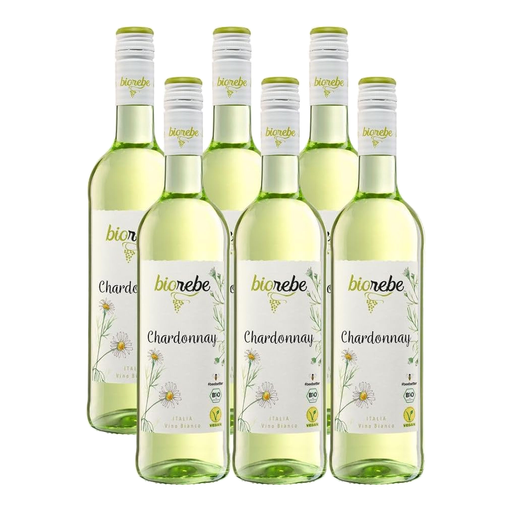
Why it's a great match: Ideal for anyone looking for a straightforward and approachable vegan organic white wine for everyday enjoyment. Chardonnay is a globally popular grape variety, and this wine offers a clean, fruity profile that is best enjoyed well-chilled. The case of 6 ensures excellent value for money.
This wine carries both an organic and a vegan certification, immediately clearing up any confusion about whether an organic wine is also vegan.
A reliable everyday wine in a practical case of 6 that meets both ethical and quality standards.
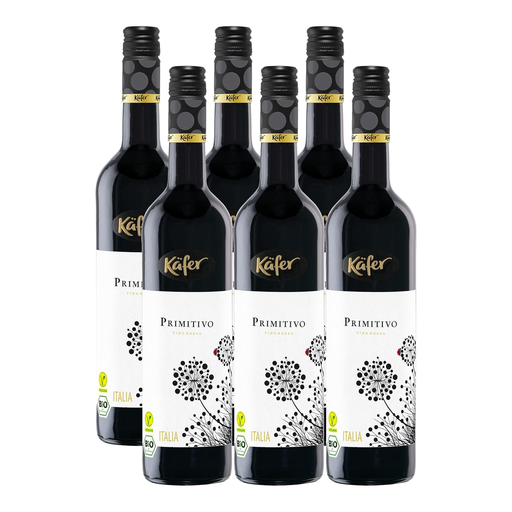
Why it's a great match: For those who seek a characterful and fruit-forward vegan red wine. The Primitivo from the Italian region of Apulia is known for its intense aromas of dark fruits and its smooth finish. It is an excellent companion to hearty dishes or for a cosy evening.
The clear indication of the grape variety (100% Primitivo) and origin (Apulia) provides a precise flavour expectation that goes beyond a general "dry" classification.
An authentic, single-varietal experience from a renowned wine-growing region, certified as both organic and vegan.
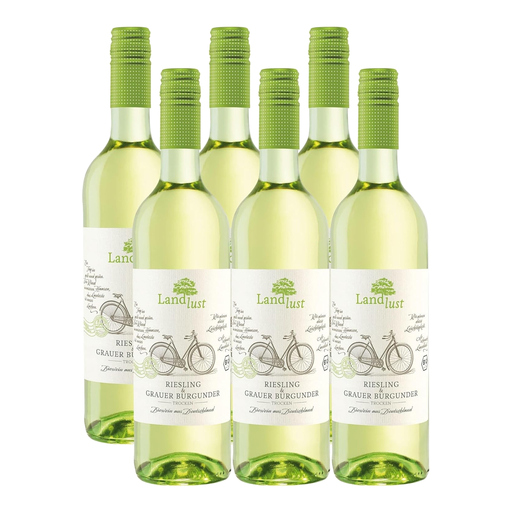
Why it's a great match: This cuvée of Riesling and Pinot Gris is a versatile companion. It combines the fresh acidity of Riesling with the nutty notes of Pinot Gris. Ideal for those looking for a wine that works well both on its own and with a variety of dishes like cheese, fish, or pasta.
The description of its aromas (pear, almond) and specific food pairing recommendations help to better assess the flavour profile and avoid a poor choice for certain occasions.
A harmonious and versatile cuvée from German vineyards, which, as a Landlust wine, reflects the desire for naturalness and conscious enjoyment.
We've compiled a complete, up-to-date list of products that fully meet these strict selection criteria and German regulations.
No, this is one of the most common misconceptions. During winemaking, even in organic production, animal-based fining agents like gelatine, egg whites, or casein (milk protein) can be used to clarify the wine. To be sure that a wine was made free from animal-derived additives, you should always look for an explicit vegan seal (e.g., the V-Label) or a clear statement from the producer on the label.
Buying a wine bundle offers several benefits. Firstly, the price per bottle is often lower than buying individually. Secondly, it is a more sustainable choice, as it reduces packaging and transport emissions per bottle, supporting the concept of sustainable wine consumption. Lastly, you will always have a suitable wine on hand for various occasions.
Vegan organic wine does not differ from other quality wines in terms of storage. It should be kept in a cool, dark place with a temperature that is as constant as possible. Bottles with cork stoppers are best stored lying down to keep the cork moist and the bottle airtight. After opening, the wine should be resealed, stored in the refrigerator, and consumed within 3 to 5 days to maintain its freshness.