
Lieferung heute & morgen

Qualitätsgarantie

Willkommens-Angebote freischalten: KOSTENLOSE Lieferung | Bis zu 80 % RABATT | Kostenlose 30-Tage-JoyPlus-Testphase
App herunterladen
Anyone looking to buy 1 kg of vegan protein powder is usually seeking a practical plant-based protein source for everyday use, after training or to supplement a high-protein diet. The selection ranges from 3K protein with three plant-based sources to 6K protein with a more extensive blend. However, packaging often uses terms that make direct comparisons more difficult.
This buying guide from the Joybuy Product Recommendation Officer explains which details really matter, where common purchasing misconceptions arise and which products suit different usage profiles.
A high protein value per 100 g may initially sound compelling. For everyday use, however, what matters is how much protein a realistic serving provides. For the products featured here, the recommended serving is 30 g of powder. Depending on the flavour and formula, this provides 21 g to 25 g of protein.
Anyone who focuses solely on the value per 100 g may overlook the fact that serving size, mixing volume and actual protein content can differ.
Vegan protein powder may contain ingredients such as soy, wheat or almonds. The Nutri+ 6K variants combine soy protein isolate, wheat protein, rice protein, pea protein, sunflower protein and almond protein, among others. They are therefore unsuitable for anyone who needs to avoid these ingredients.
According to the product information, Nutri+ 3K Protein without wheat is based on soy protein isolate, pea protein isolate and sunflower protein. Although it contains no wheat, it is not soy-free either. The ingredients list and allergen information should therefore always be checked before purchase.
A vegan protein shake is often consumed regularly. A flavour that no longer appeals after a few servings can significantly reduce the practical value of a 1 kg bag. The recommended amount of liquid is equally important: too little liquid can result in a thicker consistency, while more liquid produces a thinner shake.
The 6K products are prepared with 300 ml of liquid. For 3K Protein, 350 to 400 ml is recommended, depending on the desired consistency.
For athletes, fitness enthusiasts and active people, the amount of protein per serving is a key point of comparison. The available Nutri+ variants provide the following amounts, depending on the flavour:
This means the products cover the search range of protein powder with 21 g to 25 g of protein per serving. When comparing products, serving size should be considered alongside the protein value.
Plant-based protein powder may contain a single source or several types of protein. 3K Protein uses three plant-based sources and, according to the product description, is available without wheat. The 6K formula combines six protein sources or several plant-based ingredients, including soy, wheat, rice, pea, sunflower and almond.
The names 3K Protein and 6K Protein describe the respective product formulas. They are not independent statutory quality standards. The decisive factors remain the complete ingredients list, protein content and personal requirements regarding allergens and flavour.
According to the product information, a 30 g serving corresponds to approximately three heaped tablespoons. A shaker is useful for consistent preparation:
The manufacturer recommends that athletes consume the product within two hours of training. This is a manufacturer’s usage recommendation and does not replace individually tailored nutritional advice. The powder should be viewed as part of a balanced and varied diet.
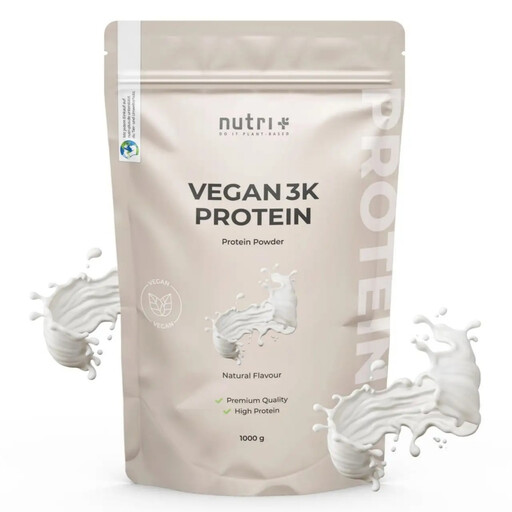
Why it suits this profile: The straightforward formula with soy, pea and sunflower protein is ideal for users looking for vegan protein powder without wheat and who prefer a neutral flavour.
The serving provides 25 g of protein from 30 g of powder. The ingredients list is shorter than that of a 6K blend, and the absence of wheat is clearly stated.
Three plant-based protein sources, 25 g of protein per serving and preparation with 350 to 400 ml of liquid.
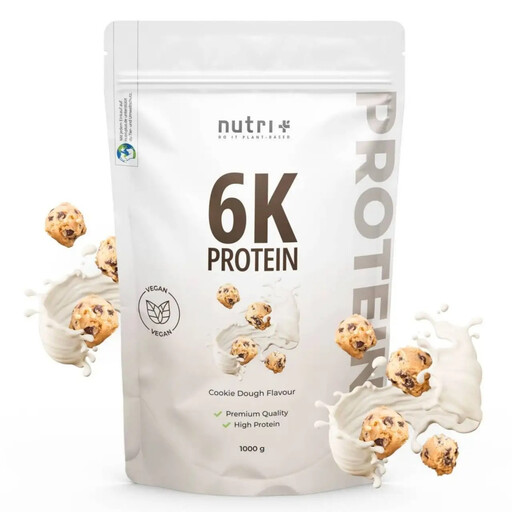
Why it suits this profile: Cookie Dough is one of a range of different flavours. The formula also contains 6.7% cookie dough pieces and 3.3% cocoa powder.
The specific serving provides 21 g of protein. Buyers should also take note of the allergens soy, wheat and almond.
30 g serving, 21 g of protein and preparation with 300 ml of liquid in a shaker.
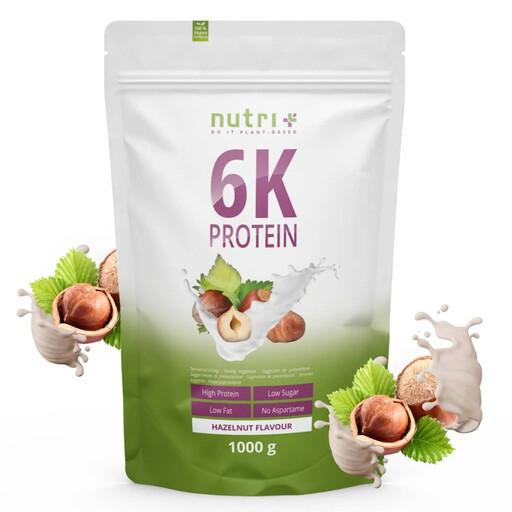
Why it suits this profile: Those who regularly engage in strength or endurance training can directly compare the protein content per serving with other products. According to the product information, Hazelnut provides 25 g of protein from 30 g of powder.
The 25 g value refers to the specified 30 g serving, not to an arbitrary scoop size. This makes daily intake easier to plan accurately.
25 g of protein per serving, a blend of several plant-based protein sources and a recommended liquid volume of 300 ml.
The Nutri+ 6K range is available, among others, in Chocolate Fudge, Hazelnut, Rice Pudding & Cinnamon, Vanilla, Pistachio, Chocolate, Salted Caramel, Chocolate-Peanut and Natural. The Rice Pudding & Cinnamon flavour provides 23 g of protein and contains 1.7% cinnamon; Salted Caramel delivers 24 g of protein per serving.
Anyone who prefers a wheat-free formula can consider Nutri+ 3K Protein in Natural, Vanilla Cream or Matcha Latte. According to the product information, these variants provide 23 to 25 g of protein per 30 g serving. The respective product pages contain details on ingredients, preparation and storage.
The complete selection of 1 kg protein powder variants makes it easy to compare formulas, protein content and flavours directly.
For the 6K products featured here, mix 30 g of powder with 300 ml of liquid in a shaker. According to the product information, the 3K variants require 350 to 400 ml. The exact amount can be adjusted to achieve the desired consistency.
Vegan protein powder can form part of a balanced diet for strength athletes and fitness enthusiasts as a plant-based source of protein. It does not replace a varied diet or structured training. Body weight, training volume, total protein intake and individual nutritional goals are all relevant when determining personal requirements.
With a daily serving of 30 g, a 1 kg bag will theoretically provide around 33 servings. The actual duration depends on whether the recommended amount is followed or the powder is used, for example, to prepare larger shakes. Once opened, the bag should be stored in a cool, dry place and kept tightly sealed.