
Lieferung heute & morgen

Qualitätsgarantie

Willkommens-Angebote freischalten: KOSTENLOSE Lieferung | Bis zu 80 % RABATT | Kostenlose 30-Tage-JoyPlus-Testphase
App herunterladen
The search for a suitable vegan protein powder can quickly become overwhelming. The market is flooded with products promising high protein content and delicious flavours. But not every protein powder delivers on its promises. Certain pitfalls often lead to purchasing a product that fails to meet your standards for taste, solubility, or composition. This guide will help you identify the key quality markers and make an informed decision.
As a Joybuy Product Recommendation Officer, my job is to sift through market information and give you objective, practical advice so you can separate marketing hype from fact.
Before we dive into the selection criteria, it's important to be aware of two common issues that often lead to disappointment when choosing a plant-based protein powder.
To avoid these pitfalls, you should check three core parameters before buying. These will give you a reliable basis for evaluating a product, regardless of its marketing claims.
The composition of the protein sources is the most important criterion. A plant-based protein powder from multiple sources, a so-called multi-component vegan protein, is often the better choice. By combining different proteins (e.g., from soy, pea, sunflower, or rice), their respective amino acid profiles complement each other. The result is a higher biological value, approaching that of animal-based proteins.
A look at the ingredient list is essential. Pay attention to the position of the protein sources—they should be listed first.
A high-quality vegan protein powder should dissolve effortlessly in water or plant-based milk without clumping. Products labelled as "isolate" generally have a higher degree of processing and dissolve better than "concentrates." A creamy and smooth vegan protein shake is not only more pleasant to drink but also speaks to the quality of the powder.
Based on the criteria above, we have selected a few products from the Nutri+ protein powder range for different user profiles.
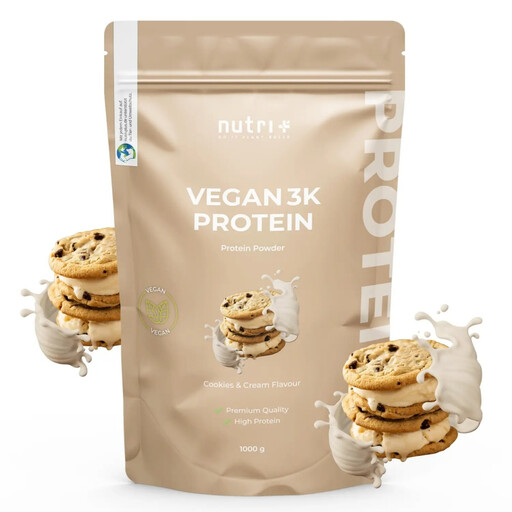
Why This Fits Their Persona: Ideal for those new to the world of vegan protein shakes who prioritise a pleasant, straightforward taste. The good solubility and classic flavour make it easy to integrate into a daily routine.
The 3-component blend of soy, pea, and sunflower protein bypasses the "amino acid gap" of single-source proteins, ensuring a balanced profile.
Delivers 23g of protein per 30g serving with a creamy consistency. The wheat-free formula is well-tolerated by many users.
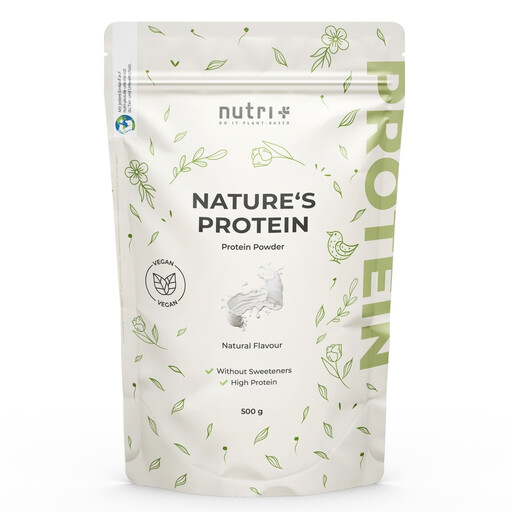
Why This Fits Their Persona: Perfect for health-conscious users who want full control over their shake's ingredients. With no sweeteners or flavours, it's ideal for mixing with fruit, blending into smoothies, or using in baking.
This product completely avoids the pitfall of hidden additives. The ingredient list consists solely of protein sources, with no fillers or flavour enhancers.
Made from soy protein isolate, pea protein isolate, and rice protein. It offers a very high protein content with 25g of protein per 30g serving.
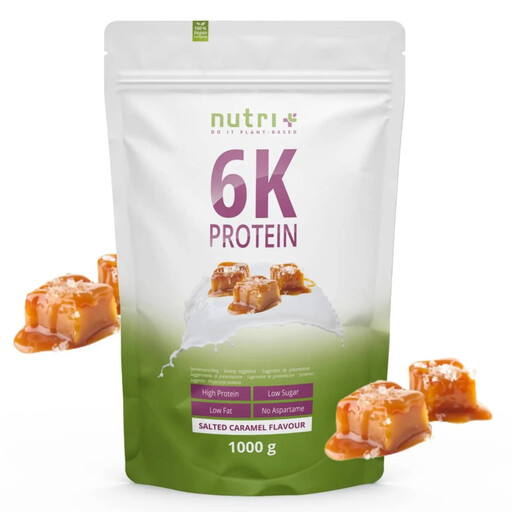
Why This Fits Their Persona: Designed for athletes looking to optimise their protein intake to support recovery and muscle growth. The complex blend ensures a time-released delivery of amino acids.
The "amino acid gap" is strategically closed with an advanced 6-component formula (soy, wheat, rice, pea, sunflower, almond) to achieve a high biological value.
Provides 24g of protein per serving and combines fast and slow-digesting protein sources. The Salted Caramel flavour offers a welcome change of pace.
We've compiled a complete, up-to-date list of products that fully meet these strict selection criteria.
For a lump-free result, first add the liquid (e.g., 300–400 ml of water or a plant-based drink) to a shaker bottle with a mixing screen. Then, add the protein powder. Seal the shaker tightly and shake vigorously for about 20–30 seconds.
It's not strictly necessary, but it is highly beneficial. A multi-component protein ensures your body is supplied with all essential amino acids in a balanced ratio. This can support muscle protein synthesis—the process of building muscle—more effectively than a protein with a deficient amino acid profile.
The biological value is a measure of how efficiently a dietary protein can be converted into the body's own proteins. A value of 100 (based on a whole egg) is used as the reference standard. By skilfully combining different plant-based protein sources, as is the case with multi-component proteins, the biological value can be significantly increased because the amino acid profiles of the individual sources complement each other.