Families who shop vegan
For a shared biscuit tin, every pack you choose must be explicitly labelled vegan. Neither the word ‘shortbread’ nor a buttery flavour proves that a product is vegan.


If you’re looking for vegan shortbread for the family biscuit tin, first check that the specific product is labelled vegan, then consider how much you’ll need. Vegan butter biscuits, caramel biscuits and homemade shortcrust biscuits are different alternatives, but they aren’t automatically shortbread. The 110 g pack of shortbread shown here is a separate consideration when working out how much you need for the occasion.
For a shared biscuit tin, every pack you choose must be explicitly labelled vegan. Neither the word ‘shortbread’ nor a buttery flavour proves that a product is vegan.
If you’re expecting guests, stocking up or taking biscuits with you, check the net weight, number of biscuits and whether they’re individually wrapped. A larger quantity may, however, mean choosing a type of biscuit other than shortbread.
If you’re after a simple, crumbly biscuit, you can weigh up shop-bought vegan alternatives against homemade shortcrust biscuits. Baking lets you choose the ingredients and how many biscuits to make, but you’ll need to set aside some time.
A good choice if: You want a buttery-tasting biscuit and the specific product is labelled vegan.
Things to consider: Veganz ‘Der Keks’, stocked by REWE, comes in a 200 g pack and isn’t marketed as shortbread.
A good choice if: Easy-to-portion biscuits matter more to you than having shortbread specifically.
Things to consider: Lotus Biscoff, described as vegan by EDEKA24, is a caramel biscuit, not shortbread. Check the details on the specific pack if you’re considering a larger one.
A good choice if: You want to decide for yourself what goes into the biscuit tin and how much to make.
Things to consider: REWE’s vegan shortcrust recipe makes 40 biscuits and takes 1 hour 30 minutes in total, according to the recipe.
| Criteria | What to check when buying | Who it matters to |
|---|---|---|
| Vegan suitability | Check that the specific pack is labelled vegan; if you have allergies, also check the ingredients and allergen statements. | If everyone sharing the biscuit tin wants to eat vegan, the word ‘shortbread’ alone isn’t enough to help me decide. Around 42% of consumers put clear vegan suitability first. |
| Quantity and servings | Match the net weight and number of biscuits to the occasion; check whether they’re individually wrapped if needed. | If I’m expecting guests or stocking up, I want to know how many biscuits I’ll actually have. Quantity and portioning come first for around 33% of consumers. |
| Type of biscuit and ingredients | Know the difference between shortbread, butter biscuits and caramel biscuits; if baking at home, check the ingredients you plan to use. | The type of crumbly biscuit I want matters more to me than getting the biggest pack, and I’d be happy to bake it myself. Around 25% of consumers put the type of biscuit or the ability to choose their own ingredients first. |
Shortbread can contain butter: Walker’s Shortbread lists butter as an ingredient in its Petticoat Tail Shortbread. The name of the biscuit alone doesn’t tell you whether it’s suitable for vegans.
When shopping vegan, check the label on the specific product’s current packaging.
Veganz ‘Der Keks’, the vegan butter biscuit stocked by REWE, comes in a 200 g pack. Whether that’s enough for several people depends on the occasion.
Before buying, compare the net weight and number of biscuits with the amount you need. Choose individually wrapped biscuits only if they suit how you plan to use them.
A vegan label doesn’t prove that a biscuit is free from particular allergens or traces of them. For example, the Veganz ‘Der Keks’ product page mentions that it may contain traces of egg and milk.
If you have allergies, check the ingredients and allergen statements on the current packaging separately.
Lotus Biscoff is sold as a caramel biscuit. Even if a specific product is labelled vegan, it won’t necessarily satisfy a craving for shortbread.
If the type of biscuit matters, check the product description. Choose butter biscuits or homemade vegan shortcrust biscuits only if you’re happy with them as alternatives.
Walker’s Petticoat Tail Shortbread shows why classic shortbread shouldn’t be assumed to be vegan.
Veganz ‘Der Keks’ is a buttery-tasting biscuit labelled vegan by REWE, sold in a 200 g pack.
The 200 g pack of Lotus Biscoff described by EDEKA24 is labelled vegan and contains caramel biscuits, a different type of biscuit from shortbread.
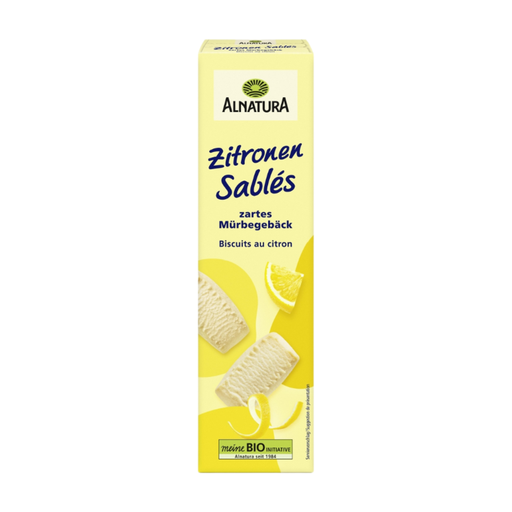
This selection features a product described as shortbread with a hint of lemon. If you’re buying for a vegan family biscuit tin, check the current vegan label and make sure the quantity is right for you.
 No image available
If you’re specifically looking for shortbread with a hint of lemon, the product name states that the pack contains 110 g. Check that this amount is right for your biscuit tin, and look for the vegan label on the current packaging. If you have allergies, you should also check the ingredients and allergen statements.
No. Walker’s Shortbread lists butter as an ingredient in its Petticoat Tail Shortbread. When shopping vegan, it’s the label on the specific biscuit that matters, not just its name.
Yes. A vegan label doesn’t replace checking the ingredients and allergen statements. Under the labelling rules explained by the European Union, allergens present in pre-packed foods are highlighted in the ingredients list.
A vegan label and a statement about possible traces are two different things. The Veganz ‘Der Keks’ product page includes both; if you have an allergy, check the information on the current packaging separately from the vegan label.
Follow the storage instructions on the specific pack. REWE advises keeping Veganz ‘Der Keks’ in a dry place away from heat. Once opened, an airtight container can help keep the biscuits crisp.