
Lieferung heute & morgen

Qualitätsgarantie

Willkommens-Angebote freischalten: KOSTENLOSE Lieferung | Bis zu 80 % RABATT | Kostenlose 30-Tage-JoyPlus-Testphase
App herunterladen
Finding an authentic vegan Thai curry paste can be a challenge. Many traditional recipes contain shrimp paste (kapi) or fish sauce, making them unsuitable for a purely plant-based diet. This article serves as a practical guide to help you choose a suitable Thai curry paste without fish sauce. We will introduce you to various options and provide objective criteria to help you make an informed purchasing decision.
To find the right plant-based curry paste for your kitchen, some basic knowledge about its composition and different varieties is helpful.
The most crucial factor in your selection is the ingredient list. Ensure that no animal-based components like shrimp paste or fish sauce are listed. Products explicitly labelled as "vegan" offer the most certainty. This is especially important for individuals with fish or shellfish allergies. Instead, a high-quality vegan paste relies on an intense blend of herbs and spices like lemongrass, galangal, kaffir lime leaves, and chillies to achieve a full-bodied flavour.
Thai curry pastes are available in three main colours, which differ in flavour and heat level:
The intensity of curry pastes can vary by manufacturer. Some are highly concentrated, meaning one to two teaspoons are sufficient for an entire dish. Pay attention to the usage instructions on the packaging. Typically, the paste is briefly fried in a little oil or the solid part of coconut milk until fragrant before the remaining ingredients are added.
Based on the criteria above, we have compiled a selection of products suitable for preparing authentic, plant-based Thai dishes. The Sunlee Curry Paste brand, for example, offers a range of explicitly vegan options.

Why It Stands Out: This paste is specifically formulated without shrimp paste or fish sauce, making it 100% suitable for vegan and vegetarian diets. The base of 22.5% dried red chillies provides authentic heat and colour.
Pros:
Who It's For: For home cooks who appreciate the classic, spicy flavour of a red Thai curry and are looking for a reliable, purely plant-based foundation.
View Details for Sunlee Red Curry Paste
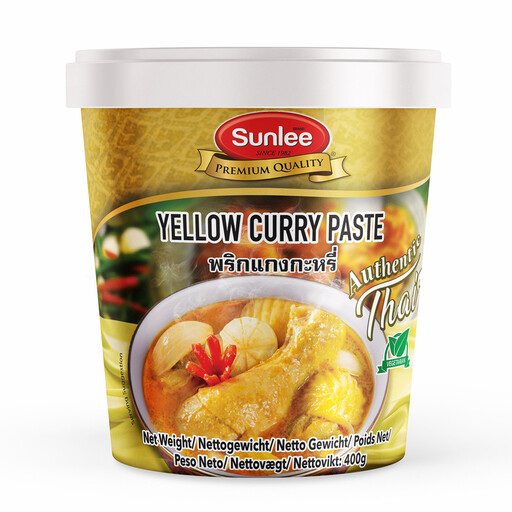
Why It Stands Out: This paste is distinguished by its milder flavour profile. The combination of turmeric and curry powder gives it the characteristic yellow colour and an earthy, savoury aroma that is less dominated by chillies.
Pros:
Who It's For: Ideal for newcomers to Thai cuisine or for families with children. It's also a great choice for dishes like yellow curry with potatoes and tofu, where a mild spice is desired.
View Details for Sunlee Yellow Curry Paste
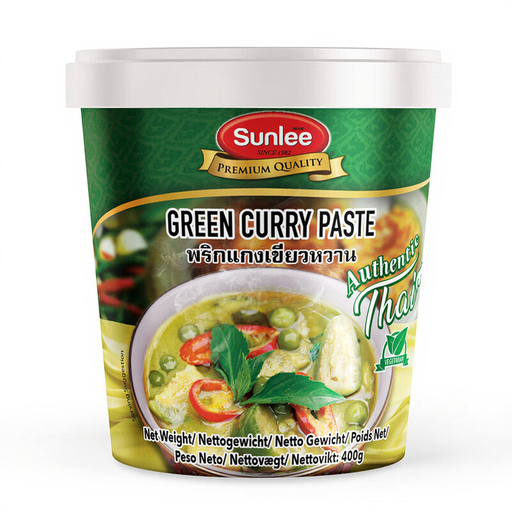
Why It Stands Out: The main ingredient in this paste is fresh green chillies, which provide a vibrant, intense heat and a fresh, herbaceous aroma. It is an excellent base for an authentic Gaeng Keow Wan (green sweet curry).
Pros:
Who It's For: For lovers of spicy Thai food who prefer the fresh, citrusy taste of a green curry and want to elevate their dishes to an authentic level.
View Details for Sunlee Green Curry Paste
The world of curries is diverse. If you are particularly interested in milder varieties or wish to expand your collection of seasoning pastes, you can find more products in our dedicated category.
Explore Our Selection of Yellow Curry
1. How can I identify a truly vegan curry paste? The most reliable way is to read the ingredients list carefully. Look out for terms like "shrimp paste," "kapi," "fish sauce," or "nam pla." Products with an official vegan seal or an explicit "vegan" declaration on the packaging are the safest choice when you want to buy a vegan curry paste.
2. How should I store opened curry paste? Once opened, curry paste should be stored in the refrigerator. To extend its shelf life, it is recommended to smooth the surface of the paste in the jar and cover it with a thin layer of vegetable oil. This minimises contact with oxygen and helps prevent mould growth. Follow the manufacturer's instructions for shelf life after opening, which is usually several months.
3. Is red, green, or yellow curry paste hotter? A general rule of thumb is: Green curry paste is often the hottest, as it is made from fresh, very hot chillies. Red curry paste, based on dried red chillies, is also very spicy. Yellow curry paste is typically the mildest variety, as its flavour profile is shaped more by turmeric and other spices than by chillies. However, the actual heat level can vary depending on the brand and recipe.