Class leaders cooking for a group
You’re planning to make chilli for several people and need to balance the recipe quantity, pot capacity and available worktop space.


For vegetable chilli at a weekend cooking class, the pot size should suit the full recipe quantity, including vegetables, liquid and beans. When cooking for a group, usable capacity matters more than extra programmes. A timer can make planning easier, but it doesn’t replace checking that the food is cooked or monitoring the temperature while it’s being kept warm. The German Federal Institute for Risk Assessment (BfR) recommends keeping heated food at a temperature of at least 60 °C throughout until it is served. According to the Federal Centre for Nutrition, tinned beans are pre-cooked; raw or dried beans need to be prepared differently and cooked thoroughly.
You’re planning to make chilli for several people and need to balance the recipe quantity, pot capacity and available worktop space.
You want to fit the preparation and cooking time into the class schedule, then keep the finished chilli safely hot until it’s ready to serve.
You’re using pre-cooked tinned beans and want an appliance that’s straightforward to use and easy to clean after the class.
A good fit if: the planned recipe, including liquid, fits within the usable pot capacity and simple controls are all you need. Tristar lists the VS-3915 as having a 3.5-l ceramic pot and capacity for up to four portions; the actual yield depends on portion size.
Consider: The manufacturer lists two heat settings and a keep-warm function. If you need a set schedule, check how the specific model controls cooking time.
A good fit if: you want to cook a larger quantity for your class in one go and set the cooking time in advance. Russell Hobbs lists the MaxiCook 22750-56 as having a 6-l pot, adjustable cooking time and a delay timer.
Consider: A larger appliance takes up more worktop space, and a 6-l pot capacity doesn’t automatically mean you can fill it to the top for your recipe.
A good fit if: you need more cooking options as well as slow cooking and can try out the specific programme before your class. The manual for the Instant Pot 5.7L Multicooker lists Slow Cook alongside other functions.
Consider: Lid position, fill limits and how the appliance works vary by model. A multi-cooker isn’t automatically a like-for-like replacement for every standalone slow cooker.
| Priority | What to check before buying | Who this matters most to |
|---|---|---|
| Enough capacity for the group | Compare the recipe quantity and the manual’s filling guidance with the pot capacity. | If I’m cooking for the whole group in one go, the vegetables, liquid and beans all need to fit in the pot. That’s why around 33% of consumers put having enough capacity for the group first. |
| Cooking time that fits the class schedule | Check the cooking-time settings and how the appliance switches to keep warm in the model’s manual. | If we have a set mealtime, I want to be able to plan the preparation and cooking around it. Around 27% of consumers prioritise being able to plan the mealtime. |
| Easy preparation and cleaning | Compare whether the insert can be removed, the cleaning instructions and the steps needed to operate the appliance. | If I want to cook with the group without any fuss and tidy up quickly afterwards, I look for clear controls and an easy-to-handle inner pot. Around 20% of consumers prioritise ease of use. |
| Safe serving and handling beans | If the chilli is being kept hot, check the temperature in different places. If using raw or dried beans, plan for the preparation they need. | If the food won’t be served straight away, I want to be able to check the chilli’s temperature and prepare the beans in a way that suits the recipe. Around 20% of consumers are particularly concerned with serving food safely. |
A pot’s capacity and the manufacturer’s portion estimates don’t mean you can fill it to the brim with a recipe containing vegetables and liquid.
Plan the quantity of ingredients in advance and compare it with the filling guidance for the specific model.
Depending on the recipe, you may otherwise need to cook another batch or use an extra appliance.
An appliance setting doesn’t confirm that the chilli has reached the recommended temperature throughout. The BfR recommends keeping heated food at a temperature of at least 60 °C throughout until it is served.
If serving is delayed, check the chilli’s temperature and don’t leave leftovers lukewarm without monitoring them.
According to the Federal Centre for Nutrition, tinned beans are pre-cooked. Raw or dried beans, on the other hand, need to be cooked thoroughly; the BfR says gentle cooking methods such as stewing or steaming aren’t suitable.
Stick to the planned recipe using tinned beans, or, if you change the ingredients, plan separately for the preparation raw or dried beans need.
Dried beans add extra preparation and cooking time to the class schedule.
The MaxiCook 22750-56 is an example of a larger standalone slow cooker with digital settings.
The VS-3915 is a standalone slow cooker with a smaller ceramic insert.
A Chefkoch editorial comparison lists a 3.5-l Crock-Pot as a smaller alternative.
Here, the brand represents multi-cookers that offer slow cooking alongside other cooking methods.
The appliances below are relevant for making vegetable chilli and planning your class, as they’re multi-cookers or slow cookers with additional cooking functions. Check the recipe quantity against the filling guidance for each model.
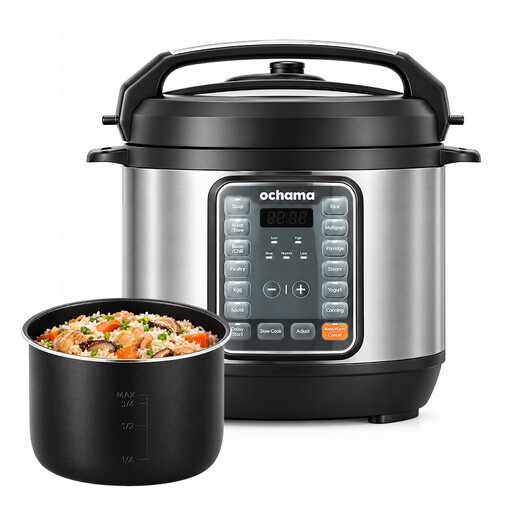 No image available
For a class where you need cooking options in addition to slow cooking. Check the permitted fill level and how Delay Start works beforehand.
The product name lists 6L, 1000W, 12-in-1, a ceramic non-stick coating and Delay Start. It also lists Slow & Rice Cooker, Steamer, Sauté, Yogurt Maker and Warmer.
According to the product description, the appliance is designed for indoor home use.
 No image available
An option if steaming or making soup for the class would also be useful, alongside slow cooking.
The product name lists 4.1L and Micro-Pressure Technology. The instructions warn that the steam is hot and advise against opening the lid immediately after cooking.
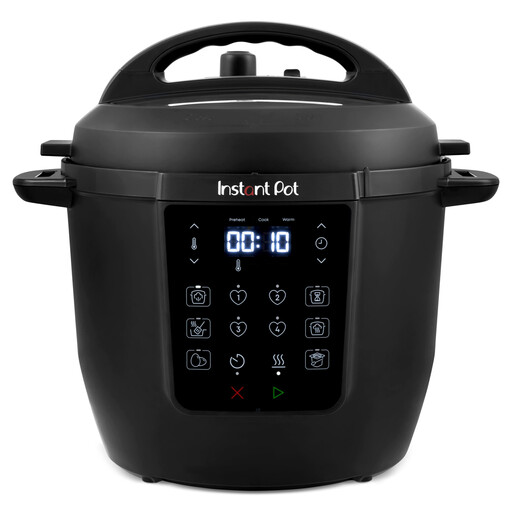 No image available
For a class where you need multi-cooker functions as well as slow cooking. Check the slow-cook settings, lid position and fill limits in the manual for the specific model.
The product name lists 5.7L and Black.
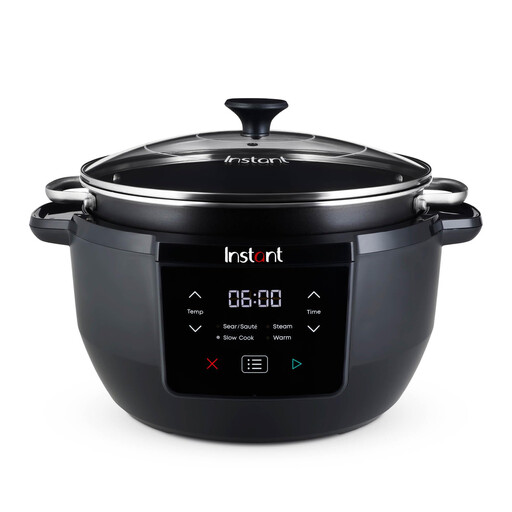 No image available
For a class where a larger pot and adjustable time and temperature settings would be useful. Plan your recipe around the model’s fill limits.
The product description lists adjustable time and temperature settings, as well as a keep-warm function. It says the inner pot must not be used in an oven or on a hob or induction hob.
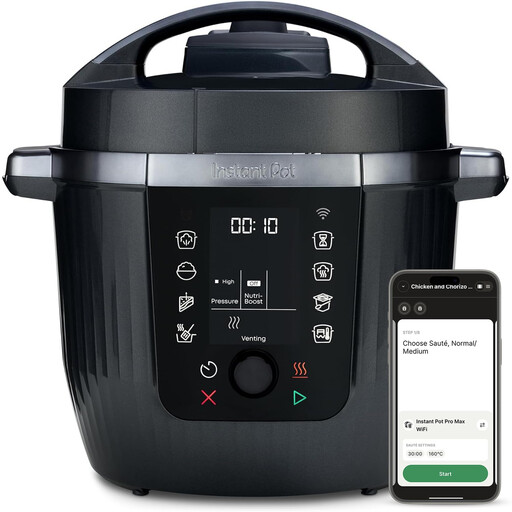 No image available
For a class kitchen where you want to use other cooking methods as well as slow cooking. Check that the intended location meets the usage guidance.
The product name lists 5.7L, 1200W and 10-in-1, as well as Pressure Cooker, Slow Cooker, Rice Cooker, Steamer, Sauté, Yogurt Maker and NutriBoost.
According to the product description, the appliance is designed for indoor domestic use.
No. The Federal Centre for Nutrition describes beans from a tin or jar as pre-cooked and ready to eat. This doesn’t apply to raw or dried beans, which need to be cooked thoroughly.
Not without checking the temperature. In its updated guidance of 19 March 2024, the BfR recommends keeping heated food at a temperature of at least 60 °C throughout until it is served. A keep-warm setting doesn’t automatically confirm that the chilli is at this temperature.
No, it depends on the model. Russell Hobbs describes the aluminium pot of the MaxiCook 22750-56 as suitable for use on a hob. This doesn’t mean the ceramic pot in the Tristar VS-3915 or other inserts are suitable; check the manual for the specific model.
For an appliance placed on the market in Germany and covered by relevant harmonised EU legislation, the manufacturer must apply the required CE marking and meet the applicable requirements. The European Union points out that the CE marking is the manufacturer’s declaration of conformity, not an independent quality mark. Check the marking and details for the specific appliance.
No. In its article of 28 September 2026, the Verbraucherzentrale distinguishes between statutory rights when goods are faulty and a voluntary guarantee with its own terms and conditions. If you’re buying for a commercially run class, don’t assume that consumer rights apply without checking who the contracting parties are.