
Lieferung heute & morgen

Qualitätsgarantie

Willkommens-Angebote freischalten: KOSTENLOSE Lieferung | Bis zu 80 % RABATT | Kostenlose 30-Tage-JoyPlus-Testphase
App herunterladen
A vegetable chopper can save you time when preparing salads, roasted vegetables, side dishes and meals for the week. However, models vary considerably in their blades, ease of use, cleaning and safety features. Having lots of attachments doesn’t automatically make a model practical for everyday use.
The most common buying pitfalls stem from three marketing tricks:
First, think about which foods you prepare regularly. A vegetable chopper for slices and julienne strips needs different attachments from a basic vegetable slicer. For carrots, cucumbers, potatoes and courgettes, evenly cut slices or sticks are often enough. If you also want to grate cheese, nuts or chocolate, look for suitable grating surfaces.
When choosing a vegetable slicer with different blades, check the following:
An egg slicer, on the other hand, is designed for softer, cooked foods. It’s suitable for eggs, kiwi or boiled potatoes, for example, but it won’t replace a versatile vegetable chopper.
Stainless steel blades are common in the kitchen and should be firmly secured in the frame. For plastic parts, look for a sturdy design and a non-slip base. Also check the dimensions: a large kitchen slicer set needs more storage space, but may include a collection container or several attachments.
A vegetable chopper with a collection container is useful if you want to collect chopped ingredients directly and prepare them in portions. Check whether the container has a lid and can be cleaned separately. For smaller kitchens, a compact model without a container may be a better choice.
A manual all-purpose slicer is operated using a handle, slider or pressing mechanism. It doesn’t need electricity and is usually easy to use for smaller quantities. An electric all-purpose slicer uses a motor and is better suited to bread, cold meats, cheese or larger quantities of firm foods. It isn’t automatically the right choice for vegetables.
One important product difference illustrates this point: according to its product description, the GARTOL 4.2V Cordless Electric Cutter is designed for felt, carpet, leather, plastic and cardboard. Despite the word ‘Cutter’ in its name, it isn’t a vegetable chopper for food. Always check what a product is designed to cut before you buy.
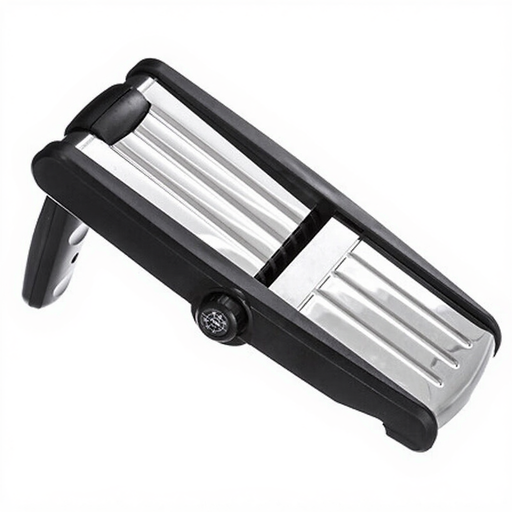
Why it’s a good match: Three interchangeable stainless steel blades cover slicing, julienne strips and grating. Its compact size makes it suitable for smaller households and occasional food preparation.
The three blades clearly specify the available cutting styles, rather than relying on a vague claim that it’s multifunctional.
Stainless steel blades, ABS plastic and compact dimensions of 24.5 × 13 × 12.7 cm.
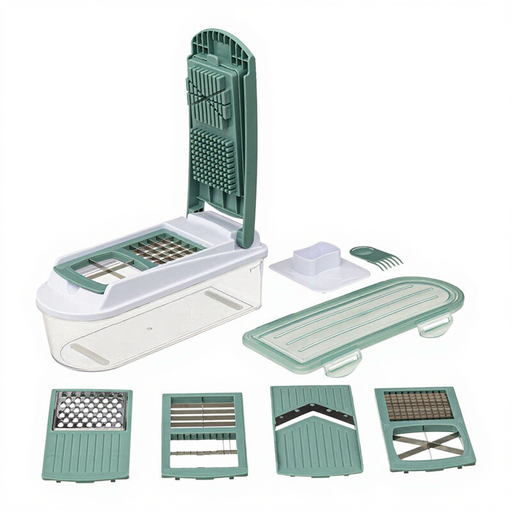
Why it’s a good match: The set combines several attachments with a pusher and a lidded collection container. You can keep prepared ingredients separate and store them ready for use.
The contents are clearly listed: blades, pusher, container and lid are all specified.
Several stainless steel blades, a collection container and compact dimensions of 32 × 14.5 × 11.5 cm.
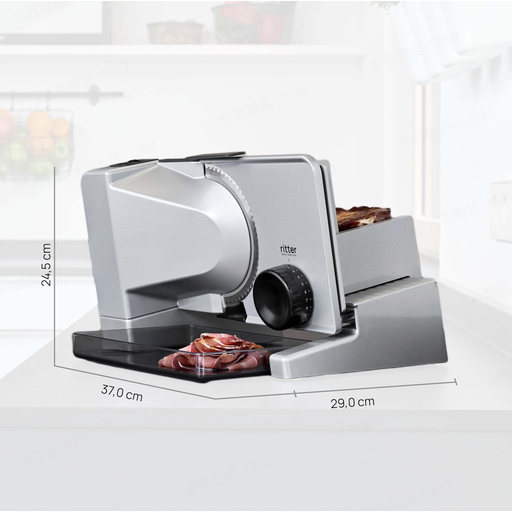
Why it’s a good match: This electric all-purpose slicer is designed for bread, cold meats, cheese, fruit and vegetables. Electronic speed control and a slice thickness of up to around 23 mm offer plenty of flexibility.
The intended uses and slice thickness are clearly specified. The two included blades are designed for different foods.
All-metal construction, a 24 cm cutting length, a collection tray and safety and continuous-operation switches.
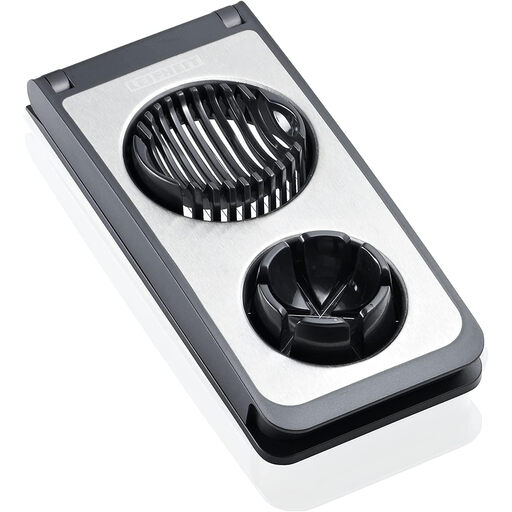
Why it’s a good match: This egg slicer offers three ways to cut eggs, kiwi and boiled potatoes: round slices, oval slices and wedges.
Rather than making vague claims about versatility, the model specifies its three cutting functions and the foods it’s suitable for.
Stainless steel housing, rust-resistant wires and a folding mechanism; according to the product details, it should be washed by hand.
We’ve put together a complete, regularly updated list of products that meet these strict selection criteria and fully comply with the safety regulations in force in the EU.
Never leave sharp blades and cutting wires loose in a drawer. Use the finger guard provided and keep your hands away from the cutting area. For electric appliances, also check the safety lock, switch and power supply before buying.
Check the manufacturer’s cleaning instructions before using the product for the first time. The Leifheit Combi ProLine should be washed by hand. According to its product description, the 5five mandoline is dishwasher-safe. Don’t assume these instructions apply to every part: individual blades, frames and containers may have different care requirements.
Choose a model with at least two clearly specified attachments. The 3 BLADES SLICER lists slicing, julienne strips and grating as its intended cutting styles. Also check whether it includes a pusher or finger guard.
Its lifespan depends on the materials, how often you use it, how you clean it and how you store it. Stainless steel blades should be stored dry and shouldn’t be used on hard foods they’re not designed to cut. If the attachments are interchangeable, it’s also worth checking whether replacement parts are available.
It depends on what you’ll use it for. An electric all-purpose slicer is particularly suited to larger quantities, as well as bread, cheese and cold meats. For small portions of vegetables, a manual vegetable chopper or mandoline is often enough. The key is to check which foods and slice thicknesses the model is explicitly designed for.