
Lieferung heute & morgen

Qualitätsgarantie

Willkommens-Angebote freischalten: KOSTENLOSE Lieferung | Bis zu 80 % RABATT | Kostenlose 30-Tage-JoyPlus-Testphase
App herunterladen
A vegetable chopper can prepare onions, herbs, fruit, nuts or meat much faster than a kitchen knife. At the same time, appliances vary considerably in terms of operation, cutting results, capacity and cleaning. If you focus only on a high wattage or the number of attachments included, you can easily end up buying a model that sees little use in everyday life.
With an electric vegetable chopper, motor power is an important factor, but it is not the only one. An appliance with a high wattage can still produce uneven results if the bowl, blade arrangement or pulse control is not suited to the intended use. For soft ingredients such as herbs or onions, simple operation with short pulses is often sufficient. For nuts, harder vegetables or meat, motor power, blade design and maximum filling capacity are more important.
A compact vegetable chopper saves space, but it fills up quickly when preparing larger quantities. If the bowl is overfilled, ingredients may remain around the sides or place greater strain on the motor. A vegetable cutter with container should therefore be selected to match your usual portion sizes. For individual onions or herbs, around 220 to 500 millilitres is generally enough. If you regularly cook for several people, you should plan for a larger capacity.
Blades with many gaps between them can make cleaning more difficult. Removable parts and dishwasher suitability reduce the effort required, but these features must be explicitly stated in the product description. With any vegetable chopper with stainless steel blades, remember that the blades are sharp and should only be handled by the plastic section. A hand guard is particularly important with manual cutters.
A manual vegetable chopper works without electricity, is usually compact and can be used directly at your workstation. Models with a pull cord are suitable for smaller quantities and ingredients such as onions, garlic, herbs or soft fruit. However, the chopping result depends on the number and strength of the pulling movements.
An electric vegetable chopper offers greater convenience for repeated preparation tasks. One-button or pulse controls make operation easier. For rented homes, small kitchens or occasional use, compact appliances with a capacity of 0.5 to 0.7 litres are often sufficient. For larger quantities, a second bowl or a model with a 2-litre container may be more practical.
A simple onion chopper or kitchen chopper often works with rotating stainless steel blades. Multiple blade levels can help distribute the ingredients around the bowl, but they do not replace an adjustable cutting thickness. If you need cubes, slices and julienne strips, it is better to look for a manual vegetable cutter with different attachments.
The following factors are also important:
Glass bowls are transparent, allowing you to monitor the contents directly. However, they are heavier than plastic containers and can be damaged by sudden changes in temperature. Plastic bowls are lighter and practical for everyday use, provided the information about the material and cleaning requirements is clear and reliable.
Before buying, check the following:

Why this product suits this profile: The manual kitchen chopper has a 220 ml container, requires no electricity and is suitable for small portions of onions, herbs, fruit or vegetables.
The manageable container size limits the quantity processed in each batch and prevents the compact chopper from being accidentally overfilled.
Manual operation without a power connection; portable format for small kitchens and individual ingredients.
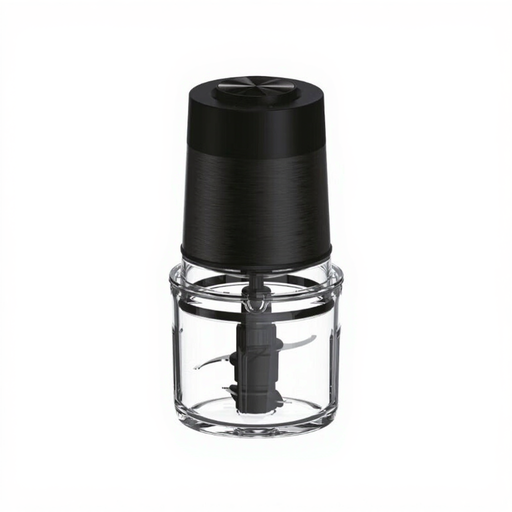
Why this product suits this profile: According to the product details, this electric vegetable chopper has 550 watts of power, a 0.5-litre glass bowl, four stainless steel blades and two speed settings with a pulse function.
The pulse function lets you control the consistency at intervals, while the stated filling capacity provides clear guidance for portion sizes.
The glass bowl and blades are dishwasher-safe according to the product description; two speed settings support different types of ingredients.

Why this product suits this profile: Two glass bowls with capacities of 0.6 and 2 litres, together with two sets of stainless steel blades, cover both small and larger preparation tasks.
The two containers prevent small quantities from being spread too thinly in an oversized bowl, while larger quantities do not need to be processed in as many batches.
300 watts, two speed settings and dishwasher-safe glass bowls according to the product details; a safety lock and non-slip base are also specified.
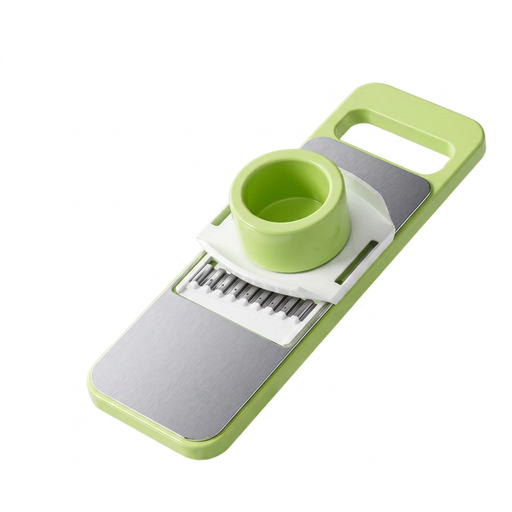
Why this product suits this profile: This manual vegetable cutter combines slicing, dicing and julienne functions for vegetables such as onions, potatoes and cucumbers.
The stated hand guard reduces direct contact between fingers and the cutting edge. The attachments should nevertheless be cleaned carefully and stored safely.
Three stainless steel blades according to the product description; several cutting options in a compact, electricity-free design.
We have put together a complete, regularly updated list of products that fully meet these strict selection criteria and the safety regulations applicable in the EU.
The manufacturer’s instructions should be followed for all models. Electrical appliances must be connected to a suitable socket with the specified voltage. The motor base must not be immersed in water. Unplug the appliance before removing the blade. When using electric appliances such as the Philips HR1393/00 with 450 watts and a 0.7-litre bowl, short pulses are recommended to help you control the desired consistency more precisely.
Hot ingredients should be allowed to cool before chopping. Bowls, lids and blades should only be placed in the dishwasher if this is expressly stated in the product description or instructions. Overfilling can affect processing and place strain on the motor.
For individual onions, a manual onion chopper or pull-cord chopper is usually sufficient. If you regularly prepare larger quantities, an electric kitchen chopper offers greater convenience. The key factors are the container size, blade arrangement and the ability to work in short pulses.
There is no standard lifespan that can be given across the board. It depends on how often the appliance is used, the ingredients processed, cleaning and proper storage. Overfilling, hard foreign objects and incorrect cleaning can place greater strain on the blades, bowl or motor. Removable parts and clear care instructions make regular maintenance easier.
A vegetable chopper usually runs for only a short time, as ingredients can be processed in just a few pulses. When it comes to ongoing electricity costs, it is therefore not only the wattage that matters, but also how long and how often the appliance is used. A manual vegetable chopper uses no electricity during operation, but it does require physical pulling or pressing movements.