
Lieferung heute & morgen

Qualitätsgarantie

Willkommens-Angebote freischalten: KOSTENLOSE Lieferung | Bis zu 80 % RABATT | Kostenlose 30-Tage-JoyPlus-Testphase
App herunterladen
If you regularly prepare vegetables, fruit, herbs or nuts, you’ll want a kitchen chopper that delivers consistent results, is easy to clean and feels safe to use. But product descriptions for vegetable choppers and food processors can vary considerably. A gadget that’s suitable for onions won’t necessarily be designed for nuts or hard carrots.
So before buying, home cooks, families and health-conscious shoppers should look beyond the wattage or number of functions. What matters most is how you’ll use it, the container size, the blade material and how much effort it takes to clean.
A multi-purpose kitchen slicer can slice, grate and shave. But if you rarely use the attachments or find them difficult to clean, some of them may end up gathering dust. For small amounts of garlic, onions or herbs, a manual vegetable chopper is often all you need. If you regularly prepare larger portions, an electric food processor with a generously sized container is likely to suit you better.
Motor power is just one technical detail. The shape of the blades, whether you use the appliance in short bursts and how much food you put in all matter too. A compact 500-watt electric chopper may be suitable for small portions, but an overfilled container can still leave you with unevenly chopped pieces.
Sharp blades, wire cutters and mandoline attachments need to be stored safely and cleaned with care. With electric appliances, keep the motor base, cable and plug away from water. And a claim such as “dishwasher-safe” won’t necessarily apply to every part. For example, the Leifheit egg slicer should be washed by hand, while the glass containers on some choppers are dishwasher-safe.
An onion chopper or garlic chopper usually works in short bursts and has a small container. For salads, potatoes or evenly sliced vegetables, a vegetable slicer or mandoline slicer is a better choice. An egg slicer, meanwhile, is designed for soft, cooked foods and specific cutting styles.
Before you buy, consider:
Small containers of around 220 to 500 millilitres are ideal for individual ingredients, dips or small amounts of herbs. A larger container is more practical for family portions. Even so, avoid overfilling it, as the ingredients may not be chopped evenly.
The Bear Chopper QSJ-D03Q1 comes with two glass containers, holding 0.6 and 2 litres. This makes it easy to prepare small and large quantities separately. According to the product information, the containers and lid are not heat-resistant or suitable for microwave use. Temperature changes of more than 50 °C should also be avoided.
Stainless steel blades are common on many appliances. Rather than relying on a general marketing claim, check whether the blades can be removed, how they should be cleaned and whether there’s a secure locking mechanism. On electric appliances, a safety lock, a stable base and pulse control are all useful features.
An electric food slicer for bread, fruit or vegetables also needs an adjustable cutting range and a safe way to guide the food. According to the product description, the ritter Sono¹ has a removable carriage with an 18 cm cutting length, a safety glass plate and an adjustable thickness setting, from very thin slices up to around 20 mm.
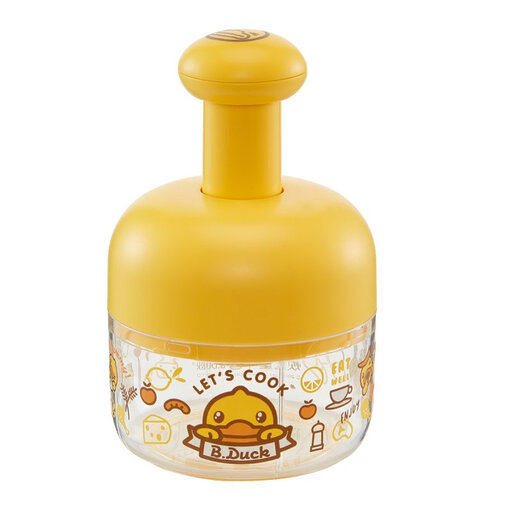
Why it suits this type of user: This manual vegetable chopper has a 220 ml container, needs no electricity and is ideal for small amounts of onions, garlic, herbs, fruit or nuts.
Its straightforward design means fewer unnecessary accessories and less storage space needed. Small batches don’t require a powerful motor.
Manual operation, compact capacity and portable design.

Why it suits this type of user: The two glass containers, holding 0.6 and 2 litres, make it easy to prepare different quantities, whether you’re chopping a single ingredient or a larger portion of vegetables.
Separate containers mean a small amount won’t get lost in an oversized bowl. The temperature guidance also helps prevent misuse.
300 watts, two speed settings, glass containers and removable components.
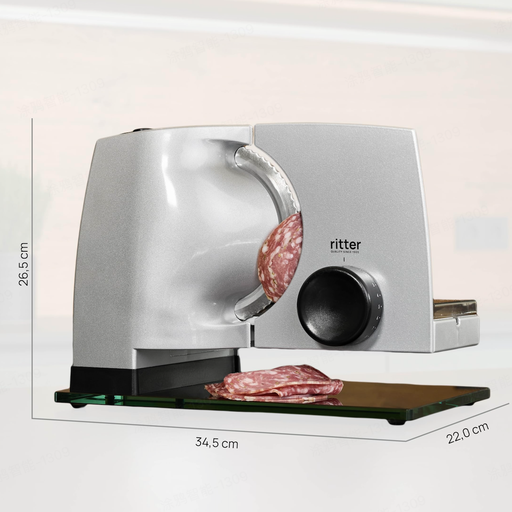
Why it suits this type of user: This electric food slicer is designed for bread, fruit and vegetables, with an adjustable cutting thickness of up to around 20 mm.
The specified cutting length and removable carriage make key design features clear. Its safety features help you use it with control.
Safety glass plate, 18 cm cutting length and Eco motor, according to the product description.
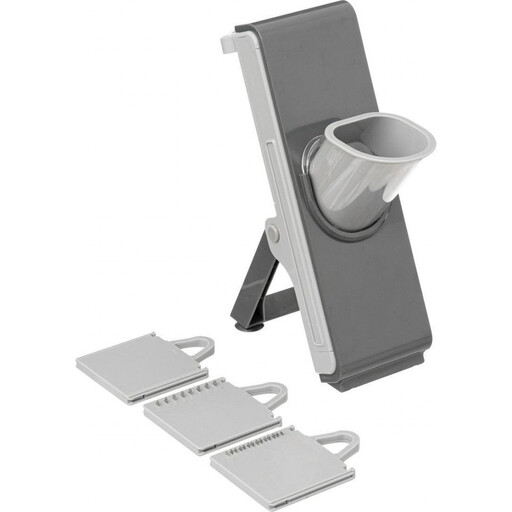
Why it suits this type of user: This vegetable slicer combines slicing, grating and chopping. At 26.5 cm long and supplied with pushers, it’s designed to help with a range of vegetable prep.
The pushers help protect your fingers. As it has stainless steel blades, use the appliance with care and clean it according to the manufacturer’s instructions.
Stainless steel blade, several functions, pushers and a dishwasher-safe design, according to the product information.
We’ve put together a complete, regularly updated list of products that meet these strict selection criteria and fully comply with the safety regulations in force in the EU.
For garlic, onions, herbs or single portions, a manual vegetable chopper with a small container should be enough. It doesn’t need electricity and is usually easy to store without taking up much space. For regular family-sized portions, an electric chopper with a larger container is a better choice.
Its lifespan depends on how often and how heavily you use it, as well as how you clean it. Only process hard foods if the product description says the appliance is suitable for them. Using short bursts, filling the container correctly and avoiding overheating can reduce wear on the motor and blades. Removable parts should be left to dry completely before you put them back together.
Electricity use depends on the motor power and how long the appliance runs. Food processors usually run for just a few seconds at a time or in short bursts, so each use is brief. When comparing models, consider not only the wattage but also how long each task takes and whether the container size suits your needs.