
Lieferung heute & morgen

Qualitätsgarantie

Willkommens-Angebote freischalten: KOSTENLOSE Lieferung | Bis zu 80 % RABATT | Kostenlose 30-Tage-JoyPlus-Testphase
App herunterladen
A vegetable cutter can prepare vegetables, potatoes, eggs or cheese more quickly and evenly. But not every model suits every household. Some devices boast numerous functions yet are fiddly to clean. Others appear sturdy but lack adequate finger protection or are only suitable for a few types of food.
Before you buy, it is worth taking a close look at the construction, materials and actual intended use. The following tips will help home cooks, families and busy households avoid common buying mistakes.
A vegetable chopper, a mandoline or a multi-function vegetable cutter can slice, grate, dice and produce julienne strips. What really matters, however, is whether the inserts are securely fixed and easy to clean after use. Lots of loose parts increase the effort and can quickly become cluttered in a kitchen cupboard.
If you mainly process potatoes, onions or cucumbers, you do not necessarily need a device with a large number of attachments. A dedicated potato cutter or onion cutter can be more practical for the job.
A sharp blade makes cutting easier, but it also increases the risk of injury if handled incorrectly. A hand guard, non-slip feet and a sturdy frame are therefore important features. With a mandoline, you should avoid guiding food directly over the cutting surface with your hand.
An egg slicer also works with tensioned wires. Keep your fingers away from the cutting elements during use. Such kitchen tools are not suitable as toys for children.
The term "robust" alone tells you little about the actual construction. Look for specific details such as stainless steel blades, rust-resistant cutting wires or a food-grade plastic design. With a stainless steel vegetable cutter, it should also be clear which parts are actually made of stainless steel and which are made of plastic.
First, think about which foods you prepare regularly:
The product description should clearly state which foods the device is intended for. Frozen ingredients, hard cores or very firm foods are not suitable for many manual models.
With cutters that have interchangeable inserts, the number of blades alone is not a sign of quality. More important are a secure fit, easily accessible controls and a clear description of the cutting types. For electric devices, the adjustable cutting thickness should be specified. According to the product description, the Ritter Sono¹ model works with a cutting thickness from paper-thin up to approximately 20 mm. The Ritter serano⁷ allows settings up to 23 mm.
For kitchen tools with wires, such as an egg slicer, rust-resistant stainless steel wires and a sturdy folding mechanism are important. Hand washing may be required for such products.
Check before you buy:
According to the product description, the Potato Cutter PP White must not go in the dishwasher. The Leifheit egg slicers mentioned are also intended for hand washing. Such details should influence your buying decision, because a device that is too time-consuming to clean will often be used less in everyday life.
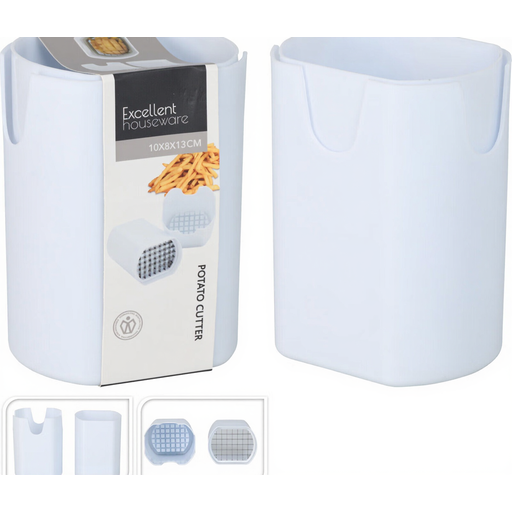
Why this product suits the profile: This manual potato cutter is designed for potato sticks and requires no electricity. Its light weight can be practical for occasional use and smaller kitchens.
The function is clearly limited to potatoes and sticks, rather than promising a confusing array of inserts. Cleaning is done with warm soapy water; dishwasher use is not intended.
PP plastic housing, stainless steel blades and manual operation with no power connection needed.

Why this product suits the profile: For households that regularly want to slice bread, fruit and vegetables to uniform thicknesses, an electric all-purpose slicer offers more adjustment options than a simple hand slicer.
The product description specifies a removable food carriage guide, a safety glass plate, and safety momentary and continuous switches. This clearly addresses the key operation and cleaning points.
Cutting thickness up to approximately 20 mm, 18 cm food carriage travel and, according to the supplier, manufactured in Germany.
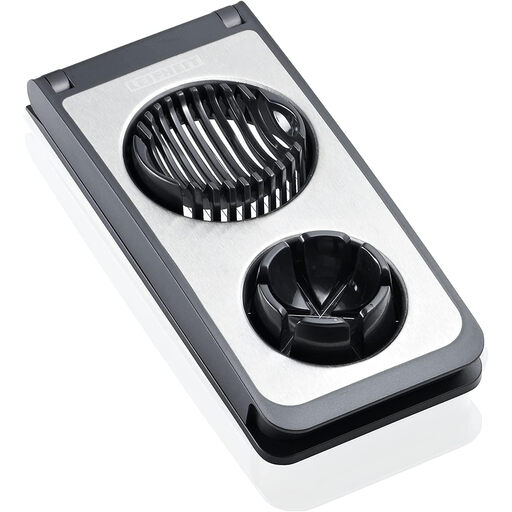
Why this product suits the profile: This egg slicer is aimed at households that frequently cut eggs, kiwis or boiled potatoes into slices, oval shapes or wedges.
The three cutting functions are clearly described. The non-slip base and folding mechanism address stability and space-saving storage. According to the product details, only hand washing is intended.
Rust-resistant stainless steel wires, three manual functions and a compact folding design.
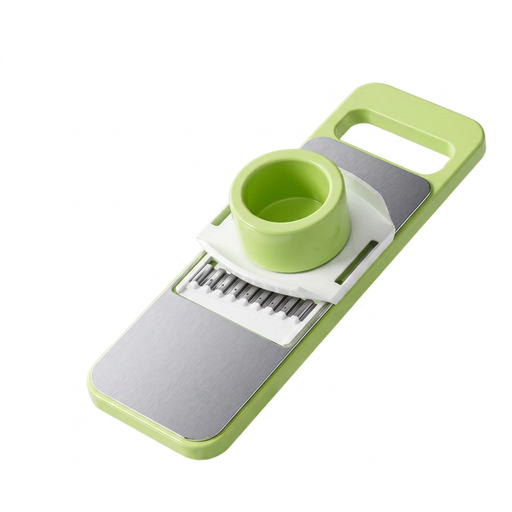
Why this product suits the profile: If you want to prepare onions, potatoes, cucumbers and other vegetables in different shapes, this manual helper offers slicing, dicing and julienne functions.
The integrated hand guard keeps your fingers away from the stainless steel blades. The three intended cutting types are more clearly defined than a general marketing claim about many functions.
Food-grade stainless steel blades, hand guard and three described uses.
After use, remove any coarse food residue before it dries onto the blades or wires. Wash parts that are not dishwasher-safe with warm water and mild washing-up liquid. Then allow all components to dry completely before reassembling and storing them.
Blades and cutting wires should not be left loose in a drawer. Protective covers or a safe storage position reduce the risk of cuts. With electric devices, the housing and motor area should not be cleaned under running water.
We have put together a complete, regularly updated list of products that fully meet these strict selection criteria and the safety regulations in force in the EU.
For chips or even sticks, a dedicated potato cutter is ideal. For slices or dice, a mandoline or a multi-function vegetable cutter may be more suitable. Check beforehand whether the size of the potatoes fits the filling opening.
The lifespan depends on the materials, how much it is used, how it is cleaned and how it is stored. Stainless steel blades or stainless steel wires can last a long time with proper care. Plastic parts should not be overloaded and should only be treated according to the care instructions.
The electricity consumption depends on the motor power and how long it is used. With occasional slicing, the energy demand is usually only during the short operating time. Before buying, you should also consider the noise level, safety features, cleaning effort and the desired cutting thickness.