
Lieferung heute & morgen

Qualitätsgarantie

Willkommens-Angebote freischalten: KOSTENLOSE Lieferung | Bis zu 80 % RABATT | Kostenlose 30-Tage-JoyPlus-Testphase
App herunterladen
A good vegetable knife is the cornerstone of any kitchen. It simplifies the daily preparation of fruits and vegetables, from simple peeling to precise cuts. However, the market is flooded with models whose marketing claims often create more confusion than clarity. As your Joybuy Product Recommendation Officer, I'll help you identify the crucial features and avoid common purchasing pitfalls, ensuring you find a tool that will maintain its sharpness and performance for years to come.
The selection can be overwhelming. Many buyers focus on marketing buzzwords or a high price tag without examining the practical features. This often leads to frustration and buyer's remorse. Pay close attention to these three common pitfalls:
To make an informed decision, you should focus on objective and verifiable features. These three parameters are the primary determinants of a vegetable knife's performance and longevity.
The blade is the heart of the knife. Most high-quality vegetable knives use stainless steel. More important than exotic names is the craftsmanship. Look for a smooth, polished surface and a clean, continuous grind.
The blade length for vegetable knives typically ranges from 6 to 12 cm.
While some blade flexibility can be advantageous for certain tasks, a stiff, stable blade is preferable for most vegetables as it allows for more precise cuts.
The handle should fit securely and comfortably in your hand, even when wet. Modern plastics like polypropylene (PP) have proven effective. They are lightweight, hygienic, dishwasher-safe, and often feature a lightly textured surface for a better grip. Look for a seamless transition between the blade and handle, as this prevents dirt from accumulating.
Based on these objective criteria, we have identified several products that are particularly well-suited for different user profiles and use cases.
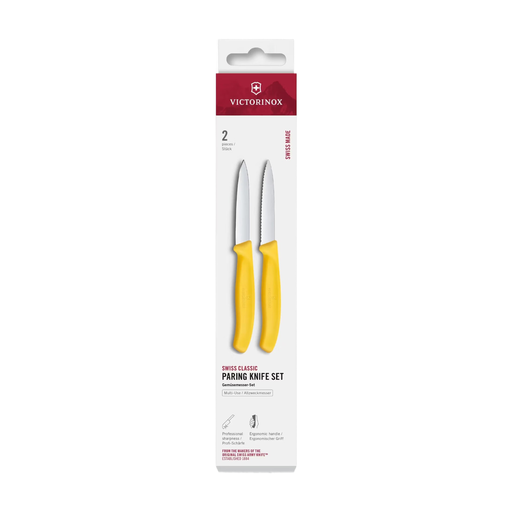
Why This Fits Their Persona: This set is designed for daily use. It offers a straightforward yet effective solution for the most common cutting tasks in the kitchen, without requiring a deep dive into knife science.
It avoids the "one-knife-for-everything" trap by offering two specialised blades: a plain edge for peeling and a serrated one for tomatoes. The ergonomic PP handle ensures a secure grip.
Versatility: Two different blade types in one set. Easy to Maintain: Dishwasher-safe materials and proven Swiss manufacturing quality.
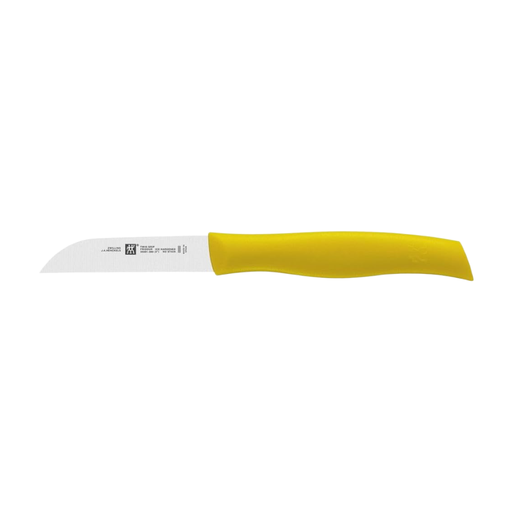
Why This Fits Their Persona: For users who value material quality and durability. This knife from an established German brand represents an investment in lasting sharpness and corrosion resistance.
It debunks the "miracle steel" myth by using a specific technology: The FRIODUR ice-hardened blade offers demonstrably high edge retention and corrosion resistance. The textured handle ensures safety.
Durable Blade: The special ice-hardening process ensures high resilience. Secure Grip: The non-slip plastic handle provides good control, even when wet.
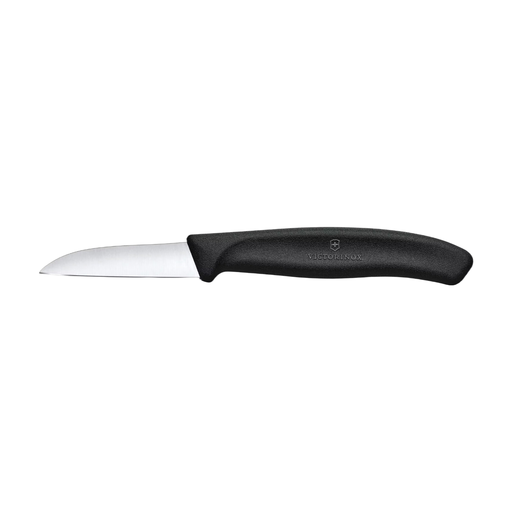
Why This Fits Their Persona: Ideal for chefs who need maximum control for detail-oriented tasks like peeling small, irregular vegetables, deseeding chillies, or creating garnishes. This knife is a specialised tool.
This knife is the opposite of a compromise. It is intentionally designed for a niche purpose and excels through its specialisation. It's not an all-rounder, but a precise garnishing knife.
Maximum Control: The extremely short 6 cm blade allows for unmatched agility. Lightweight: Weighing only 20g, it feels feather-light in the hand and prevents fatigue.
We have compiled a complete, up-to-date list of products that fully meet these strict selection criteria and rigorous safety standards.
For tomatoes and other soft fruits with firm skins, a serrated knife is the right choice. The toothed blade cuts cleanly through the skin without crushing the pulp. Many vegetable knife sets include such a tomato knife.
Even the best knife will become dull over time. Proper care is crucial for maintaining its sharpness. Although many knives are labelled as dishwasher-safe, washing by hand is gentler on the blade. For sharpening, you can use honing steels or dedicated knife sharpeners. However, caution is advised with small, delicate blades. A sharp knife is a safe knife, as less pressure is needed when cutting.
For most households, a vegetable knife set is a very practical solution. A typical set, consisting of a peeling knife with a plain edge and a serrated knife, covers over 90% of daily tasks in fruit and vegetable preparation. It offers a cost-effective way to have the right tool on hand for various jobs.