
Lieferung heute & morgen

Qualitätsgarantie

Willkommens-Angebote freischalten: KOSTENLOSE Lieferung | Bis zu 80 % RABATT | Kostenlose 30-Tage-JoyPlus-Testphase
App herunterladen
A vegetable knife may be small, but it gets plenty of use in the kitchen: peeling potatoes, trimming vegetables, slicing tomatoes and garnishing fruit. Its compact design can make it easy to underestimate how important your choice is. Many buyers focus only on colour and price, overlooking blade length, edge type and handle design.
Three common buying mistakes can lead to unnecessary expense later:
An 8 cm vegetable knife is ideal for particularly controlled work, such as peeling small ingredients, removing stalks and carrying out fine garnishing. Its short blade is easy to guide and takes up little space in the cutlery drawer.
A 10 cm vegetable knife gives you a little more reach. It’s useful if you regularly cut larger apples, peppers, courgettes or other medium-sized ingredients. The extra length can also come in handy when trimming and portioning.
Your choice should therefore depend on your hand size, the ingredients you usually prepare and the storage space available. Catering businesses may find it useful to keep both lengths on hand for different preparation tasks.
A serrated vegetable knife grips the surface of soft foods without needing much pressure on the first cut. Typical uses include:
A tomato knife often has a serrated edge and a pointed tip too. Its toothed blade can be handy for soft foods, but it needs sharpening differently from a straight-edged blade.
A straight-edged paring knife, on the other hand, is well suited to controlled peeling, removing blemishes and decorative work. If you often tournée vegetables or want to cut particularly precise edges, choose the edge type to suit the job.
For a stainless steel vegetable knife, check the details about the blade, corrosion resistance and handle material. A lightly textured plastic or polypropylene handle can offer more control when your hands are wet. A seamless join between the blade and handle makes cleaning easier.
Forged models are often described as being made from a single piece of steel. This can indicate a sturdy design and balanced handling. However, the specific product details matter more than the range name alone.
Also look for:
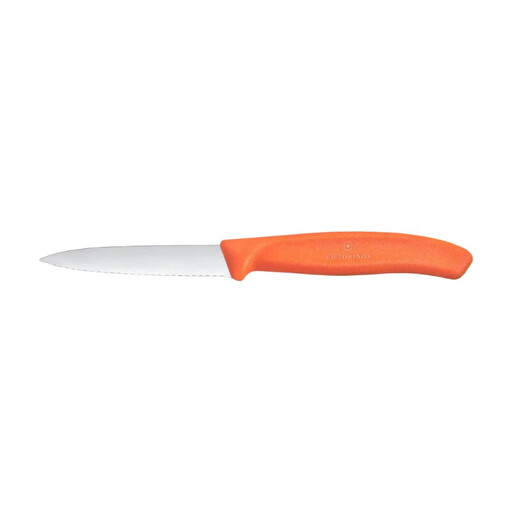
Why this product suits these needs: The compact 8 cm blade and lightweight polypropylene handle are ideal for everyday cutting tasks, without taking up much storage space.
The product details clearly state the blade length, stainless steel construction, serrated edge and handle material. This makes it easy to compare the knife with the tasks you have in mind.
8 cm stainless steel blade with a serrated edge, weighing 20 g and listed as dishwasher-safe.
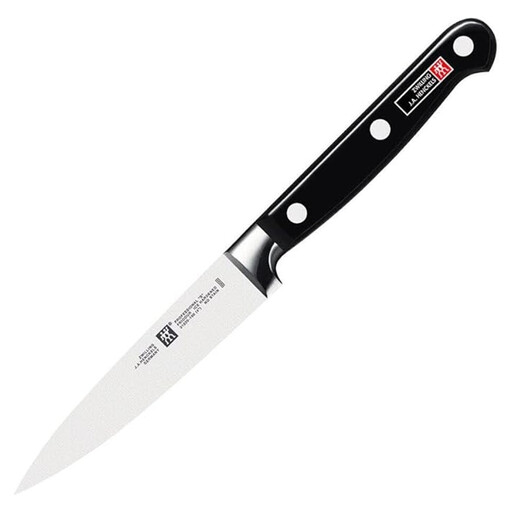
Why this product suits these needs: This model is designed for anyone looking for a 10 cm blade, forged construction and a pronounced handle transition for precise kitchen tasks.
The description specifically recommends hand washing. This avoids the common assumption that a high-quality knife will stay in the same condition over time without proper care.
Described as forged from a single piece, with an ice-hardened blade measuring 10 cm; the handle has three rivets and a sturdy transition.
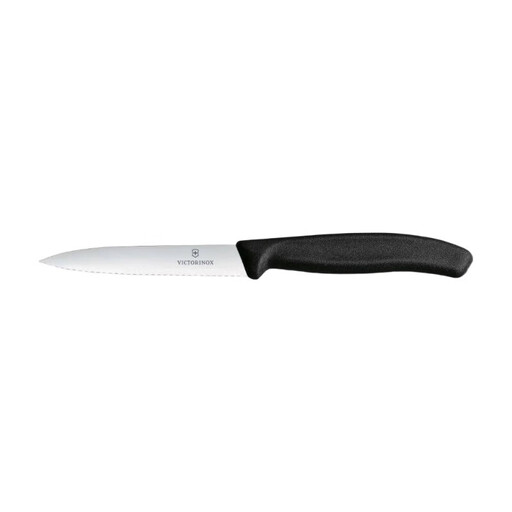
Why this product suits these needs: The longer, serrated blade is designed for repeated preparation tasks involving soft fruit and vegetables.
The 10 cm length isn’t presented as an advantage for everyone. It’s a good fit for those who need more reach than a small kitchen knife can offer.
Stainless steel blade with a serrated edge and central tip, an ergonomic polypropylene handle and a weight of 27 g, according to the product details.
Clean the knife as soon as possible after use and dry the blade and handle thoroughly. Don’t use an unsuitable honing steel on a serrated vegetable knife. Instead, check whether the manufacturer recommends a suitable sharpening method.
Use a sturdy wooden or plastic chopping board. Glass, stone and hard ceramic surfaces can damage the blade. Don’t use the knife to prise things open, open packaging or cut frozen food. Keep it out of children’s reach.
We’ve put together a complete, regularly updated list of products that meet these strict selection criteria and fully comply with the safety regulations in force across the EU.
Neither length is automatically better. An 8 cm blade often offers more control when working with small ingredients and carrying out fine tasks. A 10 cm blade is a good choice if you regularly prepare larger fruit and vegetables or need a little more reach.
Yes, a serrated edge can be used for some peeling tasks, particularly with soft fruit or firm skins. For very precise, smooth peeling cuts, a traditional paring knife with a straight edge is often a better choice.
How long it stays sharp depends on the chopping board, ingredients, care and frequency of use. Hand washing, drying it straight away and storing it properly help reduce unnecessary wear. If its cutting performance starts to decline, have the blade sharpened professionally or follow the manufacturer’s advice.