
Lieferung heute & morgen

Qualitätsgarantie

Willkommens-Angebote freischalten: KOSTENLOSE Lieferung | Bis zu 80 % RABATT | Kostenlose 30-Tage-JoyPlus-Testphase
App herunterladen
A vegetable knife is small, but it comes in handy for all sorts of everyday tasks: peeling apples, slicing tomatoes, hulling strawberries, preparing garlic or cutting vegetables into small pieces. Yet with compact kitchen knives, eye-catching product claims don’t always help you choose the right one.
Three common buying pitfalls are worth watching out for:
Compact models are usually best for fine prep work, with blade lengths of 6 to 10 cm. An 8 cm vegetable knife is particularly suited to:
A slightly pointed blade, or a pointed vegetable knife, makes it easier to core fruit and position the blade precisely. A 10 cm blade can be more comfortable for larger ingredients. A small kitchen knife may not be the best choice for large quantities, bunches of herbs or hard foods; a larger chef’s or chopping knife is usually more suitable.
A straight edge is well suited to peeling, dicing and precise cuts. It’s also easy to sharpen with a suitable knife sharpener.
A serrated vegetable knife is more likely to grip the surface of soft foods. This can be useful when cutting tomatoes, peaches or other soft fruit. However, the serrations change the feel of the cut and may not suit everyone for very fine peeling work.
So rather than relying on general claims about quality, ask yourself: will you mainly use the knife for peeling, for soft fruit or for both?
Stainless steel kitchen knives are easy to care for and resist corrosion when cleaned regularly. The product details should specify the exact type of steel. If they don’t, avoid making assumptions about the blade’s hardness or how long it will stay sharp.
When choosing a handle, look for:
A dishwasher-safe vegetable knife can be useful for families and professional kitchens. For the gentlest care, however, we recommend washing it shortly after use with mild washing-up liquid, drying it thoroughly and storing it separately from other cutlery.
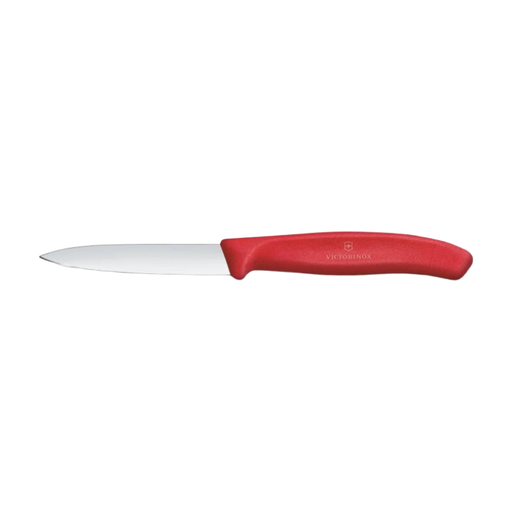
Why this product suits this profile: This compact Swiss vegetable knife is designed for everyday fruit and vegetable prep, and feels light in the hand at just 20 g.
The product details clearly specify a straight 8 cm stainless steel blade, a polypropylene handle and dishwasher suitability, rather than making vague performance claims.
Straight edge, pointed blade, stainless steel and made in Switzerland.
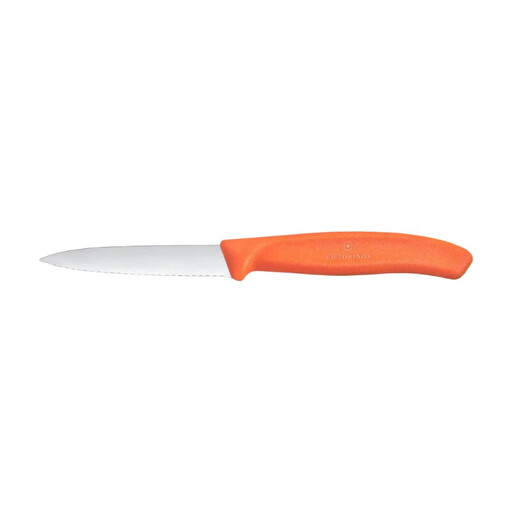
Why this product suits this profile: The serrated edge is a practical option for households that often cut soft fruit and foods with a firmer skin.
The edge is clearly described as serrated, so you can check before buying whether it’s suited to the foods you plan to cut.
8 cm blade made from corrosion-resistant stainless steel, ergonomic PP handle and made in Switzerland.
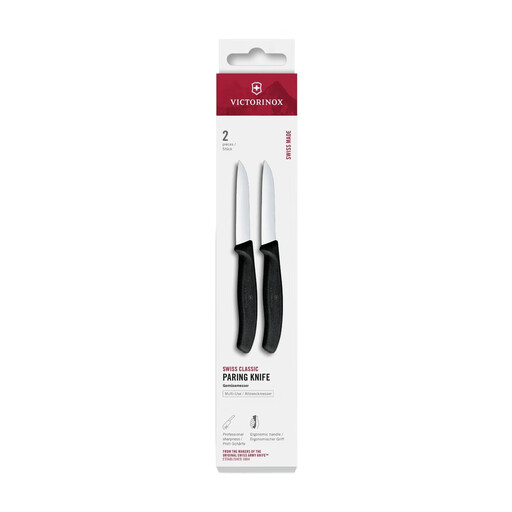
Why this product suits this profile: Two knives with matching specifications are ideal for families, frequent kitchen use or preparing ingredients at the same time.
The two-piece set means you won’t have to rely on a single knife when working in different areas or cooking for a larger household.
Two straight 8 cm blades, lightweight PP handles and dishwasher suitability.
We’ve put together a complete, regularly updated list of products that meet these strict selection criteria and the safety regulations in force across the EU.
Even a well-chosen vegetable knife for fruit and vegetables needs proper care. Use a stable wooden or plastic chopping board, and keep your fingers away from the blade while cutting. Glass, stone or ceramic boards can put more strain on the edge.
Dry the knife thoroughly after washing. Blades left loose in a cutlery drawer increase the risk of injury and may rub against other items. A knife block, blade guard or suitable magnetic storage will help keep things tidy.
For home kitchens and professional kitchens alike, remember that a kitchen knife is intended for preparing food. If carrying one in public in Germany, you must follow the applicable laws and regulations.
For peeling and small cutting tasks, 6 to 8 cm is usually easy to handle. A 10 cm blade offers a little more reach and can be useful for larger fruit and longer cuts. The right length depends on your hand size, cutting technique and the foods you’re preparing.
A serrated edge can be useful for cutting soft fruit or tomatoes. If you mainly peel, core and make very controlled cuts, you may prefer a straight edge. Each type is suited to different tasks.
There’s no reliable way to give a set lifespan. It depends on factors including the chopping board, the foods you cut, how you clean the knife and how often you use it. Hand-washing, drying it carefully and avoiding hard surfaces can help maintain the blade’s edge.