
Lieferung heute & morgen

Qualitätsgarantie

Willkommens-Angebote freischalten: KOSTENLOSE Lieferung | Bis zu 80 % RABATT | Kostenlose 30-Tage-JoyPlus-Testphase
App herunterladen
A vegetable knife is one of the most versatile small kitchen knives. It helps you peel, slice, core and garnish fruit and vegetables. Depending on the design, it can also be used for cheese, cold meats, tomatoes or bread. Its compact shape makes it particularly handy for home cooks, keen cooks and smaller cutting tasks.
However, some product claims can lead to the wrong choice. A striking colour tells you little about the blade, and “dishwasher-safe” does not automatically mean that regular machine washing will protect it in the long term.
A serrated vegetable knife can grip skins, tomato skins and bread crusts well. For clean, straight cuts through potatoes, carrots or herbs, a plain edge is often easier to control. If you’re looking for just one all-rounder, consider whether a straight or serrated edge is better suited to the tasks you do most often.
According to the product description, a dishwasher-safe vegetable knife can go in the dishwasher. However, other cutlery can knock against the edge, harsh detergents can affect the surface, and high temperatures can put strain on the handle. For consistently good cutting performance, hand-washing with mild washing-up liquid and drying the knife afterwards is usually the gentler routine.
A very short knife is nimble but offers less cutting surface. A longer blade makes it easier to work with larger ingredients, but may feel less precise for delicate garnishing. The descriptions 8 cm vegetable knife and 10 cm vegetable knife therefore indicate more than just size: they suggest different uses.
A classic paring knife, utility knife, tourne knife or fruit knife may look similar, but each is designed differently depending on its blade shape. A tourne knife, for example, often has a curved blade for decorative cuts. A utility knife usually has a straighter blade and is designed for a range of food preparation tasks.
When choosing a stainless steel kitchen knife, check the specific product description. Rust-resistant stainless steel makes care easier, but it does not remove the need to dry the knife after washing. Descriptions such as “hardened”, “ice-hardened” or “rust-resistant” refer to the material or manufacturing properties stated by the manufacturer.
A plain edge can be maintained with a suitable honing or sharpening tool. Serrated edges take more care, as not every standard sharpener can sharpen the individual teeth.
The handle should sit securely in your hand when dry and have no sharp joins. Plastic handles are often lightweight and easy to care for. A seamless join between the blade and handle can make cleaning easier. Whatever the model, follow these safety guidelines:
The models below differ in blade length, edge shape, care requirements and intended use. The details are based on the respective product descriptions.
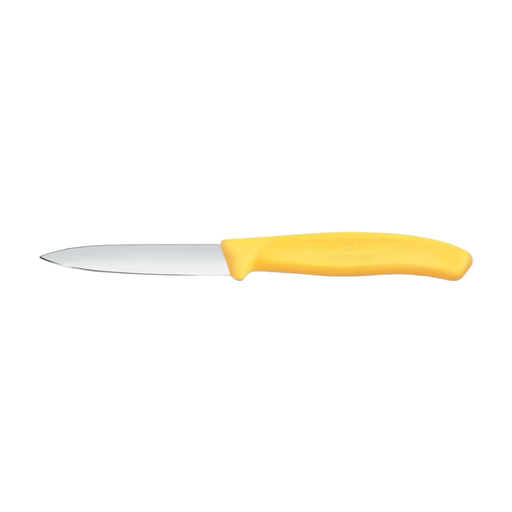
Why this product suits this profile: The 8 cm blade and lightweight plastic handle are well suited to everyday slicing and peeling, without taking up much space in your kitchen drawer.
The straight, rust-resistant stainless steel blade makes the edge type clear. The product description also states that the knife is suitable for the dishwasher.
8 cm blade, ergonomic plastic handle and a lightweight design at just 20 g.
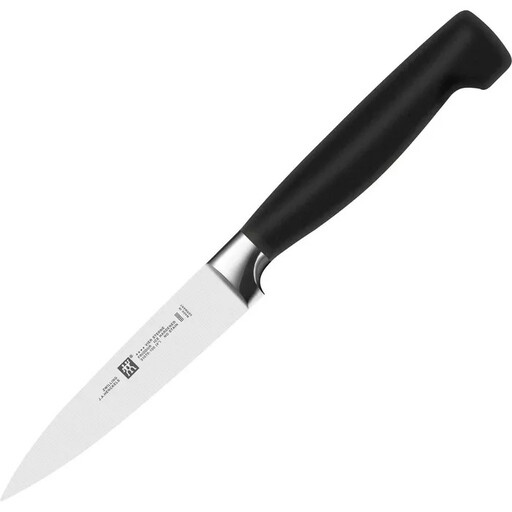
Why this product suits this profile: The 10 cm blade is designed for precise peeling, slicing and garnishing of fruit and vegetables. It offers a little more cutting surface than an 8 cm model.
The product details specify one-piece construction, an ice-hardened blade and a recommendation to hand-wash the knife, despite stating that it is dishwasher-safe.
10 cm blade, SIGMAFORGE construction and an ergonomic plastic handle with a seamless join.
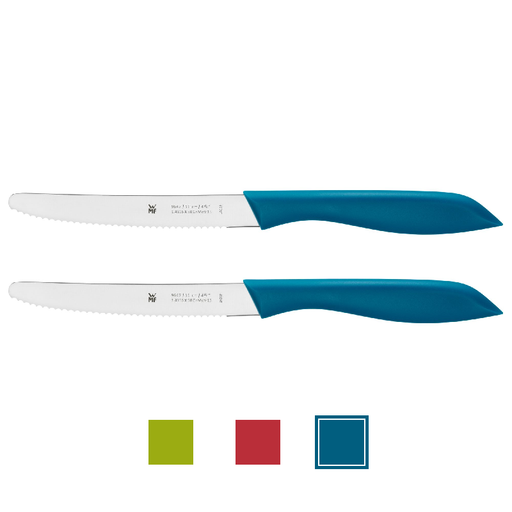
Why this product suits this profile: This set is for households looking for serrated knives for tomatoes, bread, cheese, cold meats, fruit and snacks.
The double-serrated edge is listed as a specific product feature. This makes it easier to assess its suitability for soft foods with firm skins.
Two 11 cm hardened stainless steel blades, ergonomic handles and, according to the product description, dishwasher-safe construction.
We’ve put together a complete, regularly updated list of products that meet these strict selection criteria and fully comply with the safety regulations in force in the EU.
With proper use, a vegetable knife will stay in good working order for longer. After cutting citrus fruit, tomatoes or other acidic foods, clean and dry the blade promptly. Abrasive cleaners and scouring pads can damage the surface.
A knife block, drawer insert, magnetic strip with enough space between knives or blade guard are all suitable storage options. Loose knives in the cutlery drawer increase the risk of injury and can damage the edge.
For most everyday tasks, 8 to 10 cm is a good range to consider. An 8 cm blade is highly manoeuvrable for small ingredients. A 10 cm blade is handy if you regularly cut larger fruit, vegetables, cheese or cold meats.
It depends on what you’ll use it for. A straight edge is suited to controlled cuts and is easier to sharpen. A serrated edge grips firm skins and soft interiors, as with tomatoes, bread rolls or certain fruits. If you tackle a variety of tasks, you could choose a set with both a straight and a serrated blade.
How long the blade stays sharp depends on its material, how you use it, the chopping board, cleaning and cutting technique. Glass and stone surfaces, along with cutting hard or frozen foods, speed up wear. A suitable chopping board, hand-washing and safe storage will help keep the edge usable for longer.