
Lieferung heute & morgen

Qualitätsgarantie

Willkommens-Angebote freischalten: KOSTENLOSE Lieferung | Bis zu 80 % RABATT | Kostenlose 30-Tage-JoyPlus-Testphase
App herunterladen
A vegetable knife is one of those compact kitchen tools that gets used every day: for peeling potatoes, slicing fruit, dicing small ingredients or adding garnishes. Since many models look similar, it is worth taking a close look at the technical specifications.
An 8 cm vegetable knife is well suited to controlled tasks held directly in the hand or performed on a chopping board. For larger ingredients or longer cutting movements, however, a 10 to 13 cm blade may be more practical. A small kitchen knife is therefore not automatically suitable for every task.
A vegetable knife with a straight blade supports clean, controlled cuts and is suitable for peeling, removing cores, dicing and garnishing. A serrated vegetable knife can offer advantages when cutting tomatoes, soft fruit or firm skins, but it is not always the best choice for fine peeling movements.
A kitchen knife described as dishwasher-safe can generally be cleaned in the dishwasher. Frequent washing, high temperatures and harsh detergents can nevertheless put more strain on the cutting performance and handle surface than gentle hand washing. If you want to keep the blade sharp for as long as possible, clean the knife immediately after use with mild washing-up liquid and dry it thoroughly.
A paring knife and a fruit knife are often between 6 and 10 cm long. Length is not the only important factor; the shape of the tip also matters. A centrally positioned or sharply tapered blade makes it easier to remove stalk ends and work on small contours.
Stainless steel is a practical material choice for everyday kitchen use. It is corrosion-resistant and easy to care for, but it does not replace drying the knife after cleaning. A straight edge is easy to control for classic vegetable preparation. A serrated edge grips smooth or soft surfaces more effectively and can be helpful when cutting tomatoes and soft fruit.
You should also look for clear information about blade length, edge type and handle material. Terms such as “professional sharpness” are of little value without a technical explanation. Specific details are more useful, such as an 8 cm blade, stainless-steel blade, polypropylene handle or FRIODUR-ice-hardened stainless steel, provided these are stated in the product description.
An ergonomic handle should sit securely in your hand and remain easy to control even when your hands are damp. Lightweight polypropylene or plastic handles can be comfortable when peeling and garnishing. For longer cutting tasks, the balance between the blade and handle is also important.
Before buying, check whether the model is described as dishwasher-safe. Even so, hand washing can help protect both the blade and the handle. Do not leave a vegetable knife loose among other cutlery. A knife block, magnetic strip or blade guard reduces the risk of damage and cuts.
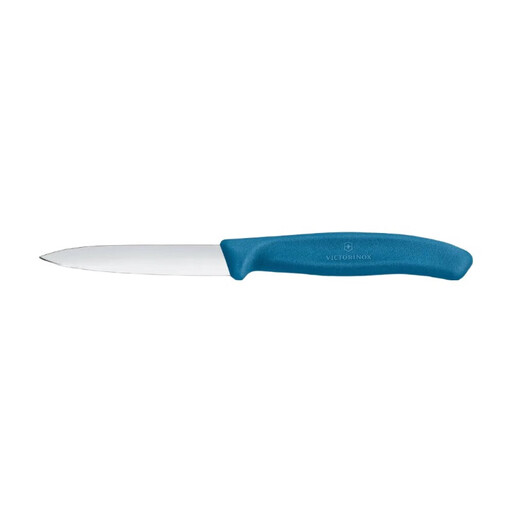
Why this product suits this profile: The 8 cm blade and 20 g weight are designed for everyday cutting and peeling tasks. The blue polypropylene handle makes it easier to identify in a busy kitchen.
The product details specify the blade length, material, weight and dishwasher suitability instead of relying solely on general claims about sharpness.
Straight 8 cm stainless-steel blade, lightweight PP handle and stated dishwasher suitability.
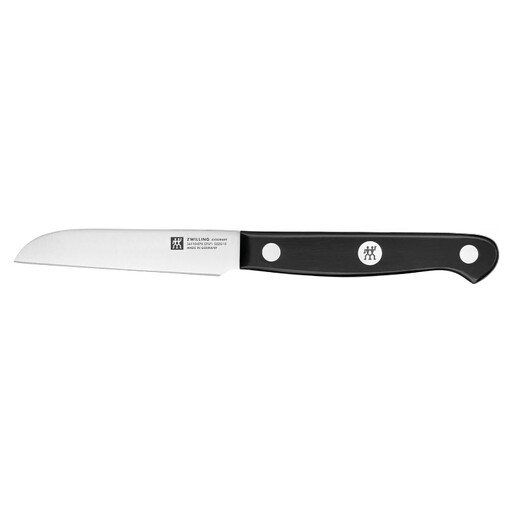
Why this product suits this profile: The product description specifies a ground V-edge, an 8 cm blade and a FRIODUR-ice-hardened stainless-steel blade. The ergonomic plastic handle is designed for controlled handling.
The blade type, blade length, hardness range of 55–58 HRC and cutting angle are described clearly in the product details.
Straight V-blade, FRIODUR-treated stainless steel, ergonomic handle and stated dishwasher suitability.
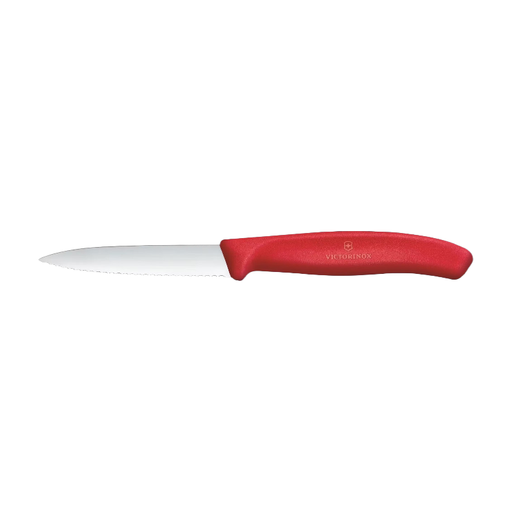
Why this product suits this profile: The serrated 8 cm blade is designed for soft fruit, tomatoes and foods with firmer skins. The lightweight red PP handle supports frequent short cutting tasks.
The serrated edge is clearly stated. This lets you check before buying whether the knife is suitable for tomatoes, soft fruit and similar ingredients.
Serrated stainless-steel blade, 8 cm length, 20 g weight and ergonomic plastic handle.
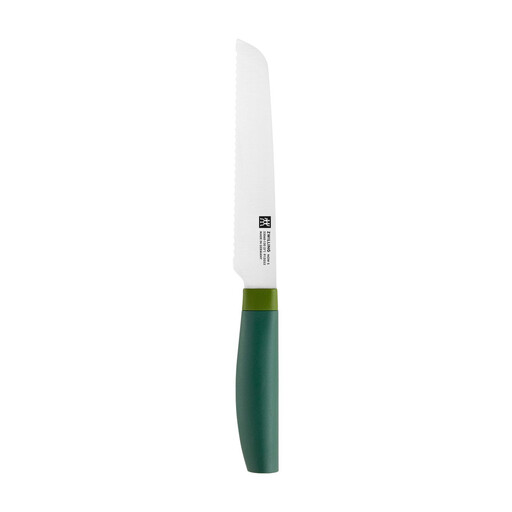
Why this product suits this profile: The 13 cm blade extends its use beyond that of a classic vegetable knife. According to the product details, the serrated edge is suitable for vegetables, fruit, bread, cheese and sausages.
The longer blade is not classed as a classic paring knife, but as a utility knife with several clearly stated applications.
13 cm serrated edge, FRIODUR stainless steel, ergonomic ABS handle and stated dishwasher suitability.
We have put together a complete, regularly updated list of products that fully meet these strict selection criteria and the safety regulations applicable in the EU.
For typical tasks such as peeling, removing cores and garnishing, 6 to 8 cm is easy to handle. If you regularly cut larger vegetables and fruit, you can choose a 10 cm model. From 12 cm onwards, the knife is often more of a versatile utility knife.
That depends on how you intend to use it. A straight blade is suitable for controlled cuts and fine peeling tasks. A serrated edge can be useful for tomatoes, soft fruit and firm skins. For many households, both versions complement each other.
How long the cutting edge remains effective depends on the chopping board, cutting technique, cleaning routine and frequency of use. Hard surfaces, loose storage in the cutlery drawer and frequent dishwasher cleaning can put more strain on the blade. Hand washing, drying and safe storage help preserve the edge.