
Lieferung heute & morgen

Qualitätsgarantie

Willkommens-Angebote freischalten: KOSTENLOSE Lieferung | Bis zu 80 % RABATT | Kostenlose 30-Tage-JoyPlus-Testphase
App herunterladen
A vegetable knife is one of those compact kitchen tools used every day for peeling, coring and cutting fruit and vegetables. However, its simple design often means that choosing the right one is underestimated. A short blade is not automatically practical, a striking handle says little about how comfortable it is to use, and “dishwasher safe” does not mean that the dishwasher is the gentlest way to clean it for every type of use.
This buying guide explains which features matter before you buy and which model may suit different usage profiles.
An 8 cm vegetable knife offers enough length for many cutting tasks, but may be less manoeuvrable than a 6 cm vegetable knife when carrying out small, precise jobs. Conversely, a 6 cm blade is less suitable for larger fruit or longer cuts. The key consideration is therefore not a general size specification, but how you plan to use the knife.
Advertising often highlights sharpness without providing information about blade material, grind or edge shape. For everyday use, a straight grind, stainless steel and a suitable blade length are more reliable selection criteria. A serrated edge is suited to different applications than a smooth cutting edge.
A dishwasher-safe kitchen knife can be cleaned in the dishwasher according to the product details. However, manufacturers often still recommend hand washing, as aggressive detergents, high temperatures and contact with other cutlery can put greater strain on the edge and handle. The knife should be dried completely after cleaning.
For many households, 6 to 8 cm is a practical guideline:
A straight grind allows controlled cuts and is typically suitable as a peeling knife. A serrated edge can offer advantages when cutting foods with a firm outer skin or softer interior, such as bread rolls or tomatoes.
Stainless steel is widely used in everyday kitchen knives because it is corrosion-resistant with normal care and easy to clean. The precise steel composition and hardness affect edge retention and the ability to resharpen the blade. The products presented here are specified as having stainless-steel blades; the Zwilling Twin Grip also features FRIODUR ice hardening and a hardness of 55–58 HRC.
An ergonomic handle should feel secure in your hand without being unnecessarily heavy. Polypropylene or plastic handles are lightweight and resistant to moisture. If you cut frequently, a textured surface and a well-balanced connection between the handle and blade are also important. Colour, on the other hand, is mainly a matter of personal preference, identification and visibility.
A folding knife for picnics and travel can be carried compactly. A cleanly locking mechanism and the complete retraction of the blade before storage are essential. In Germany, the legal requirements for carrying knives in public vary depending on the type of knife and the situation. Users should check the applicable regulations before taking one with them. A picnic knife is also not a substitute for a utility or carpet knife.
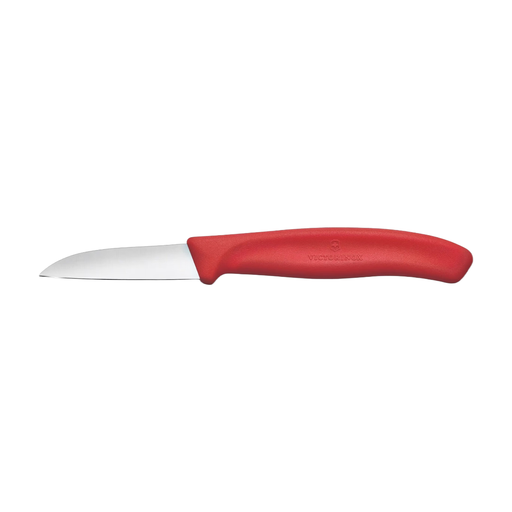
Why this product suits this profile: The short, straight stainless-steel blade is designed for everyday cutting and peeling tasks, while its 20 g weight keeps it light in the hand.
The stated blade length and straight grind make the intended use clear, rather than relying solely on general claims about sharpness.
6 cm blade, stainless steel and dishwasher-safe polypropylene handle.
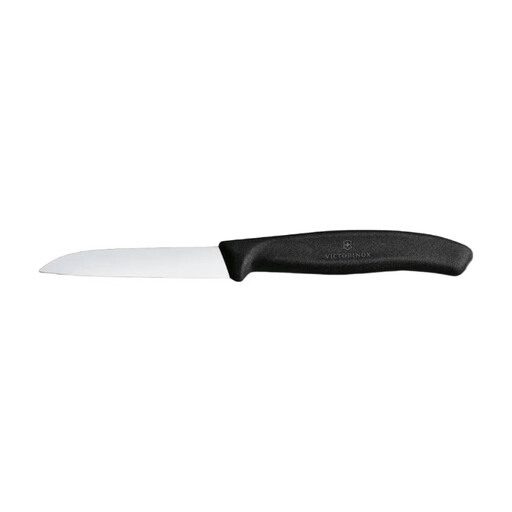
Why this product suits this profile: The 8 cm blade covers typical kitchen tasks. The lightweight PP handle and Swiss manufacture are clearly stated product features.
The specifications state the blade length, material, weight and cleaning guidance. This makes it easier to compare the choice with your own needs.
Straight 8 cm grind, 20 g weight, ergonomic polypropylene handle and dishwasher compatibility.
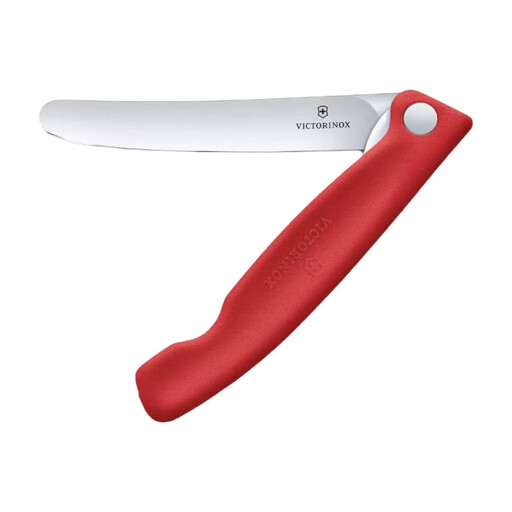
Why this product suits this profile: The folding 11 cm blade is suitable for fruit, vegetables, cured meats and cheese while you are out and about. At 42 g, it can be carried compactly in a bag or rucksack.
The folding function reduces the exposed blade length during transport. The blade must be fully folded into the handle before storing it.
Folding design, straight stainless-steel grind, ergonomic PP handle and stated dishwasher compatibility.
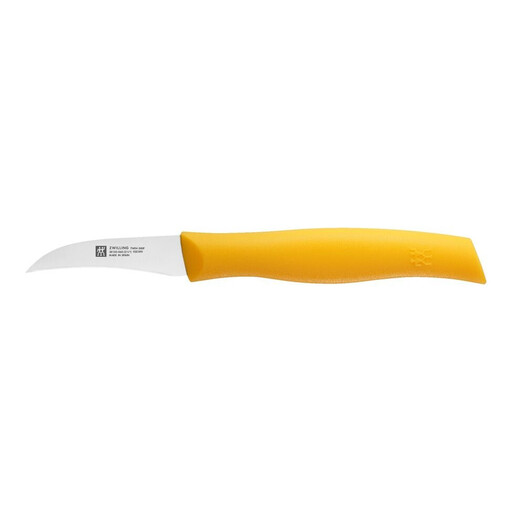
Why this product suits this profile: The 6 cm blade is designed for small, controlled tasks. The manufacturer specifies FRIODUR ice-hardened stainless steel and an ergonomic plastic handle.
The stated hardness of 55–58 HRC and the specific blade length provide more useful information than an unsubstantiated superlative about sharpness.
6 cm stainless-steel blade, FRIODUR ice hardening and a low weight of around 20 g.
We have put together a complete, regularly updated list of products that fully meet these strict selection criteria and the safety regulations applicable in the EU.
Even an easy-care vegetable knife needs to be handled properly:
Yes, a straight peeling knife with a blade length of 6 or 8 cm is suitable for potatoes, apples, carrots and similar foods. For larger pieces, an 8 cm vegetable knife offers greater reach, while a 6 cm blade may be easier to control for small, detailed tasks.
That depends on the relevant product information. The Victorinox models mentioned here and some Zwilling models are described as dishwasher safe. However, hand washing followed by drying is often gentler on the materials and helps preserve the edge and handle for longer.
When you are out and about, a folding blade of around 11 cm can be practical for cutting fruit, vegetables, cheese or cured meats. A folding picnic knife should disappear securely into the handle and only be used for its intended food preparation tasks. The legal regulations governing the carrying of knives should be checked before transport.