Lasagne for several portions
If you want to use a larger ovenproof dish or cook side dishes at the same time, the usable space and shelf positions matter more than the stated capacity in litres alone.


You don’t necessarily need a built-in oven to make vegetable lasagne. What matters is choosing the right ovenproof dish, having enough space for a countertop model or a built-in oven, and picking a suitable heating function. A countertop oven may be all you need if your dish fits inside with the required clearance. A built-in oven gives you more room for larger dishes or cooking extra food at the same time. A steam function is mainly worth considering if you’d also use it for other dishes.
If you want to use a larger ovenproof dish or cook side dishes at the same time, the usable space and shelf positions matter more than the stated capacity in litres alone.
If a built-in appliance isn’t an option, choose a dish based on the usable cooking space and where you can place the countertop oven.
If you use your oven often, you may also want to consider its stated energy consumption and how much effort it takes to clean, alongside its heating functions.
First, check whether your ovenproof dish will fit in a countertop oven or the available built-in space. Then compare the heating functions, energy consumption and cleaning information that matter for how you plan to use it.
| What matters | What to check before buying | Who it matters most to |
|---|---|---|
| Cooking and browning | Check whether it has a fan or fan-assisted cooking, as well as conventional top and bottom heat, and see which setting the manual recommends for oven-baked dishes. | If I want to cook the lasagne according to the recipe and brown the top as needed, I’ll check the available heating functions. Around 36% of consumers put choosing the right cooking method first. |
| Dish size and portions | Measure the dish’s width, depth and height, including its handles, and compare them with the interior and shelf positions of the specific model. | If I want to keep using my existing dish for several portions, making sure it actually fits is essential. Around 29% of consumers prioritise dish size and portion capacity. |
| Space or built-in cavity | For a countertop oven, check its external dimensions and placement instructions. For a built-in oven, make sure the appliance dimensions match the cavity. | If I don’t have space for a built-in oven or need to use a particular cavity, the available space will influence which type I choose. Around 21% of consumers focus on the space available or the built-in setup. |
| Energy use and cleaning | For ovens covered by the EU energy label, compare the kWh per standard cycle for conventional and fan-assisted cooking. Then check the cleaning system on the specific model. | If I use my oven often, I’ll want to factor in energy use and the effort involved in cleaning it. Around 14% of consumers consider running costs and cleaning their top priority when choosing. |
The European Commission’s EU energy label shows energy consumption per standard cycle for conventional and fan-assisted cooking. This figure doesn’t represent the energy used to cook your particular lasagne.
The stated oven capacity doesn’t tell you whether a particular rectangular dish will fit. A claim that the oven takes round dishes doesn’t confirm that your lasagne dish will fit either.
Measure the dish, including its handles and height, and compare its dimensions with the usable interior and shelf positions of the specific oven.
If your dish doesn’t fit, you may need a different oven or an additional dish.
The European Commission excludes small ovens from the rules covering domestic ovens. So if a countertop oven doesn’t have the equivalent label, you can’t directly compare its efficiency with a labelled oven.
For ovens covered by the label, use the specific kWh figures per standard cycle and heating function. Don’t treat missing comparable figures for countertop ovens as equivalent measurements.
Steam and cleaning functions are features of certain models, but on their own they don’t show that an oven is better for cooking vegetable lasagne.
Consider these features if you’d also use them for other dishes or they’d suit your cleaning needs.
Built-in ovens with a range of heating functions and extra features; the HR776G1B1 is one example.
Built-in fan ovens; the BBARS85HU1I is one example, with multiple shelf levels and hydrolysis cleaning.
Freestanding ovens in a range of sizes, including countertop models that don’t need a built-in cavity.
Mini ovens with different heating functions; the BGE 1580/E is an example of a countertop model.
Built-in steam ovens are another option if you’d also like steam functions for other dishes.
The products below include built-in ovens with hot air and a freestanding cooker with an oven. Check that each model’s dimensions and features suit your ovenproof dish and kitchen.
 No image available
This built-in oven is worth considering if you have a suitable cavity and want to use hot air cooking.
71 l capacity, five shelf positions, 3D hot air, conventional top and bottom heat, and pyrolytic cleaning.
 No image available
This built-in oven is an option if you’re looking for hot air cooking and extra cleaning functions, and have a suitable cavity.
71 l capacity, ten heating methods, 3D hot air and pyrolytic cleaning. The description also lists a baking tray and telescopic rails.
 No image available
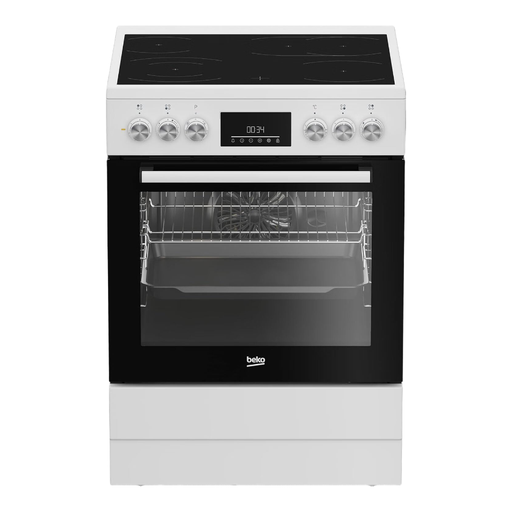
This freestanding cooker could suit you if you need a hob as well as an oven and have enough space for it.
60 cm wide, 72 l capacity, eight heating functions, hot air and a 4-zone ceramic hob. The description lists SteamShine steam cleaning.
No, there’s no one heating function that you have to use. Follow the recipe and the instructions for your specific oven when choosing a setting and deciding whether to preheat. The European Commission recommends preheating only when the recipe or appliance table calls for it.
Not directly. According to the European Commission, the EU label for ovens it covers shows energy consumption in kWh per standardised cycle for conventional and fan-assisted cooking. Your recipe and cooking time may lead to different results. The Commission says small ovens aren’t covered by the rules mentioned for domestic ovens.
Compare your dish’s dimensions with the usable interior, and check that the appliance fits the available space or built-in cavity. Also follow the positioning and connection instructions in the manual for the specific model.
The consumer advice centre lists local collection points as an option for disposing of old electrical appliances. Under the take-back rules it describes, larger old appliances may also be returned free of charge to a retailer that is required to accept them when you buy a new one. Check the specific arrangements when you place your order.
Not for this dish alone. Decide whether you’d also use the extra steam function for other foods or whether a particular cleaning system would suit your needs.