Households with staggered mealtimes
If you’re preparing lasagne for several people, weigh up keeping it hot against chilling it and reheating it later. The BfR recommends keeping food at a minimum of 60 °C throughout.


Choose an oven based on the space available for your actual oven dish and how many portions you want to prepare at once. Built-in ovens, cookers and countertop ovens suit different kitchens and space requirements. If you’re eating later, a keep-warm setting alone doesn’t prove that the centre of the lasagne is at a safe temperature. The German Federal Institute for Risk Assessment (BfR) recommends keeping food at a minimum of 60 °C throughout; for longer storage, it recommends cooling food quickly and reheating it thoroughly.
If you’re preparing lasagne for several people, weigh up keeping it hot against chilling it and reheating it later. The BfR recommends keeping food at a minimum of 60 °C throughout.
Oven capacity and multi-level cooking features can help you choose, but you’ll still need to measure your dish, including its handles, and check the usable space inside the oven.
A freestanding cooker may suit you if you also need a hob. A countertop oven is another option, as long as your dish fits inside.
Start by measuring your oven dish and checking which type of appliance will suit your kitchen. Then decide whether to keep the lasagne hot until mealtime or chill and reheat it for a later meal.
| Consideration | What to check when buying | Who is this important to? |
|---|---|---|
| Keeping food hot safely | Check whether the model has a suitable keep-warm setting; check the food’s temperature separately. | If I want to serve the next portion later, it matters to me that the lasagne stays hot throughout. Around 36% of consumers put keeping food hot safely first. |
| Reheating portions later | Check whether smaller ovenproof dishes or individual portions will fit inside; factor in chilling and reheating. | If the next meal is much later, I want to chill individual portions and reheat them as needed. Around 29% of consumers prioritise reheating portions later. |
| Space for your oven dish | Compare the internal dimensions and shelf height with your dish, including its handles; also check which accessories are included. | If I use a large dish, it needs to fit comfortably, handles and all. Around 21% of consumers prioritise dish size and space for the quantity they need. |
| Kitchen space and energy use | Choose between a built-in oven, a cooker with a hob and a countertop oven; where possible, compare the energy use per standard cycle for appliances using the same heating method. | If built-in or worktop space is limited, the right type of appliance matters to me; if I use it often, I’m also interested in comparable energy use. Around 14% of consumers put space and energy use first. |
The percentages indicate consumers’ top priorities for this specific purchasing decision. When comparing energy use, the cycle figure relates to a standardised baking cycle, not to a longer keep-warm period. The Verbraucherzentrale (German consumer advice centre) makes this clear in its explanation of oven energy labels.
The oven’s set temperature doesn’t show whether the centre and every other part of a thick lasagne will stay hot enough. The BfR recommends keeping food at a minimum of 60 °C throughout.
Base your approach on the actual temperature of the food. For longer storage, the BfR recommends cooling hot food quickly to below 7 °C, then reheating it to 70 °C throughout for at least two minutes.
A capacity in litres doesn’t tell you whether your particular dish, including its handles and the clearance it needs, will fit.
Measure the dish and the oven interior, and check the shelf height and accessories for the model you’re considering.
If your existing dish doesn’t fit, you may need to buy an additional, suitably sized dish for smaller portions.
The label shows electricity use per standardised baking cycle, not per hour of keeping food warm. So you can’t simply apply the cycle figure to a longer keep-warm period.
When comparing ovens, use the same heating method and take oven capacity into account. Allow for additional oven use if you plan to keep food hot for longer.
Keeping food hot for longer means additional running time; the cycle figure alone doesn’t show how much energy this uses.
Built-in ovens; the HBG3720B4 model is described as having a 71 l capacity, conventional heat and hot-air cooking.
Built-in and steam ovens; the HR776G1B1 is a 60 × 60 cm built-in oven with a steam boost for baking and roasting.
Freestanding cookers are an option if you need a hob as well as an oven.
Countertop ovens are an option if you don’t have a suitable space for a built-in model.
Built-in ovens; the BAR2 KH8V2 IN model is listed as having a 71 l capacity and hot-air cooking.
The Joybuy models below are built-in ovens. Before choosing, check that your kitchen’s housing dimensions and oven dish are suitable for the appliance.
 No image available
This model is worth considering if you have a suitable space for a built-in oven.
The product name lists a 71 l capacity, 3D hot-air cooking, conventional heat and pyrolytic self-cleaning.
 No image available
A built-in oven is an option if your existing kitchen has a suitable space for one.
The product name lists a 70 l capacity, Rotating Heat, a grill and AquaClean steam cleaning.
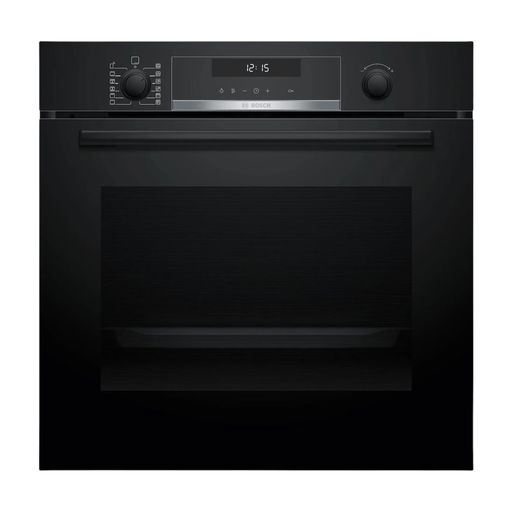 No image available
As a built-in oven, this model requires a suitable space in your kitchen.
The product name lists a 60 cm width, Home Connect, AirFry and pyrolytic cleaning.
 No image available
This built-in model suits a kitchen layout with a suitable space for installation.
The product name lists a 60 cm width, AirFry and 3D hot-air cooking.
 No image available
This built-in model requires a suitable housing space and professional installation.
The product name lists a 78 L capacity, nine cooking functions and an A+ energy rating.
Not on its own. The BfR recommends that food reaches at least 60 °C throughout. A displayed or set oven temperature doesn’t prove that the centre of the lasagne has reached this temperature too.
For longer storage, the BfR recommends cooling hot food quickly to below 7 °C. When reheating it later, the food should reach 70 °C throughout for at least two minutes.
Compare the stated kWh per standard cycle for the same heating method, and take oven capacity into account. According to the Verbraucherzentrale, the figure on the label describes a standard baking cycle, not the electricity needed for a particular lasagne or a longer keep-warm period.
The Verbraucherzentrale explains that retailers covered by the rules must take back larger old appliances free of charge when you buy a corresponding new one; this may also apply to online retailers. Before ordering, check with the seller how the take-back will be arranged.