
Lieferung heute & morgen

Qualitätsgarantie

Willkommens-Angebote freischalten: KOSTENLOSE Lieferung | Bis zu 80 % RABATT | Kostenlose 30-Tage-JoyPlus-Testphase
App herunterladen
A vegetable peeler is part of the everyday kitchen equipment in many British households. Potatoes, carrots, apples and cucumbers can usually be prepared more quickly with one than with a kitchen knife. Even so, peelers, fruit peelers and potato peelers differ considerably in terms of blade, handle, cleaning and intended use.
Anyone who focuses solely on a low price or an especially sharp blade can easily overlook important details. Three common purchasing mistakes can make a peeler impractical after only a short time:
A stainless steel vegetable peeler is easy to care for every day and, when cleaned correctly, resistant to moisture. Stainless steel blades are typically suitable for firmer foods such as potatoes, carrots, apples and cucumbers. For a model made from zinc alloy, pay attention to high-quality workmanship and a rust-resistant surface.
A ceramic peeler can be an alternative if you want a low weight and a corrosion-free blade. However, ceramic is more brittle than steel. Impacts, dropping the peeler or using it on very hard or frozen foods can damage the blade. The manufacturer’s cleaning instructions should therefore be followed.
For soft skins such as those of tomatoes, peaches or certain varieties of mango, a serrated blade is often more practical. A julienne peeler, meanwhile, is not primarily designed for completely peeling food, but for cutting fine strips, for example from carrots, cucumbers or courgettes.
An ergonomic handle should sit securely in your hand without requiring excessive pressure when pulling it over the vegetable. Non-slip plastic handles are easy to clean. Wooden handles feel warm and natural, but should be dried thoroughly after washing and never left soaking in water.
For left-handed users, a peeler that can be used on either side or rotated is practical. Swivel blades can follow the contours of potatoes, asparagus or apples. With a classic vegetable peeler, on the other hand, it is important that the blade can be guided steadily and produces the desired peeling thickness.
A dishwasher-safe peeler can save time in family kitchens and with frequent use. Nevertheless, blades should not be left loose among other cutlery. After cleaning, allow the peeler to dry completely, especially if it has a wooden handle or a multi-part construction.
Every vegetable peeler has a sharp blade. Children should not be allowed unsupervised access to one. A peeler should also only be used for peeling or for the functions specified by the manufacturer. Damaged, loose or bent blades should no longer be used on a daily basis.
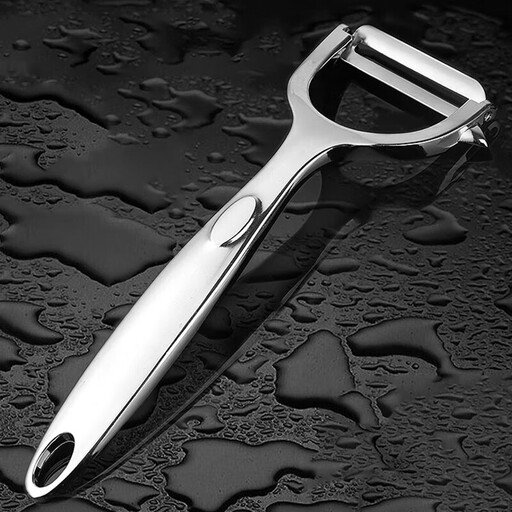
Why this product suits this profile: This single peeler focuses on the essential everyday task and is suitable for potatoes, carrots, apples and other fruit and vegetables.
No unnecessary extra features: the straightforward design makes cleaning easier.
Zinc alloy, ergonomic shape, sharp blade and, according to the product information, dishwasher-safe.
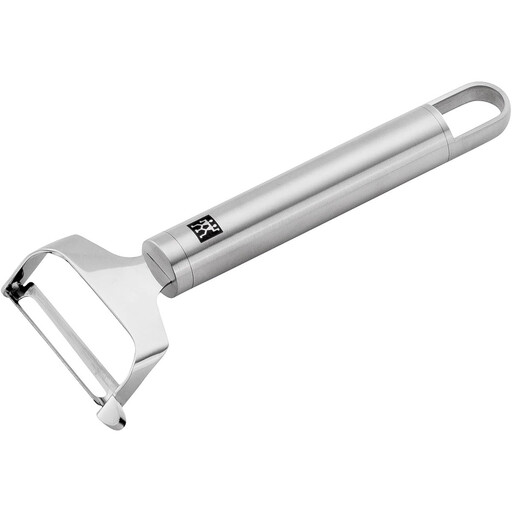
Why this product suits this profile: According to the product description, the swivel blade follows the contours of the food and is suitable for both right- and left-handed users.
The moving blade is designed to accommodate different contours, reducing reliance on a fixed angle.
18/10 stainless steel, swivel blade, ergonomic handle and dishwasher-safe design; dimensions: 17 × 6,5 × 2 cm.
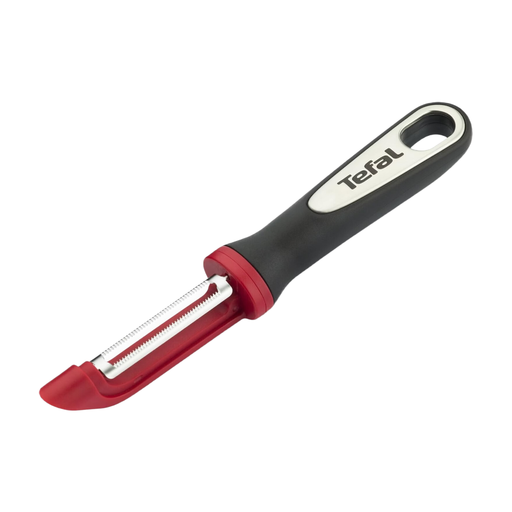
Why this product suits this profile: According to the product description, the double-serrated stainless steel blade is designed for tomatoes, peaches and other soft-skinned fruit and vegetables.
The specialist blade is not designed solely for hard skins, making it a useful complement to a classic potato peeler.
Double-serrated stainless steel blade, plastic handle, 28,8 cm length and, according to the product information, dishwasher-safe.
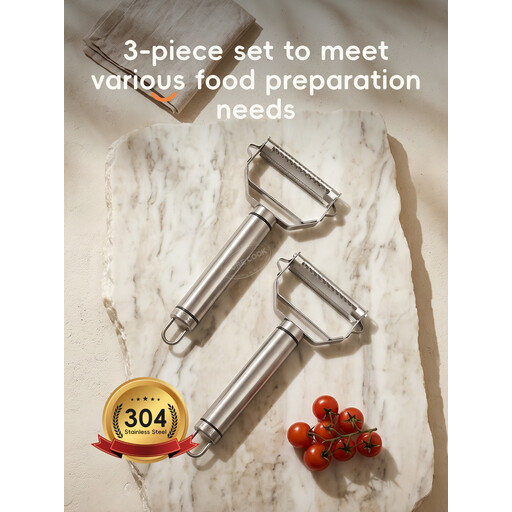
Why this product suits this profile: The three-piece set provides both a straight and a serrated side for different foods and uses.
The functions are split between two blade types rather than relying on a single blade to handle several tasks.
304 stainless steel, three pieces, straight and serrated blades and, according to the product information, dishwasher-safe.
We have put together a complete, regularly updated list of products that fully meet these strict selection criteria and the safety regulations applicable in the EU.
Simple routines can help maintain consistent performance in your kitchen:
For potatoes, a classic vegetable peeler with a straight or swivel stainless steel blade is usually sufficient. With irregularly shaped potatoes, a swivel blade can make it easier to follow the surface. A secure grip and a blade that produces thin strips of peel are the key considerations.
It depends on how you plan to use it. Ceramic is corrosion-free and lightweight, but can break or chip if knocked. Stainless steel is generally more resistant in everyday use and is often dishwasher-safe. If you are looking for a robust kitchen tool for the whole family, consider the material, care instructions and replacement options together.
It is not possible to give a reliable fixed service life for every model. The key factors are frequency of use, the foods being peeled, cleaning and storage. Replacement is advisable if the blade no longer peels cleanly despite correct use, shows signs of rust, or if the handle or the connection to the blade is damaged.