
Lieferung heute & morgen

Qualitätsgarantie

Willkommens-Angebote freischalten: KOSTENLOSE Lieferung | Bis zu 80 % RABATT | Kostenlose 30-Tage-JoyPlus-Testphase
App herunterladen
A vegetable peeler is part of the everyday kitchen equipment in many British households. Even so, it often takes only a few uses to reveal whether a particular model really suits your cooking routine. A blunt blade, slippery handle or awkward cleaning process can quickly wipe out the time saved.
As a Joybuy Product Recommendation Officer, I filter product information according to transparent criteria and match products to different usage scenarios. What matters is not an especially promotional description, but the question: Which blade, material and design best suit the shopper’s ingredients and habits?
The word “sharp” alone says little about how suitable a peeler is in practice. A straight vegetable peeler is usually suitable for potatoes, carrots and apples. A serrated blade may be more useful for softer skins such as those of tomatoes, peaches and kiwis. Shoppers should therefore check whether the blade is smooth, serrated, double-serrated or mounted on a pivot.
A dishwasher-safe peeler can generally be cleaned in the dishwasher, but heat, detergents and frequent wash cycles may affect handle surfaces or cutting performance over time. For example, the product information for a ceramic peeler recommends hand washing. Even stainless steel models may benefit from being dried after cleaning to reduce water marks and residue.
A multi-functional kitchen peeler may offer additional features such as julienne cutting or a bottle opener. This is useful when storage space is limited. However, for repeated, precise tasks, a separate vegetable knife or specialist julienne peeler may be easier to control. Additional features should therefore only be decisive when you expect to use them regularly.
Stainless steel is widely used in everyday kitchens and is rust-resistant when properly cared for. With a stainless steel vegetable peeler, the product description should clearly state whether the blade is made from stainless steel and whether it has a smooth or serrated edge. A specific steel grade, such as 304, can provide additional guidance, but it does not replace checking the workmanship and handle.
Ceramic peelers with zirconium oxide blades are lightweight and corrosion-resistant. Ceramic can be damaged if it comes into contact with hard objects or is dropped. According to the product information, such models are not intended for frozen foods or other hard materials.
A pivoting blade can adapt to the curves of potatoes, asparagus and apples. This can make it easier to guide and support a more even peeling motion. For left- and right-handed users, it is important to check whether the fruit and vegetable peeler is explicitly suitable for use with either hand.
With a potato peeler, the handle should sit securely in your hand. An ergonomic plastic handle may be lightweight and easy to care for, while wooden handles offer a different feel but generally need more careful drying. The outer shape alone is not a reliable indication of comfort. What matters is the information provided about the handle material, weight and non-slip design.
Before buying, users should compare the dimensions and weight with their available storage space. A compact fruit peeler is practical for drawers and smaller kitchens. A peeler set may be worthwhile if several people cook or if different blades are required.
It is also important to check exactly what is included: some offers contain only a peeler, while others combine one with a knife or several attachments. The manufacturer’s safety instructions should always be followed when using sharp kitchen tools. Children should not have unsupervised access, and damaged blades or loose handles should not be used.
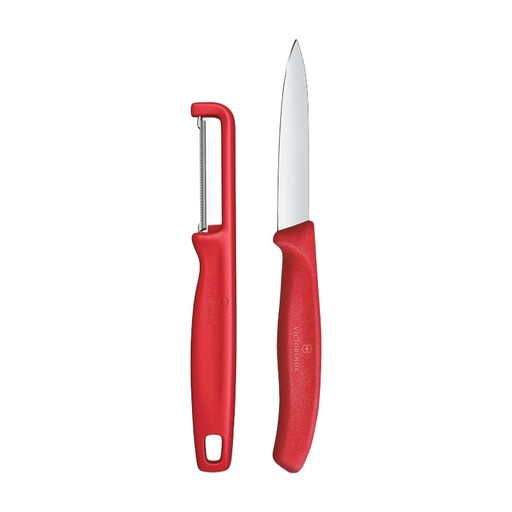
Why this product suits the profile: This two-piece set combines a serrated peeler with a vegetable knife. Beginners get two tools for peeling, slicing and dicing.
The contents are clearly defined: one peeler and one knife, rather than unused extra features. According to the product information, the handles are suitable for both left- and right-handed users.
Stainless steel blades, ergonomic plastic handles, a 2-piece set and dishwasher suitability according to the product description.
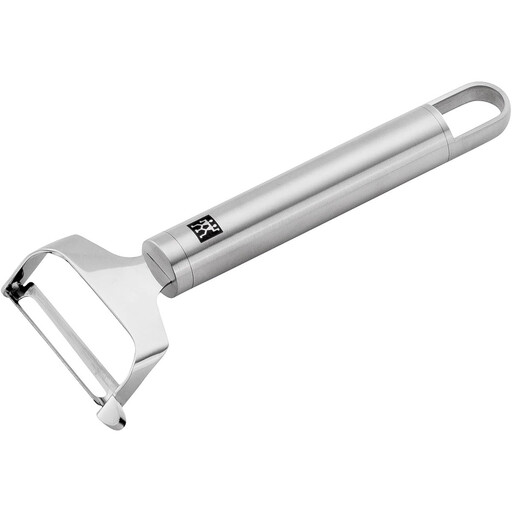
Why this product suits the profile: According to the product description, the movable pivoting blade follows the contours of fruit and vegetables. This makes it a good fit for households that regularly prepare potatoes, carrots, apples or asparagus.
The blade type is clearly specified: a stainless steel pivoting blade. According to the product information, the peeler is designed for both left- and right-handed users and is dishwasher-safe.
18/10 stainless steel according to the product description, a movable blade, 96 g weight and an ergonomic handle.
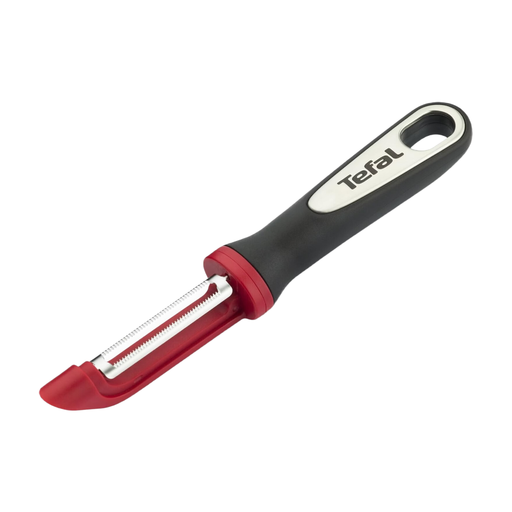
Why this product suits the profile: According to the product information, the double-serrated blade is designed for tomatoes, peaches and other soft-skinned foods.
Instead of making an unclear all-purpose claim, the intended area of use is clearly stated. For very tough skins, a different vegetable peeler may be more suitable.
Double-serrated stainless steel blade, plastic handle and dishwasher suitability according to the product description.
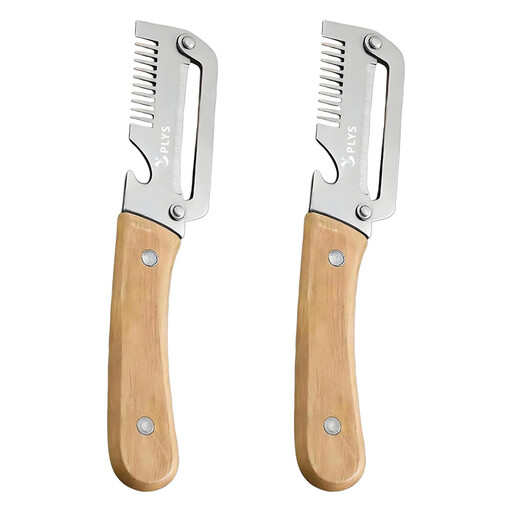
Why this product suits the profile: This two-piece set combines peeling with additional features such as strip cutting and bottle opening. It may be useful for family kitchens, camping or multiple storage locations.
The additional features are listed individually in the product information. Shoppers can therefore check in advance whether they actually need them.
Two-piece set, stainless steel blade, ergonomic wooden handle and functions for peeling, strip cutting and opening bottles.
We have put together a complete, regularly updated list of products that fully meet these strict selection criteria and the safety regulations applicable in the EU.
For tomatoes and other soft-skinned foods, a tomato peeler with a serrated blade may be more suitable than a smooth vegetable peeler. The serrated design grips the skin without requiring users to apply much pressure. For potatoes or carrots, a smooth or pivoting stainless steel blade is often sufficient.
That depends on how you intend to use it. Ceramic is corrosion-resistant and lightweight, but it can be damaged by impacts or improper use. Stainless steel is versatile and many models are dishwasher-safe. Shoppers should therefore compare the blade type, care instructions and intended use, rather than judging the material in isolation.
It is not possible to give a reliable fixed service life for every model. It depends on the blade quality, construction details, cleaning, storage and frequency of use. Using the peeler only for suitable foods, checking for damage and following the care instructions can help reduce common causes of wear. If cutting performance declines or the blade becomes loose, replacing the peeler is advisable.