
Lieferung heute & morgen

Qualitätsgarantie

Willkommens-Angebote freischalten: KOSTENLOSE Lieferung | Bis zu 80 % RABATT | Kostenlose 30-Tage-JoyPlus-Testphase
App herunterladen
A vegetable peeler set should make everyday food preparation easier, whether you’re peeling potatoes, carrots, apples or cucumbers. In practice, peelers can vary considerably in how the blade moves, how the handle feels, how easy they are to clean and what they’re designed for. If you focus only on a particularly sharp blade or a high number of pieces, you could end up with a set whose accessories rarely get used or whose handle becomes uncomfortable after a short time.
This buying guide explains which details really matter and which common marketing claims are worth checking carefully.
A sharp blade is important in a potato peeler or fruit peeler, but that claim alone tells you little about how well it will perform over time. The material, blade shape and build quality all matter. For stainless steel, the seller should clearly identify the material. Ceramic blades are hard, but can be more prone to breaking if knocked or twisted.
A dishwasher-safe peeler can be convenient, but it’s still worth checking the care instructions. Frequent machine washing can put more strain on blades, handles and surfaces than gentle hand-washing. Some sets are specifically listed as dishwasher-safe, while other manufacturers recommend washing by hand.
A large kitchen utensil set may look appealing at first. But if you mainly peel vegetables, a single Y-peeler may be more useful than a set containing several knives, scissors and specialist tools. Check whether the pieces suit the way you cook and can be stored safely.
A Y-peeler sits across your hand, at right angles to the direction of movement. This can be handy for peeling larger surfaces, such as potatoes or squash. A swivel peeler has a moving blade which, according to the product description, can adapt to different curves. This can be useful for carrots, asparagus or apples.
A straight vegetable peeler is handled more like a small knife. It may suit you if you prefer a longer shape or want to do precise work on smaller foods as well. For left-handed users, a blade that works in either direction is an important consideration.
Stainless steel vegetable peelers are versatile for everyday use and, with the right care, resist corrosion. Details such as 18/10 stainless steel, as used in the ZWILLING Twin Grip Set, make it easier to understand what the product is made from. However, a specific steel grade isn’t listed for every product.
Ceramic peelers can be lightweight and don’t need traditional sharpening. However, avoid using them to prise or twist food, or on frozen ingredients. Hand-washing is recommended for a ceramic model such as the 5Five peeler. The right choice depends on whether you value a lighter weight or easier day-to-day care.
An ergonomic handle should feel secure in your hand without causing pressure points. Plastic, polypropylene, TPR and wood all feel different and require different care. For longer food-preparation sessions, a lightweight design and a non-slip shape can be helpful.
Also look for clear cleaning instructions:
With all peelers and knives, keep sharp blades out of children’s reach and store them safely.
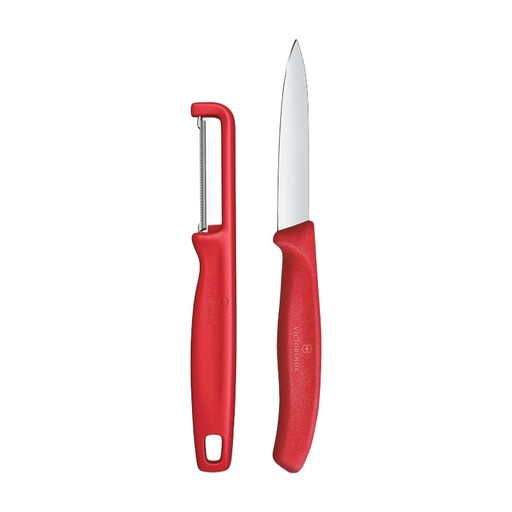
Why this product suits this need: This two-piece set pairs a straight vegetable peeler with a vegetable knife for everyday food preparation.
The set keeps things simple, so there’s less risk of unused accessories piling up. The product details list stainless steel blades, ergonomic plastic handles and dishwasher-safe components.
Two kitchen tools with distinct uses; suitable for right- and left-handed users, according to the product description.
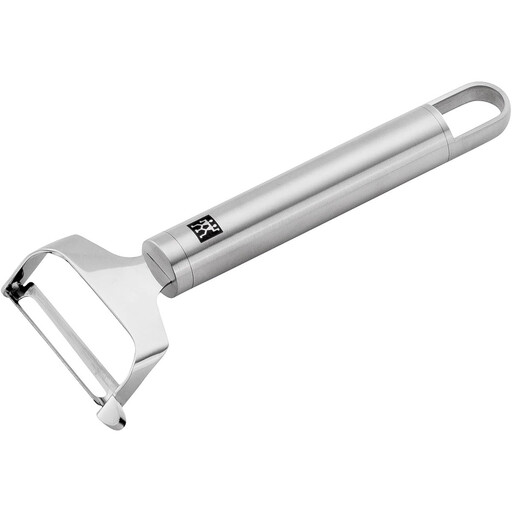
Why this product suits this need: This stainless steel swivel peeler is designed for regular use with fruit and vegetables, and can be used by both right- and left-handed people.
The product details specify the material, dimensions of 17 × 6,5 × 2 cm, weight of 96 g and dishwasher suitability. This makes key comparison points clear.
Moving swivel blade; stainless steel construction and ergonomic handle, according to the product description.
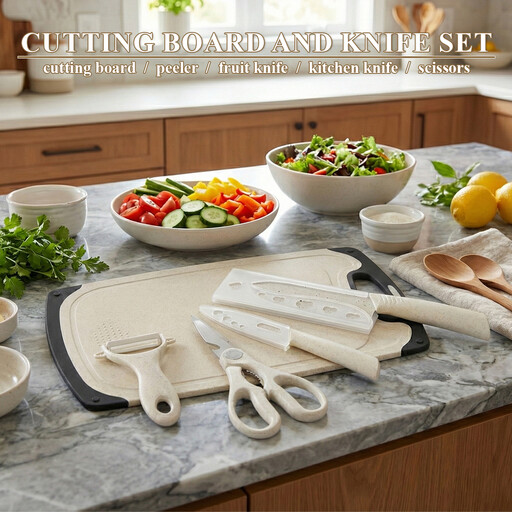
Why this product suits this need: As well as a Y-peeler, parents get a chopping board, knife, fruit knife and safety scissors for preparing fruit, vegetables and soft foods.
This set is clearly designed for food preparation in family households. The product description specifically mentions safety features and a compact selection of tools.
Five pieces for different preparation tasks; chopping board made from wheat straw fibre and PP, according to the product details.
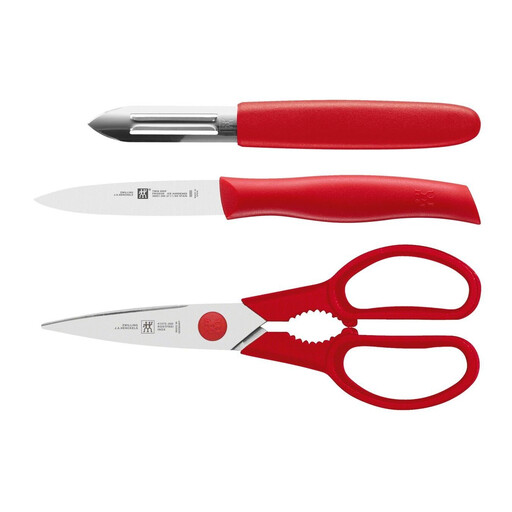
Why this product suits this need: A paring knife, peeler and kitchen scissors cover a range of everyday tasks, from cooking and snipping herbs to opening packaging.
The three tools have different uses, so there’s less overlap than with a set of several similar peelers. Hand-washing is recommended.
Three distinct kitchen tools; blades made from 18/10 stainless steel, according to the product description.
We’ve put together a complete, regularly updated list of products that meet these strict selection criteria and fully comply with the safety regulations in force in the EU.
Y-peelers, swivel peelers and straight peelers are all suitable for potatoes and carrots. The key things to look for are a secure grip, a blade of the right width and a design that feels comfortable in your preferred hand. For rounded foods, a moving swivel blade can make peeling easier.
Its lifespan depends on the material, how often you use it and how well you care for it. Stainless steel blades should be dried after washing and not cleaned with abrasive products. Ceramic blades can stay sharp for a long time, but shouldn’t be dropped or twisted. Stop using a peeler if its blade becomes loose, damaged or visibly chipped.
A set is worthwhile if you also want to chop, trim or prepare herbs. If you only peel occasionally, a single fruit and vegetable peeler may be enough. So don’t just compare the price of each set: consider the functions you’ll actually use, how the pieces need to be cleaned and how much storage space you have.