
Lieferung heute & morgen

Qualitätsgarantie

Willkommens-Angebote freischalten: KOSTENLOSE Lieferung | Bis zu 80 % RABATT | Kostenlose 30-Tage-JoyPlus-Testphase
App herunterladen
A vegetable peeler is a basic item in many British kitchens. Even so, the wide range of options does not automatically make it easy to choose the right one. An inexpensive swivel peeler may work well for potatoes, but squash or slip on tomatoes. Conversely, a specialist model for soft skins is not always the right choice for carrots and root vegetables.
As a Joybuy Product Recommendation Officer, I assess product information against clear, verifiable criteria. Marketing language matters less than blade type, materials, handling, cleaning and intended use.
Soft foods have different requirements from firm vegetables. A smooth blade is typically suitable for potatoes, carrots and apples. With tomatoes, peaches or kiwis, a serrated blade may grip more effectively without crushing the skin. A universal potato peeler is therefore not automatically a suitable tomato peeler.
“Stainless steel” initially describes only the material group. Details such as 304 stainless steel, 18/10 stainless steel or a non-specific stainless-steel alloy are more precise. The connection between the blade and handle, as well as resistance to corrosion during regular exposure to moisture, also matters. Even a stainless-steel peeler should be dried after cleaning.
Buying a dishwasher-safe vegetable peeler can make cleaning easier. However, frequent washing in the dishwasher may put greater strain on the surface or handle, depending on the material, detergent and drying process. For delicate handle materials and particularly sharp blades, hand-washing with mild washing-up liquid is a gentler alternative.
Common blade options include stainless steel, 304 stainless steel and specialist stainless-steel alloys. Ceramic blades are corrosion-resistant, but may be more susceptible to damage if knocked. The handle should sit securely in your hand and remain easy to control when working with wet vegetables. Left-handed users should check whether the blade can be used from both sides.
A compact peeler measuring around 16 to 19 cm in length can be stored neatly in many kitchen drawers. With sets, check whether they actually contain several separate peelers or combine a knife and a peeler. Details such as dishwasher-safe, hand-washing recommendations and drying instructions help you assess the care required.
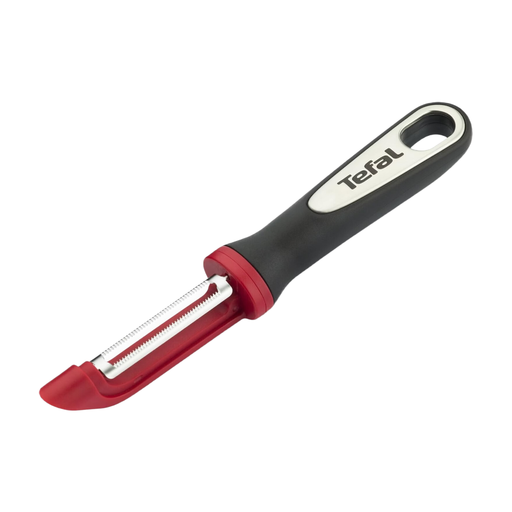
Why this product suits the profile: The double-serrated stainless-steel blade is designed for tomatoes, peaches and other foods with soft skins. The plastic handle provides simple, lightweight handling for occasional kitchen tasks.
The serrated blade is clearly described as a specialist solution for soft skins, rather than simply being promoted as a universal blade.
Double-serrated stainless-steel blade, ergonomic handle and dishwasher-safe according to the product information.
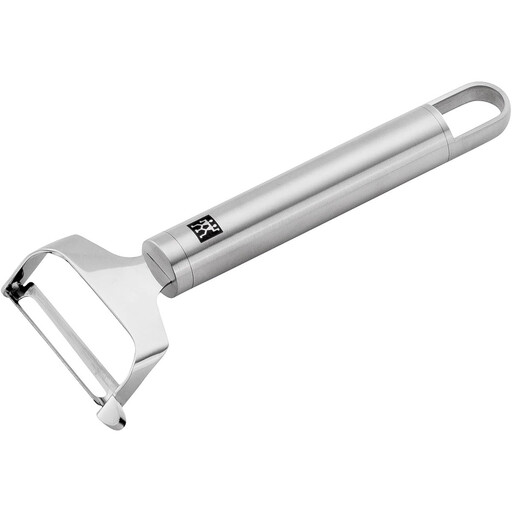
Why this product suits the profile: This model has a movable swivel blade, a stainless-steel handle and a length of 17 cm. It is designed for both right- and left-handed users and is suitable for fruit and firm vegetables.
The product details specify the blade mechanism, dimensions, material and cleaning requirements. This makes it easier to compare the product’s suitability with your own kitchen routine.
18/10 stainless steel, movable swivel blade, suitable for use from both sides and dishwasher-safe according to the product information.
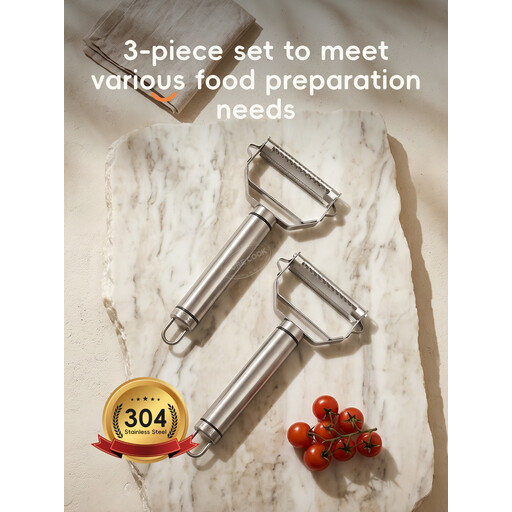
Why this product suits the profile: The vegetable peeler set contains three double-ended peelers made from 304 stainless steel. The smooth and serrated sides cover firm and soft produce, while the set is also specified for catering, camping and larger households.
The separate blade surfaces reduce the need to use a single blade type for every food. The material specification is also more precise than simply stating “stainless steel”.
Three pieces, 304 stainless steel, straight and serrated blades, and dishwasher-safe according to the product information.
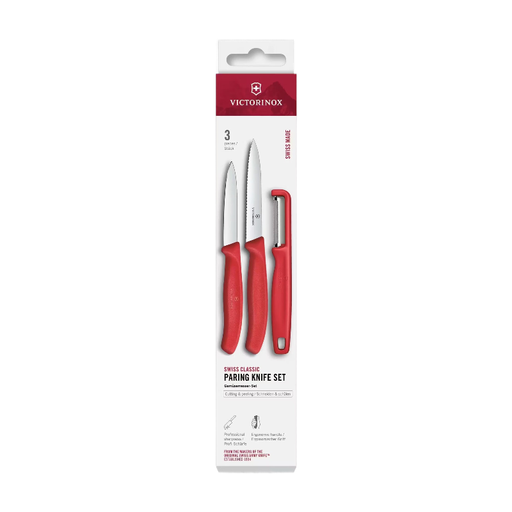
Why this product suits the profile: Alongside a straight peeler, the set contains two vegetable knives with different blades. It is therefore suitable for peeling, cutting and food preparation in home kitchens or smaller catering operations.
The contents are clearly defined: two vegetable knives and one straight peeler. Buyers can therefore assess the actual range of functions in advance.
Three-piece set, stainless-steel blades, polypropylene handles and dishwasher-safe according to the product information.
For preparing potatoes, apples and carrots every day, a classic swivel peeler with a straight or movable blade is usually enough. If you often prepare asparagus, choose an asparagus peeler with a blade guide designed for the job. For tomatoes and peaches, a tomato peeler with a serrated edge is more practical. A fruit peeler can be used for apples, pears or cucumbers, while a julienne peeler also creates decorative strips or strips suitable for salads.
You should also check the following points before buying:
We have put together a complete, regularly updated list of products that fully meet these strict selection criteria and the safety regulations applicable in the EU.
For potatoes, a swivel peeler with a straight or movable blade is a practical choice. The blade should be guided securely, and the handle should sit comfortably and firmly in your hand. For larger quantities, a model suitable for use from both sides or with a dishwasher-safe design can make the process easier.
The terms are sometimes used interchangeably by retailers. A swivel peeler usually refers to a peeler that removes thin strips of skin. “Potato peeler” often describes the intended use rather than a specific type of blade. The important factors are therefore the precise details regarding the blade, handle and suitable foods.
Its lifespan depends on the quality of the blade, frequency of use, storage and cleaning. A peeler should be rinsed after use, dried thoroughly and stored safely. If the blade becomes loose, the handle develops cracks or there is visible damage, it should no longer be used.