
Lieferung heute & morgen

Qualitätsgarantie

Willkommens-Angebote freischalten: KOSTENLOSE Lieferung | Bis zu 80 % RABATT | Kostenlose 30-Tage-JoyPlus-Testphase
App herunterladen
A vegetable slicer can quickly turn potatoes, cucumbers, carrots or cabbage into even slices or strips. In many households, however, the problem is not the range of functions but choosing the right model: an apparently versatile vegetable cutter may require a lot of storage space, be difficult to clean or lack a suitable blade for the intended use.
This buying guide explains what households, home cooks and professional chefs should look for in a manual or electric kitchen slicer. It focuses on verifiable features such as blade material, operation, cleaning, dimensions and the product’s actual intended use.
A vegetable slicer with different blades can produce slices, strips, julienne cuts or grated ingredients. What matters, however, is whether the attachments are easy to change and can then be cleaned separately. Accessories you do not need take up extra space and can easily get lost in a kitchen cupboard.
Before buying, make sure you know:
A sharp blade makes cutting easier, but it remains a safety-critical component of any kitchen slicer. A manual vegetable cutter should therefore be used with a suitable food holder, pusher or another device that guides the food safely. Small leftover pieces should never be pushed towards the blade with your fingers.
Stability also matters: a sliding base makes smooth, even movements more difficult. Models with a wide support surface, container or non-slip elements may be more practical to use – provided these features are expressly stated in the product description.
A multifunctional slicer may contain a frame, blades, collection container and pusher made from different materials. A general statement about cleaning is therefore not always sufficient. Check whether the blades can be removed and whether all individual parts are approved for dishwasher cleaning.
The 5five Multi-Purpose Mandoline Slicer illustrates why this information matters: the item is described as dishwasher-safe. By contrast, the Leifheit Egg Slicer Combi ProLine and the ComfortLine version are expressly intended to be cleaned by hand.
Stainless steel is commonly used for blades, wires or housing components. When choosing a stainless-steel vegetable cutter, the product description should clearly state which components are actually made from stainless steel. A plastic frame with a stainless-steel blade is not the same as an appliance made entirely from stainless steel.
The cutting style is also more important when choosing a product than having the longest possible list of accessories:
A vegetable grater with several grating surfaces is suited to different tasks than a flat mandoline kitchen slicer. If you regularly prepare a variety of foods, a set may be a good choice. For occasional slicing, a simpler model is often sufficient.
A manual slicer does not require electricity and can be used straight away. It is suitable for smaller quantities and quick preparation. A manual pull chopper, on the other hand, works with a cord and rotating blade system. This can be practical for onions, garlic, herbs, fruit or nuts, but it does not necessarily replace a traditional slicer for producing even slices.
Electric appliances such as a bread slicer or electric meat slicer are designed for regular, controlled cutting of larger quantities. When buying one, check the motor power, cutting-thickness range, removable carriage and switch design. These details must be included in the relevant product description; general advertising claims are not enough for a meaningful comparison.
A compact appliance is easier to store in drawers, but may offer less collection capacity. For example, the 10-piece multifunctional set measures 32 × 14,5 × 11,5 cm and has a collection container with a lid. The 5five Mandoline Slicer measures 26,5 × 15 × 9,5 cm and has a stated weight of 550 g.
Before buying, measure the available storage space and check the following points:

Why this product suits the profile: This manual chopper has a 220 ml capacity and is designed for smaller quantities of onions, vegetables, ginger, fruit, nuts and herbs.
The clearly defined container capacity helps prevent the appliance from being mistaken for a full multifunctional slicer.
Manual operation without a power connection; described as suitable for small portions and several soft or otherwise suitable foods.
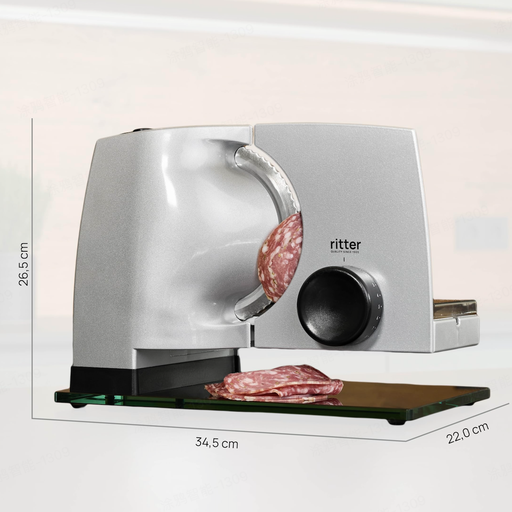
Why this product suits the profile: This electric appliance is designed for bread, fruit and vegetables, with a cutting thickness ranging from wafer-thin to approximately 20 mm.
The stated cutting-thickness range is more specific than a general claim such as ‘precise slicing’.
Removable food carriage, 18 cm cutting path, safety glass base and ECO motor according to the product description.
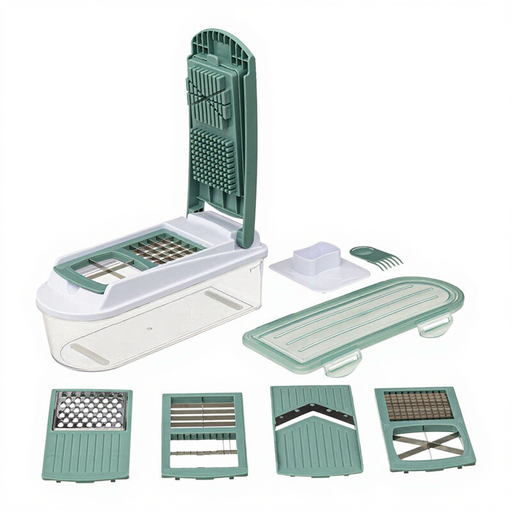
Why this product suits the profile: This set is aimed at users who regularly need different cutting styles, such as slices, julienne and chips.
The included interchangeable blades, pusher and collection container are clearly specified, making it easier to check the functions before buying.
Stainless-steel blades, ABS frame, pusher and container with lid according to the product description.
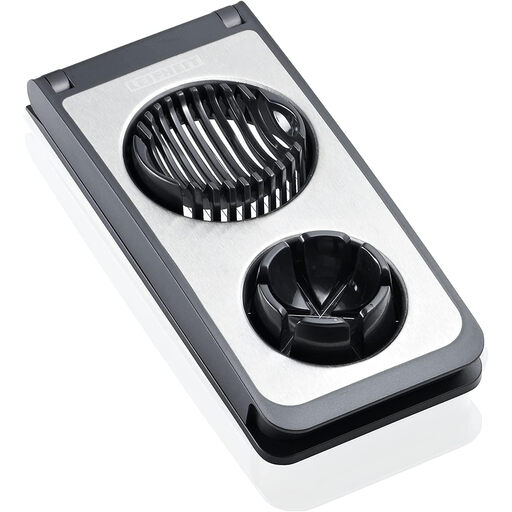
Why this product suits the profile: For eggs, kiwis and boiled potatoes, this manual egg slicer offers three cutting functions: round slices, oval slices and wedges.
Its limited range of uses prevents unrealistic expectations of a universal vegetable cutter.
Rust-resistant stainless-steel wires, stainless-steel housing and folding mechanism according to the product description; hand-wash only.
We have put together a complete, regularly updated list of products that fully meet these strict selection criteria and the safety regulations applicable in the EU.
For potatoes and cucumbers, a slicer with a specified slicing function is a sensible choice. It should have a pusher or finger guard. If you also want to make sticks, julienne cuts or grated ingredients, check the number of blades and the specific cutting styles listed.
Its lifespan depends on the material, cleaning, storage and level of use. Blades should not be used on hard stones, bones or frozen foods if the instructions for use prohibit this. After cleaning, all parts should be dried thoroughly and the blades stored safely with suitable protection.
A manual vegetable cutter does not require electricity and incurs no ongoing energy costs during use. An electric food slicer may be more convenient for larger quantities, but it requires electricity and more storage space. The right choice therefore depends on how often you will use it, the quantity you need to prepare, the desired cutting thickness and the cleaning required.